

A new communication satellite for a Hong Kong based satellite operator will be launched on the largest Chinese rocket available to serve the Asia-Pacific region. The APStar 7 satellite, which will be operated by the APT Satellite Holdings Ltd. of Hong Kong, is scheduled to launch from the Xichang Satellite Launch Center in south-western China on Saturday evening local time.



Launch location:
[ame="http://en.wikipedia.org/wiki/Xichang_Satellite_Launch_Center"]Xichang Satellite Launch Center[/ame] Launch pad no. 2 28° 14'43.8"N, 102° 1'37.2"E
Launch dates and times:
[table="head"]{colsp=6}Launch times
Time Zone|
{colsp=6}
[/table]
Live Coverage Of The Launch:
PAYLOAD
APStar 7 communication satellite:

Mission Summary
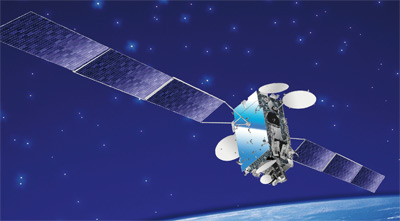
APSTAR-7 is an advanced telecommunications satellite based on Spacebus 4000 C2 of Thales Alenia Space France (TASF) with a lift-off mass of 5054kg and a design lifetime over 15 years. The satellite has 56 operational transponders (28 in C-band and 28 in Ku-band) onboard, and will replace the current APSTAR-2R satellite at 76.5°East Longitude.
APSTAR-7 satellite’s C-band global beam covers Asia, Africa, Australia and part of Europe and its multiple Ku-band beams, including China Beam, Middle East & North Africa Beam, Africa Beam and a Steerable Spot Beam are able to provide in-beam and cross-beam broadcast and telecommunication services.
APT Satellite Company Limited is one of the leading satellite operators in the Asia Pacific region. Its five APSTAR satellites fleet provides quality and “one-stop-shop” broadcast and telecommunications services covering about 75% of the world’s population.
Thales Alenia Space France (TASF) is one of the leading satellite manufacturers in the world. APSTAR-7 is the 7th TASF-manufactured satellite launched by Long March launch vehicle.
[table="head"]{colsp=2}Summary
Parameter|Value
[/table]
[table="head"]Characteristics|
[/table]
Launch Vehicle:
[table="head"]{colsp=2}Characteristics
 |[table="head"]{colsp=2}
[/table]
[/table]
The vehicle's reliability statistics according to http://www.spacelaunchreport.com/log2012.html#rate:
APStar 7 Ascent Profile
The first two stages and the four boosters pushes the third stage, adapter system and APStar 7 into a 28.5° inclination suborbital trajectory.
Immediately after the separation of the second stage booster, the third stage follows a two-burn injection profile, first to a low Earth orbit, then to the final geosynchronous transfer orbit. Separation of the satellite will come 25 minutes after launch.

APStar 7 Ascent Timeline
[TABLE="head"]Event|Time rel lift-off|Time Beijing|Time UTC|Comment
Lift-off|00:00:00|18:25:03|10:25:03|
Initiation of roll program|00:00:11|18:25:14|10:25:14|
Booster Separation|00:02:21|18:27:24|10:27:24|
1st/2nd Stage Separation|00:02:39|18:27:42|10:27:42|
Payload Fairing Separation|00:03:55|18:28:58|10:28:58|
2nd/3rd Stage Separation/1st Burn Ignition|00:05:44|18:30:47|10:30:47|
1st Burn Shutdown|00:10:12|18:35:15|10:35:15|1st Burn's Duration 00:04:28
2nd Burn Ignition|00:20:56|18:45:59|10:45:59|
2nd Burn Shutdown|00:24:02|18:49:05|10:49:05|2nd Burn's Duration 00:03:06
Spacecraft Separation|00:25:42|18:50:45|10:50:45|
[/TABLE]
Photos of the preparations for the launch


References
http://cn.cgwic.com/APSTAR-7/
http://www.9ifly.cn/thread-8616-1-1.html
http://www.cgwic.com/LaunchServices/Download/manual/
http://www.apstar.com/apt_apstar/APSTAR VII.asp
http://www.thalesgroup.com
http://forum.nasaspaceflight.com
http://www.spacelaunchreport.com
Launch location:
[ame="http://en.wikipedia.org/wiki/Xichang_Satellite_Launch_Center"]Xichang Satellite Launch Center[/ame] Launch pad no. 2 28° 14'43.8"N, 102° 1'37.2"E
Launch dates and times:
[table="head"]{colsp=6}Launch times
Time Zone|
Beijing / UTC+8
| Universal / UTC
| Washington / EDT
| Los Angeles / PDT
Launch time:
|18:25:03
|10:25:03
|06:25:03
|03:25:03
on:
|Mar. 31, 2012
|Mar. 31, 2012
|Mar. 31, 2012
|Mar. 31, 2012
{colsp=6}
[highlight][eventTimer]2012-03-31 10:25:03?before|after;%dd% Days %hh% Hours %mm% Minutes %ss% Seconds %c%[/eventTimer] APStar 7 Launch[/highlight]
[/table]
Live Coverage Of The Launch:
- Most probably none (as with the standards of Chinese aerospace... :shifty
 . If there is any, I will post here immediately.
PAYLOAD
APStar 7 communication satellite:
Mission Summary
APSTAR-7 is an advanced telecommunications satellite based on Spacebus 4000 C2 of Thales Alenia Space France (TASF) with a lift-off mass of 5054kg and a design lifetime over 15 years. The satellite has 56 operational transponders (28 in C-band and 28 in Ku-band) onboard, and will replace the current APSTAR-2R satellite at 76.5°East Longitude.
APSTAR-7 satellite’s C-band global beam covers Asia, Africa, Australia and part of Europe and its multiple Ku-band beams, including China Beam, Middle East & North Africa Beam, Africa Beam and a Steerable Spot Beam are able to provide in-beam and cross-beam broadcast and telecommunication services.
APT Satellite Company Limited is one of the leading satellite operators in the Asia Pacific region. Its five APSTAR satellites fleet provides quality and “one-stop-shop” broadcast and telecommunications services covering about 75% of the world’s population.
Thales Alenia Space France (TASF) is one of the leading satellite manufacturers in the world. APSTAR-7 is the 7th TASF-manufactured satellite launched by Long March launch vehicle.
[table="head"]{colsp=2}Summary
Parameter|Value
Working Orbit:
|GEOOrbital Location:
|76.5° EastCoverage:
|Eastern and southern Asia, Middle East, most of Africa, Australia, South EuropeApA at separation:
|50281 kmPeA at separation:
|200 kmInc at separation:
|27.4°[/table]
[table="head"]Characteristics|
Eutelsat W3C
Customer:
|- APT Satellite Holdings Ltd.
Prime contractor:
|- Thales Alenia Space
Platform:
|- Spacebus 4000C2
Mass at Separation:
|- 5054 kg
Dry Mass:
|- ?
Stabilization:
|- 3 axis stabilized
Dimensions (stowed):
|- ?
Batteries:
|- ?
Primary Payload:
|- 28 C-band transponders
- 28 Ku-band transponders
Life time:
|- 15 years
Coverage areas:
|
.jpg)
.jpg)
.jpg)
.jpg)
.jpg)
[/table]
Launch Vehicle:
[table="head"]{colsp=2}Characteristics
Long March 3B
Prime contractor:
|- China Academy of Launch Vehicle Technology
Height:
| 56.3 m with upper stage and payload fairingDiameter:
| max 3.35 mLiftoff mass:
| 458.97 metric tonnesPayload mass:
| ~5.5 tonnes at GTOBoosters (x4):
|- 1 X YF-25 engine
- Length 15.326 m
- Propellant mass 41.5 tonnes (UDMH and NTO)
- Thrust at sea level 74.04 tonnes of force
- Specific Impulse 2556.2 N-s/kg (at sea level)
1st stage:
|- 1 X YF-21C engine
- Length 23.272 m
- Propellant mass 186.6 tonnes (UDMH and NTO)
- Thrust at sea level 296.16 tonnes of force
- Specific Impulse 2556.2 N-s/kg (at sea level)
2nd stage:
|- 1 X YF-24E engine
- Length 9.943 m
- Propellant mass 49.605 tonnes (UDMH and NTO)
- Thrust in vacuum 74.2 tonnes of force
- Specific Impulse 2922.57 N-s/kg (in vacuum)
3rd stage:
|- 2 X YF-75 engine
- Length 12.375 m
- Propellant mass 18.193 tonnes (LH2 and LOX)
- Thrust in vacuum 15.7 tonnes of force
- Specific Impulse 4312 N-s/kg (in vacuum)
Payload Fairing:
|- Diameter 4.2 m
- Length 9.56 m
[/table]
[/table]
The vehicle's reliability statistics according to http://www.spacelaunchreport.com/log2012.html#rate:
Code:
================================================================
Vehicle     Successes/Tries Realzd Pred  Consc. Last     Dates
                             Rate  Rate* Succes Fail
================================================================
CZ-3B/3C         24    26    .92  .89     12    8/31/09  1996-
APStar 7 Ascent Profile
The first two stages and the four boosters pushes the third stage, adapter system and APStar 7 into a 28.5° inclination suborbital trajectory.
Immediately after the separation of the second stage booster, the third stage follows a two-burn injection profile, first to a low Earth orbit, then to the final geosynchronous transfer orbit. Separation of the satellite will come 25 minutes after launch.
APStar 7 Ascent Timeline
[TABLE="head"]Event|Time rel lift-off|Time Beijing|Time UTC|Comment
Lift-off|00:00:00|18:25:03|10:25:03|
Initiation of roll program|00:00:11|18:25:14|10:25:14|
Booster Separation|00:02:21|18:27:24|10:27:24|
1st/2nd Stage Separation|00:02:39|18:27:42|10:27:42|
Payload Fairing Separation|00:03:55|18:28:58|10:28:58|
2nd/3rd Stage Separation/1st Burn Ignition|00:05:44|18:30:47|10:30:47|
1st Burn Shutdown|00:10:12|18:35:15|10:35:15|1st Burn's Duration 00:04:28
2nd Burn Ignition|00:20:56|18:45:59|10:45:59|
2nd Burn Shutdown|00:24:02|18:49:05|10:49:05|2nd Burn's Duration 00:03:06
Spacecraft Separation|00:25:42|18:50:45|10:50:45|
[/TABLE]
Photos of the preparations for the launch
References
http://cn.cgwic.com/APSTAR-7/
http://www.9ifly.cn/thread-8616-1-1.html
http://www.cgwic.com/LaunchServices/Download/manual/
http://www.apstar.com/apt_apstar/APSTAR VII.asp
http://www.thalesgroup.com
http://forum.nasaspaceflight.com
http://www.spacelaunchreport.com


