mahdavi3d
Well-known member
- Joined
- Nov 25, 2011
- Messages
- 537
- Reaction score
- 102
- Points
- 58
Event Horizon Telescope
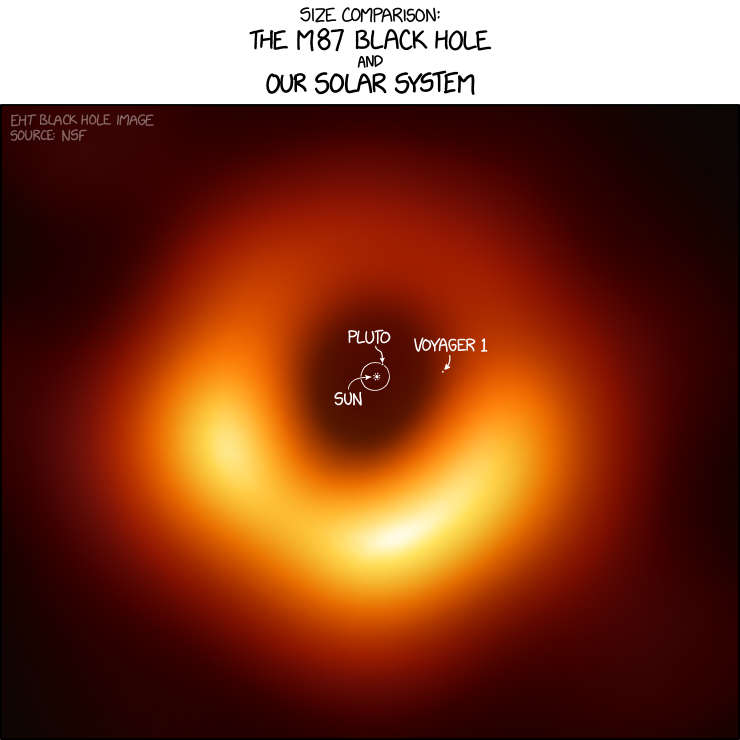
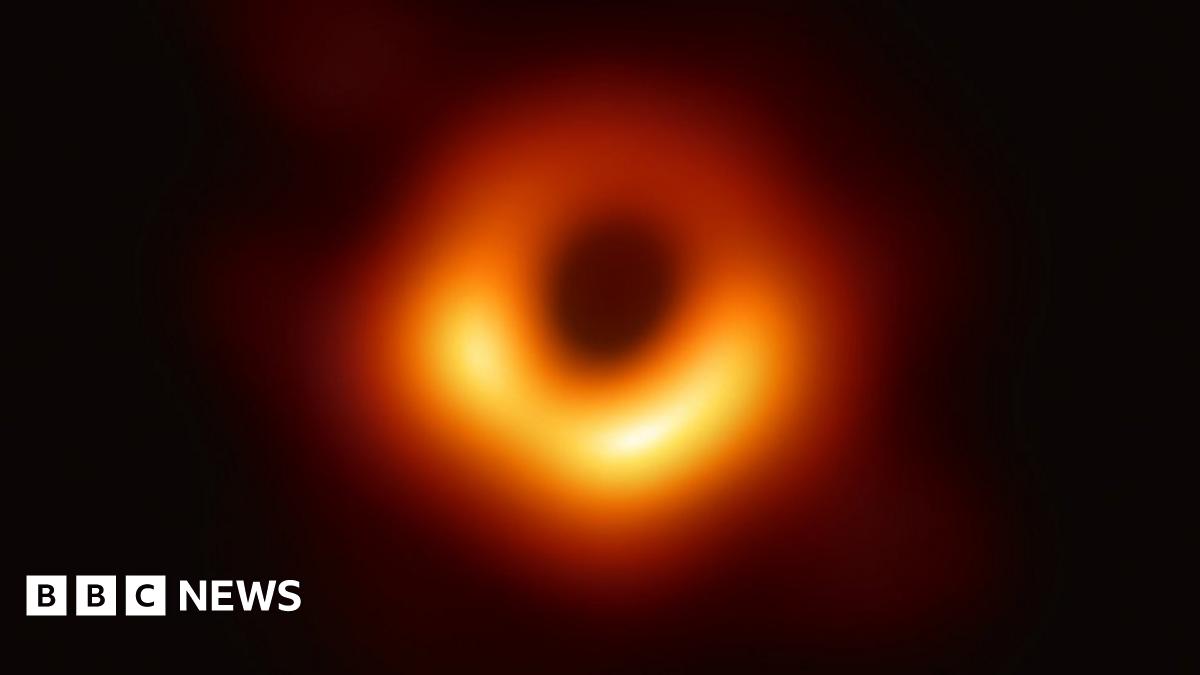
A long standing goal in astrophysics is to directly observe the immediate environment of a black hole with angular resolution comparable to the event horizon.
Realizing this goal would open a new window on the study of general relativity in the strong field regime, accretion and outflow processes at the edge of a black hole, the existence of an event horizon, and fundamental black hole physics. Steady long-term progress on improving the capability of Very Long Baseline Interferometry (VLBI) at short wavelengths has now made it extremely likely that this goal will be achieved within the next decade.
Key science objectives
Testing general relativity - Einstein's theory of general relativity predicts that there will be a roughly circular "shadow" around a black hole. The EHT aims to image the shadow to test this prediction and determine the mass of black holes
Understanding accretion around a black hole - Black holes exert a strong gravitational pull on nearby matter. Some of this matter ultimately falls into the black hole in a process called accretion. One of the objectives of the EHT is to improve our understanding of the physics of accretion.
Understanding jet genesis and collimation - Most galaxies show large scale jets of very fast moving plasma that are launched from the central black hole. One possibility is that these jets are launched very close to the rapidly-rotating central black hole. Most of these jets remain tightly confined to a narrow opening angle even far from the black hole. The EHT will improve our understanding of the process of generation and collimation of these jets.
sources:
http://www.eventhorizontelescope.org/
http://www.eventhorizontelescope.org/science/index.html
[ame="https://www.youtube.com/watch?v=-B0v2XypLqY"]The Event Horizon Telescope: Imaging and Time-Resolving a Black Hole - YouTube[/ame]
A long standing goal in astrophysics is to directly observe the immediate environment of a black hole with angular resolution comparable to the event horizon.
Realizing this goal would open a new window on the study of general relativity in the strong field regime, accretion and outflow processes at the edge of a black hole, the existence of an event horizon, and fundamental black hole physics. Steady long-term progress on improving the capability of Very Long Baseline Interferometry (VLBI) at short wavelengths has now made it extremely likely that this goal will be achieved within the next decade.
Key science objectives
Testing general relativity - Einstein's theory of general relativity predicts that there will be a roughly circular "shadow" around a black hole. The EHT aims to image the shadow to test this prediction and determine the mass of black holes
Understanding accretion around a black hole - Black holes exert a strong gravitational pull on nearby matter. Some of this matter ultimately falls into the black hole in a process called accretion. One of the objectives of the EHT is to improve our understanding of the physics of accretion.
Understanding jet genesis and collimation - Most galaxies show large scale jets of very fast moving plasma that are launched from the central black hole. One possibility is that these jets are launched very close to the rapidly-rotating central black hole. Most of these jets remain tightly confined to a narrow opening angle even far from the black hole. The EHT will improve our understanding of the process of generation and collimation of these jets.
sources:
http://www.eventhorizontelescope.org/
http://www.eventhorizontelescope.org/science/index.html
[ame="https://www.youtube.com/watch?v=-B0v2XypLqY"]The Event Horizon Telescope: Imaging and Time-Resolving a Black Hole - YouTube[/ame]