
Old Teen Novel about Asteroid Mining

rodion_herrera

Moonwatcher
Addon Developer
Joined
Nov 4, 2007
Messages
230
Reaction score
24
Points
18
Location
Davao City, Philippines
I dug up an old teen novel about asteroid mining that I read back when I was in high school, and this perhaps also fueled my interest in space and space travel while growing up.
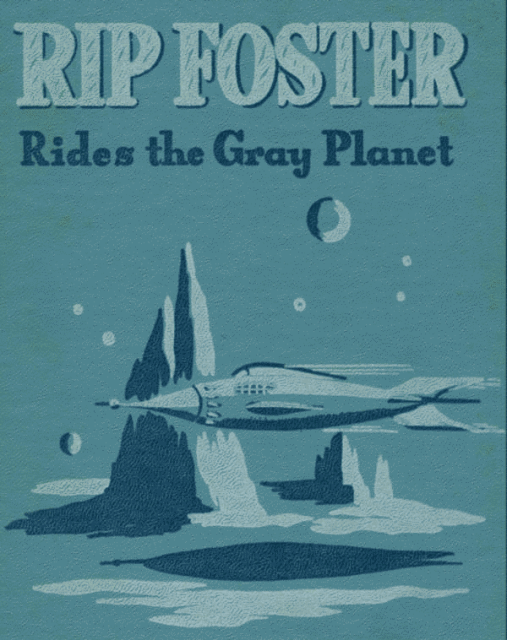
image01.png


I thought of searching for it and reading it again, with the recent news about asteroid mining going on. So here it is. Download and read here:
http://www.gutenberg.org/files/20147/20147-pdf.pdf

Incidentally, one of the characters, Space Marine Corporal Paulo Santos, is Filipino :) I'm Filipino so I was really excited about this novel as a kid :D

Happy reading :)

-RODION
 
Last edited:
Well, it has to be said that Rico was not a phillipine-national, but rather a federation citizen born on the Phillipines. The origin of the character is not unimportant though.
 
I've come across other books with a Filipino in them myself. Though the titles evades me on the ones I've read so far. And no they're not written by any Filipino author either.
 
Well, it has to be said that Rico was not a phillipine-national, but rather a federation citizen born on the Phillipines. The origin of the character is not unimportant though.

However, since he states his native language is Tagalog, he should be a national. Of course, given the extremely mixed ethnicity of most RAH characters, a good percentage of him could be anything. :)

He seems to identify a lot with that particular culture, anyway.
 
However, since he states his native language is Tagalog, he should be a national. Of course, given the extremely mixed ethnicity of most RAH characters, a good percentage of him could be anything. :)

He seems to identify a lot with that particular culture, anyway.

But I think he is as much Phillipine as I am Eastfalian Lower Saxon. I am part of a cultural context, have a dialect and heritage, but in first and second place, I am European and German, and he is Federation citizen.

It is part of the identity, but not all that there is.
 
But I think he is as much Phillipine as I am Eastfalian Lower Saxon. I am part of a cultural context, have a dialect and heritage, but in first and second place, I am European and German, and he is Federation citizen.

It is part of the identity, but not all that there is.

That character might be like me. I'm born in the Philippines. Of the same blood as a Filipino. I can speak the Tagalog language. However, I'm a U.S. citizen, thanks to my father (retired USAF SSgt). :lol:
 
It is part of the identity, but not all that there is.

Of course, especially considering that the first character described in the novel is a "Finno-turk from Iskander"...

Heinlein was fond of throwing casual references to characters' ethnicity or culture just to remind readers that the world is not WASP. Remember the Muslim Patrol officer in "Space Cadet"?
 
Of course, especially considering that the first character described in the novel is a "Finno-turk from Iskander"...

Heinlein was fond of throwing casual references to characters' ethnicity or culture just to remind readers that the world is not WASP. Remember the Muslim Patrol officer in "Space Cadet"?

Iskander? Sounds like that planet in the old Japanese Anime, Yamato Space Battleship. :lol:
 
Iskander? Sounds like that planet in the old Japanese Anime, Yamato Space Battleship. :lol:

It's implied to be a colony, and one whose inhabitants form a vast percentage of the Federal armed forces.

Don't know if Matsumoto took the name for planet Iscandar from the novel, but who knows...
 
Since you're on the subject of Uchuu Senkan Yamato, and this being the Orbiter Forum, I thought I'd share something I made two years ago...


...sorry couldn't resist :D

-RODION
 
Well, it has to be said that Rico was not a phillipine-national, but rather a federation citizen born on the Phillipines. The origin of the character is not unimportant though.
From Buenos Aires IIRC :)
 
(from Wikipedia)

Comparison with the novel

There are many differences between the original book and film; some of these include:

- The novel features an all-male Mobile Infantry and very little actual combat is described, while the film focuses on heavy action scenes and the love triangle between Johnny, Dizzy and Carmen.

- The romantic subplot does not appear in the novel; The Mobile Infantry is an all-male unit and the character of Dizzy Flores is a male trooper who dies in the first chapter.

- The novel is told exclusively from Johnny's point of view describing his hero's journey from indifferent high school student (Appreciation of Television is listed on his transcript) to elite “cap trooper”, and details the maturation process that entails. The film changes point-of-view focus between Johnny and Carmen (who in the novel never had any relationship beyond friendship).

- The absence in the film of the “power armor” that was a central plot device in the novel, and had an entire chapter devoted to its description and use.

- While the original novel has been accused of promoting militarism, fascism and military rule; the film satirizes these concepts by featuring news reports that are intensely fascist, xenophobic and propagandistic. Verhoeven stated in 1997 that the first scene of the film (a conscription advert for the mobile infantry) was adapted shot-for-shot from a scene from Leni Riefenstahl’s Triumph of the Will (an outdoor rally for the Reichsarbeitsdienst). Other references to Nazism in the movie include the Gestapo-like uniforms of commanding officers, Albert Speer-style architecture and the propagandistic dialogue. (Violence is the supreme authority!)

A report in an American Cinematographer article states that the Heinlein novel was optioned well into the pre-production period of the film, which had a working title of Bug Hunt at Outpost Nine; most of the writing team reportedly were unaware of the novel at the time. According to the DVD commentary, Paul Verhoeven never finished reading the novel, claiming he read through the first few chapters and became both "bored and depressed."

-RODION
 
The funny thing is that the original novel promotes civic values, rather than militarism. It's made clear that as long as you're in the Service (which is not only military) you cannot vote or be elected. If you ever go career, say goodbye to your franchise rights until you're out of it. As for fascism, I doubt many of those who have accused Starship Troopers of it have had any experience of what fascism is really like.
 
The funny thing is that the original novel promotes civic values, rather than militarism. It's made clear that as long as you're in the Service (which is not only military) you cannot vote or be elected. If you ever go career, say goodbye to your franchise rights until you're out of it. As for fascism, I doubt many of those who have accused Starship Troopers of it have had any experience of what fascism is really like.

Or that mobile infantry is not gunfodder at all, like the movie depicts it. They are special forces.

The civic values aspect was too much for me, Heinlein could have reduced the monologues a lot there if you ask me. It doesn't really explain why somebody chooses service, it rather apologizes it.
 
(from Wikipedia)


- While the original novel has been accused of promoting militarism, fascism and military rule;

It has certainly been accused of it, but only by people who stopped reading very, very early indeed. For instance, the point in the book that only those in a service career get to vote is taken as a statement endorsing military fascism, yet the book makes it clear that "service" also includes the police and even firefighters.

And Verhoeven and crew's treatment of Heinlein's aging widow after she had been assured that her late husband's work would be treated respectfully -- that was depressing. Although to be fair, Heinlein did warn her before his death. He swore off ever having any further dealings with Hollywood way back during the filming of "Destination Moon."

So do yourself a favor if you haven't already and read the book. And if you'd like to see a screen treatment, the computer animated Roughnecks: The Starship Troopers Chronicles is much better.

/End of threadjack.

:tiphat:
 
That was the movie version, but that had not much in common with the novel.
In the book too, as his mother was killed when they hit BA (dad was out of town but Rico didn't know that at the time)

The movie sucked, of course.
 
Back
Top