Graduate Astrodynamics at U.S. Universities

Arrowstar

Probenaut
Addon Developer
Joined
May 23, 2008
Messages
1,785
Reaction score
0
Points
36
Hi, everyone!

I'm currently looking into graduate school here in the U.S. I'm looking to pursue a degree in aerospace engineering. In particular, I am interested in getting into a career in mission design, trajectory work, perhaps navigation (in that order of interest and prioritization). My summer work here at JPL has given me some good names from within NASA, but I'm still having a hard time identifying graduate programs that can offer me the specialization I want. To date, I've only identified Purdue and Caltech as possible universities fitting my academic criteria.

Are there any recommendations for schools I can begin looking into that will satisfy what I've described above? Am I correct in my assessment of Purdue and Caltech? Keep in mind that I want to learn more than just orbital mechanics, I want to get some formal instruction into mission design and optimization as well, to whatever extent possible.

Thanks, folks. :)
 
Last edited:
Look at who is publishing, and what. In guidance control and flight mechanics, AIAA Journale of Guidance, Control and Dynamics:

Anthony J. Calise at the Flight Mechanics and Controls Group at the School of Aerospace Engineering, Georgia Institute of Technology.

Robert H. Bishop, University of Texas at Austin
David G. Hull, University of Texas at Austin
[ame="http://www.amazon.com/Optimal-Control-Applications-Mechanical-Engineering/dp/0387400702/ref=sr_1_1?ie=UTF8&s=books&qid=1247956874&sr=1-1"]Amazon.com: Optimal Control Theory for Applications (Mechanical Engineering Series): David G. Hull: Books[/ame]

Bruce A. Conway and associates at Univ. of Illinois at Urbana-Champlain

These are some of the people whos papers and students I try to keep up with. There are more, but it's dinner time and I'm getting yelled at. Check out journals in your fields. Good luck
 
Im currently studying just that at Texas A&M university. It ranks in the top ten in Graduate programs and has excellent hands on programs.

(Beware, shameless plug below, but in all honesty I have a blast and am learning an amazing amount of astrodynamics and hands on, practical, no BS spacecraft engineering, not academic paper dreams, actual vehicles and real application, with focus on rendezvous and docking)

As far as astrodynamics we have one of the best... Dr. John L. Junkins. He is prolific in the dynamics fields. He teaches excellent classes in celestial mechanics and Estimation of dynamical systems (teaches from Battin in the first, and his own excellent book in the second). He started with Marshall as a NASA intern in 1965 and published on some saturn v work, then McDonnel Douglas on Delta Rockets, worked on Polaris, and now spends his time working on Rendezvous and Docking navigation systems (such as the VisNav system and StarNav system tested on STS-107).

We also have healthy spacecraft attitude dynamics classes and optimization courses to flesh out mission planning interests (all with good professors see: Johnny Hurtado and Danielle Mortari).

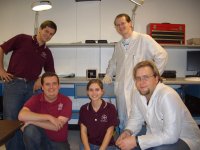
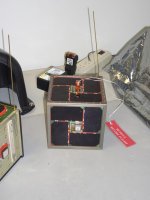
Of interesting note is a program I work on. I work on the schools student satellite program as a Graduate Manager under my advisor Dr. Helen Reed (we just launched our first satellite into space this week on Endeavour) called AggieSat2. Its part of a four year program with NASA johnson space center and the university of texas to develop an Autonomous Rendezvous and Docking Demonstrator. We have three more missions to cultivate those technologies and do a demonstration. All very hands on.

Thats me in the bottom left with our satellite

Anyways, my shameless .02

http://aero.tamu.edu/

www.aggiesat.org
 

Attachments

  • CIMG0871.jpg
    CIMG0871.jpg
    164.4 KB · Views: 34
  • sat2 bay.JPG
    sat2 bay.JPG
    23 KB · Views: 122
  • AGGIESAT2 2.jpg
    AGGIESAT2 2.jpg
    87.5 KB · Views: 24
Last edited:
Really cool! Good job missleman01. ;) But... you worked with UT and still called it AggieSat?! :P
 
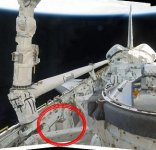
Also, may I ask where you obtained this image?

attachment.php


I cannot seem to find it in any of the STS-127 image galleries.

Thanks!
 
Missleman: Thanks for the info, I looked into the program yesterday online and saw some things I liked. It really sounds like they have you guys working on good stuff. Pardon me for asking (as I'm sure this is heretical or some such thing), but do you know anything about UT Austin's program that I couldn't just find online, either?

Keeping the thread on topic... is anyone else in the middle of graduate school or finished graduate school in AeroE with an emphasis on astrodynamics or mission design that has comments or hints about their programs? Or, heck, even if you're just studying AeroE somewhere, what do you think about the program?

mjessick: Thanks for the advice, I'll begin taking a look at published works as well.

Good info, people, thanks! :)
 
To answer, the image of the bay was a panorama combination of a couple of NASA photos taken on flight day 2 (maybe at nasaspaceflight, dont remember where I got it), but the source images are NASA standard from FD2.

As far as UT goes, they have a similar program.

Inside that launcher in the payload bay there are two satellites. AggieSat2 and Bevo-1 (Bevo is UT's longhorn cow mascot for those unfamiliar with the schools). For this first mission, we decided to split the mass. Each is a 5x5x5" cube developed independently. Both carry a GPS unit NASA JSC built for orbit work. Were giving it an engineering test as our icebreaking mission for the first in the series. We may or may not split mass on the subsequent 3 missions.

To stay on the thread, as far as UTs program goes, I think its similar in many respects. Bishop and Lightsey are both well published (and I know them because they are the PIs on Bevo-1, they have been at our design reviews with JSC) but I naturally know my own advisor better so im biased.

First off, I think youll get a good education in both UT and A&M. Naturally I am biased to A&M.

I might be bold enough to say that A&M has a better hands on focus, very practical. We come from very humble Texas roots. That is not to say UT isnt, but UT tends to be more known and "published". I think UT would tend to be a little more academic...and thats not a bad thing. I say that meaning UT does seem to do more mission concept work on the whole. Texas A&M does have more aeronautics, but with our Sat lab, and the growing dynamics and controls group, we have plenty of space education.

In the very end, if youre looking at these two texas schools it boils down to personality. Texas A&M tends to be a research school with a very conservative edge. UT tends to be a research school with a very liberal edge. Both are well funded by the state of texas and both have award winning labs, profs, and projects. Im conservative so I love Texas A&M. If you are conservative I highly suggest A&M. If you have a more liberal collegiate leaning, UT Austin is a very good fit.

Wherever you go, look for projects like AggieSat and Bevo-1. They are exceptional. Cornell, Utah State, Wash U, Stanford, Cal Poly have similar programs. Its a small community so I may see you around :)
 
Im currently studying just that at Texas A&M university. It ranks in the top ten in Graduate programs and has excellent hands on programs...

As far as UT goes, they have a similar program.

To stay on the thread, as far as UTs program goes, I think its similar in many respects. Bishop and Lightsey are both well published (and I know them because they are the PIs on Bevo-1, they have been at our design reviews with JSC) but I naturally know my own advisor better so im biased.

First off, I think youll get a good education in both UT and A&M. Naturally I am biased to A&M.

I might be bold enough to say that A&M has a better hands on focus, very practical. We come from very humble Texas roots. That is not to say UT isnt, but UT tends to be more known and "published". I think UT would tend to be a little more academic...and thats not a bad thing. I say that meaning UT does seem to do more mission concept work on the whole. Texas A&M does have more aeronautics, but with our Sat lab, and the growing dynamics and controls group, we have plenty of space education.

In the very end, if youre looking at these two texas schools it boils down to personality. Texas A&M tends to be a research school with a very conservative edge. UT tends to be a research school with a very liberal edge. Both are well funded by the state of texas and both have award winning labs, profs, and projects. Im conservative so I love Texas A&M. If you are conservative I highly suggest A&M. If you have a more liberal collegiate leaning, UT Austin is a very good fit.
You don't want to go to A&M, bad things happen there. UT Austin, on the other hand, is an excellent school in a great town. Hook 'em horns! :P (UT BS comp sci '08 here)

More validly...have you looked at Embry-Riddle at all? They only do aeronautical sorts of things, so I wouldn't be at all surprised if they were one of the best places to go.
 
Heh, I'll be sure to add both A&M and UT Austin to my 'investigate further' list. As for Embry-Riddle, I have looked into their program and they seemed to be primarily focused on the aeronautical with little mention of the space aspect of things. In any event, I didn't find anything there that struck me as what I was looking for, but if you have some working knowledge of the program, please share. :)
 
How about MIT? They have a very active dynamics group. I was there in '07 for a 6 month session and although I wasn't working in dynamics I was greatly impressed with some of the work they do. The only downside is that it's a little isolated from a lot of the other universities that offer similar courses, so collaboration is somewhat less developed. They do work closely with Goddard on a number of things, though, but that's mainly on the instrumantation development side.

Also, by "graduate degree" do you mean M.S of Ph.D? I'm guessing the former but want to check, it makes quite a difference.
 
I looked at MIT's website for information. It could be it's not well displayed, but I didn't see anything there that lead me to believe they are heavily involved in the field. I will take another look at some point, however. Also, I do mean the M.S. degree when I talk about graduate school. :)
 
MIT displays their expertise in published material rather than on a website, but that said their website is - i find - very well presented and easy to navigate. I doubt they're much good for a masters student, though, most of what they do is plain research so more suited to a doctoral candidate.
 
I'll keep that in mind, simonpro. Thanks.
 
Back
Top