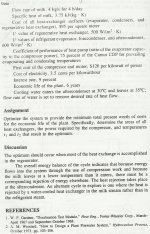
If I pump fluid @ 70C into something @ 300C the fluid will get warmer, right..?***
Well, that depends. Yes, as far as it goes. But it doesn't account for all the ways that heat is transfered. Heat, like water, tends to "seek it's own level", but there are a lot of factors that determine how well it can do that. If I pump a 70C liquid into a 300C heat exchanger, then the liquid will become warmer. But then again, that's what heat exchangers are for - facilitating the transfer of heat energy to another. In this case, the heat is being transfered by conduction - the fastest way to transfer heat.
There is no such thing as cold - there is only a lack of heat. Heat is form of energy, and cold is a lack of energy - not an "anti-energy". Heat Energy is transfered from one object to another in three ways.
Conduction works much like it does with electrical energy. Different materials conduct heat better or worse than others. The cooling fluid uses conduction to absorb heat from one heat exchanger (such as a heat sink on a CPU) and also to release that heat to another (such as a radiator).
Convection is easiest to understand as "using the air to conduct heat". A standard oven uses convection - it heats the interior of the oven and the food is placed into the hot environment and absorbs the ambient heat from the air. Higher end "convection" ovens used in restaurants also circulate the air in the oven, which speeds the heat transfer and allows shorter cooking times.
The last main way is radiation, such as Infra Red light.
And the whole "environment temperature" is misleading. It's based on the amount of radiant heat an object is exposed to, but seems based on an "average" level of absorption. In space, where heat can only transfer by radiation, actual heat only exists where there is matter to hold the heat. There is lots of "potential heat", or "heat energy", but there are many things that can affect whether or not that potential heat actually gets something hot.
Once above an atmosphere, convection doesn't really apply. The "environment" is at 300C, but what does that mean. Heat doesn't exist on it's own, it needs something physical to be hot, or else it's "heat radiation", or "potential heat". The way the radiator is designed has a lot to do with how hot the radiator will actually be. A surface that is reflective to IR energy, or is in the shade, will have a much lower temperature than the "environment". There are plenty of materials available that offer good conductance and low absorption of radiant energy. This means that a radiator that is designed to reflect heat energy from external radiation can effectively radiate heat energy even if it's in sunlight, if it isn't the most powerful source of radiation around. I doubt mankind will ever even begin to get a clue as to how much heat can be "sunk" into space through radiation, "Solar System Warming" from human causes is unlikely!



 . Finally, solar radiation would only be an issue when flying on the sunny side and in specific spacecraft attitudes (it varies in proportion to the cosine of the angle of incidence) that a competent pilot would avoid anyway, so I think it is safe to ignore. You are talking about a ship that runs on fairy-dust anyway...
 and leave it at that :shrug:
 ) is heated by both conduction and radiation, but definitely not by convection. The radiation comes from the surfaces in the oven, the walls and the elements themselves. The conduction is from the collisions of hot particles of air with the cooler particles in my pie. The convection is just responsible for moving the hot air around the oven and displacing the air that has been cooled by my pie.