

- Joined
- Feb 13, 2008
- Messages
- 5,398
- Reaction score
- 8
- Points
- 0
- Location
- Khimki
- Website
- tigerofsiberia.livejournal.com
The next Arianespace/Starsem Soyuz launch with Globalstar’s second-generation satellites is on schedule for a July 13 liftoff from the Baikonur Cosmodrome in Kazakhstan, as all six spacecraft have been fueled and integrated on their dispenser system.
This will be the second such mission conducted for Arianespace by its Starsem affiliate, and is to be followed by two more flights before year-end.
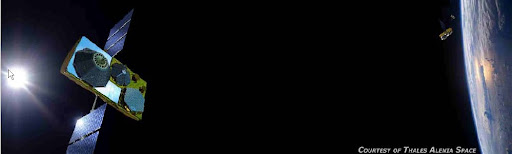
The second-generation Globalstar satellites were built by Thales Alenia Space and are trapezoidal in shape to allow their installation on the Soyuz’ conical-shaped dispenser.
Globalstar has contracted with Arianespace to conduct a series of four Soyuz launches, each of which will carry six of the second-generation satellites for a total of 24 spacecraft.
Once this new constellation is fully deployed, it will support Globalstar’s mobile satellite voice and data services for commercial and government customers in more than 120 countries.


Launch location:
Baikonur Launch pad no. 31/6 45°59'46.16"N, 63°33'51.29"E
Launch dates and times:
Notice: The launch has been postponed for 1 day from July 11th to July 12th due to technical problems.
[table="head"]{colsp=5}Launch times
Time Zone|Australia - Sydney/AEST|Baikonur (UTC+6)|Moscow / MSKS (UTC+4)/|Universal / UTC|Washington / EDT
Launch time:|12:27:00 p.m.|8:27:00|6:27:00|2:27:00|10:27:00 p.m.
on:|July 13, 2011|July 13, 2011|July 13, 2011|July 13, 2011|July 12, 2011
{colsp=5}[highlight][eventTimer]2011-07-13 02:27:00?before|after;%dd% Days %hh% Hours %mm% Minutes %ss% Seconds %c%[/eventTimer] Senary Globalstar-2 Launch[/highlight][/table]
Live Coverage Of The Launch:
TSENKI video streams (Russian + English)
http://www.tsenki.com/broadcast/broadcast/
Arianespace Webcast
http://www.videocorner.tv/index.htm
Launch Press Kit:
http://www.arianespace.com/images/launch-kits/launch-kit-pdf-eng/Globalstar2-press-kit-GB.pdf
PAYLOAD
Six Globalstar-2 satellites.
Spacecraft Overview
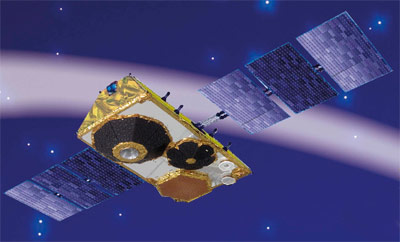
The new Globalstar second-generation low-earth-orbit (LEO) satellite is a three-axis stabilized spacecraft consisting of a trapezoidal main body with two solar arrays. In 2006 Globalstar contracted Thales Alenia Space for the design, manufacture and delivery of its second-generation constellation satellites. The first six satellites being launched were delivered to Globalstar in August of this year.
The new Globalstar spacecraft has a design life of 15 years or twice the design life of the first-generation Globalstar satellite. To help ensure the reliability of the design life, the second–generation robust architecture has placed particular emphasis on redundancy management and the radiation environment of the Globalstar operational orbit. In addition, each functional chain of the spacecraft was carefully analyzed for implementation of redundancies and tolerances to minimize single point failures.
Each second-generation Globalstar satellite weighs approximately 700 kg, offers power of 2.4 kW, is fitted with 16 transponders from C-to S-band, and 16 receivers from L- to C-band. The satellite's trapezoidal body is fabricated from rigid aluminum honeycomb panels. The trapezoidal shape was selected to conserve volume and to allow the mounting of multiple satellites under the launch vehicle's payload fairing.
The satellite operates in a body-stabilized, three-axis attitude control mode and uses sun sensors, Earth sensors, and a magnetic sensor to help maintain attitude. The satellite utilizes thrusters for orbit-raising, station-keeping maneuvers and attitude control. The spacecraft's thrusters are fueled from a single on-board propellant tank.
The two solar arrays provide the primary source of power for the Globalstar spacecraft, while batteries are used during eclipses and peak traffic periods. The solar panels automatically track the sun as the satellite orbits the Earth, providing maximum possible exposure to the sun's energy.
The heart of a Globalstar satellite is its communications systems. These systems are mounted on the Earth deck, which is the larger of the two rectangular faces on the satellite's body. There are C-band antennas for communications with Globalstar gateways, and L- and S-band antennas for communications with user terminals. Designed with the same frequencies and beam patterns which are compatible with existing gateway antenna and ground infrastructure, each second-generation satellite can be mixed seamlessly with Globalstar’s first-generation satellite operations.
Four launches of six satellites each will be conducted by Arianespace using the highly reliable Soyuz launch vehicle. The Soyuz has been used to successfully launch Globalstar satellites on nine previous occasions. Once the first six new Globalstar satellites are in operational orbit, the most immediate service improvement will benefit those customers who use the Company’s voice and Duplex data services. With each subsequent launch, these customers can expect a progressive return to the high reliability and service quality enjoyed before 2007.
The second-generation satellites are designed to support Globalstar’s current lineup of voice, Duplex and Simplex data products and services including the Company’s lineup of SPOT retail consumer products. Once the Company’s next-generation ground network is installed, the advanced constellation will also provide Globalstar customers with enhanced future services featuring increased data speeds of up to 256 kbps in a flexible Internet protocol multimedia subsystem (IMS) configuration. Products and services supported are expected to include: push-to-talk and multicasting, advanced messaging capabilities such as multimedia messaging or MMS, geo-location services, multi-band and multi-mode handsets, and data devices with GPS integration.
The payloads are built in Toulouse; the thermal subsystems and structures in Cannes; part of the side panels in Turin; several payload electronics units are developed and manufactured in L’Aquila and Madrid, which also produces passive microwave devices; the L-band antennas are produced in Rome and the onboard computer (OBPE) and part of the GPS receiver in Milan. Thales Alenia Space is also responsible for launch support services.
[table="head"]Characteristics|
[/table]
Launch Vehicle:
[table="head"]{colsp=2}Characteristics
 |[table="head"]{colsp=2}

[/table]
[/table]
Launch Profile
(NOT VALID, to be updated for Jul 13th)
[TABLE="head"]Time MSK|Time UTC|Event|Orbit reached
06:43:00|02:43:00|Launch|-
06:51:49|02:51:49|Upper composite separation|Suborbital trajectory 51.7°, 207.2 / -1009.7 km, T=76.5 min
06:52:49|02:52:49|230 s Fregat Burn|Transfer orbit 51.7°, 215.6 / 937.9 km, T=95.85 min
07:46:35|03:46:35|77 s Fregat Burn|Target orbit 51.99°, 920.6 / 933.1 км, T=103.35 min
08:21:40|04:21:40|First two satellites released|-
08:23:20|04:23:20|Next four satellites released|-
10:14:45|06:14:45|36 s Fregat Burn|Deposit orbit
[/TABLE]
Weather forecast for Baikonur, Kazakhstan for July 12, 2011 (9 a.m.)
Time|Temps|Wind Chill|Heat Index|UV Index|Dew Point|Relative Humidity|Precip|Snow|Clouds|Visibility|Wind|Weather
9 AM|+30°C|+30°C|+31°C|3 Moderate|+18°C|49%|0%|0%|14%|16KM|W 2.24 m/s|
 Sunny
Sunny
Sunrise/Sunset and associated twilight times for Baikonur on Tuesday, July 12, 2011
Times are local.
Event|Time
Astronomical twilight begins|3:39
Nautical twilight begins|4:42
Civil twilight begins|5:31
Sunrise|6:06
Transit (sun is at its highest)|13:52
Sunset|21:37
Civil twilight ends|22:12
Nautical twilight ends|23:01
Astronomical twilight ends|0:04
Source References
http://www.starsem.com
http://www.globalstar.com
http://www.thalesgroup.com
http://www.federalspace.ru
http://forum.nasaspaceflight.com
http://www.novosti-kosmonavtiki.ru
http://www.tvroscosmos.ru
http://www.tsenki.com
http://www.spacelaunchreport.com
http://www.intellicast.com/Local/Forecast.aspx
http://www.good-stuff.co.uk/suntimes/sunmap.php
This will be the second such mission conducted for Arianespace by its Starsem affiliate, and is to be followed by two more flights before year-end.
The second-generation Globalstar satellites were built by Thales Alenia Space and are trapezoidal in shape to allow their installation on the Soyuz’ conical-shaped dispenser.
Globalstar has contracted with Arianespace to conduct a series of four Soyuz launches, each of which will carry six of the second-generation satellites for a total of 24 spacecraft.
Once this new constellation is fully deployed, it will support Globalstar’s mobile satellite voice and data services for commercial and government customers in more than 120 countries.
Launch location:
Baikonur Launch pad no. 31/6 45°59'46.16"N, 63°33'51.29"E
Launch dates and times:
Notice: The launch has been postponed for 1 day from July 11th to July 12th due to technical problems.
[table="head"]{colsp=5}Launch times
Time Zone|Australia - Sydney/AEST|Baikonur (UTC+6)|Moscow / MSKS (UTC+4)/|Universal / UTC|Washington / EDT
Launch time:|12:27:00 p.m.|8:27:00|6:27:00|2:27:00|10:27:00 p.m.
on:|July 13, 2011|July 13, 2011|July 13, 2011|July 13, 2011|July 12, 2011
{colsp=5}[highlight][eventTimer]2011-07-13 02:27:00?before|after;%dd% Days %hh% Hours %mm% Minutes %ss% Seconds %c%[/eventTimer] Senary Globalstar-2 Launch[/highlight][/table]
Live Coverage Of The Launch:
TSENKI video streams (Russian + English)
http://www.tsenki.com/broadcast/broadcast/
Arianespace Webcast
http://www.videocorner.tv/index.htm
Launch Press Kit:
http://www.arianespace.com/images/launch-kits/launch-kit-pdf-eng/Globalstar2-press-kit-GB.pdf
PAYLOAD
Six Globalstar-2 satellites.
Spacecraft Overview
The new Globalstar second-generation low-earth-orbit (LEO) satellite is a three-axis stabilized spacecraft consisting of a trapezoidal main body with two solar arrays. In 2006 Globalstar contracted Thales Alenia Space for the design, manufacture and delivery of its second-generation constellation satellites. The first six satellites being launched were delivered to Globalstar in August of this year.
The new Globalstar spacecraft has a design life of 15 years or twice the design life of the first-generation Globalstar satellite. To help ensure the reliability of the design life, the second–generation robust architecture has placed particular emphasis on redundancy management and the radiation environment of the Globalstar operational orbit. In addition, each functional chain of the spacecraft was carefully analyzed for implementation of redundancies and tolerances to minimize single point failures.
Each second-generation Globalstar satellite weighs approximately 700 kg, offers power of 2.4 kW, is fitted with 16 transponders from C-to S-band, and 16 receivers from L- to C-band. The satellite's trapezoidal body is fabricated from rigid aluminum honeycomb panels. The trapezoidal shape was selected to conserve volume and to allow the mounting of multiple satellites under the launch vehicle's payload fairing.
The satellite operates in a body-stabilized, three-axis attitude control mode and uses sun sensors, Earth sensors, and a magnetic sensor to help maintain attitude. The satellite utilizes thrusters for orbit-raising, station-keeping maneuvers and attitude control. The spacecraft's thrusters are fueled from a single on-board propellant tank.
The two solar arrays provide the primary source of power for the Globalstar spacecraft, while batteries are used during eclipses and peak traffic periods. The solar panels automatically track the sun as the satellite orbits the Earth, providing maximum possible exposure to the sun's energy.
The heart of a Globalstar satellite is its communications systems. These systems are mounted on the Earth deck, which is the larger of the two rectangular faces on the satellite's body. There are C-band antennas for communications with Globalstar gateways, and L- and S-band antennas for communications with user terminals. Designed with the same frequencies and beam patterns which are compatible with existing gateway antenna and ground infrastructure, each second-generation satellite can be mixed seamlessly with Globalstar’s first-generation satellite operations.
Four launches of six satellites each will be conducted by Arianespace using the highly reliable Soyuz launch vehicle. The Soyuz has been used to successfully launch Globalstar satellites on nine previous occasions. Once the first six new Globalstar satellites are in operational orbit, the most immediate service improvement will benefit those customers who use the Company’s voice and Duplex data services. With each subsequent launch, these customers can expect a progressive return to the high reliability and service quality enjoyed before 2007.
The second-generation satellites are designed to support Globalstar’s current lineup of voice, Duplex and Simplex data products and services including the Company’s lineup of SPOT retail consumer products. Once the Company’s next-generation ground network is installed, the advanced constellation will also provide Globalstar customers with enhanced future services featuring increased data speeds of up to 256 kbps in a flexible Internet protocol multimedia subsystem (IMS) configuration. Products and services supported are expected to include: push-to-talk and multicasting, advanced messaging capabilities such as multimedia messaging or MMS, geo-location services, multi-band and multi-mode handsets, and data devices with GPS integration.
The payloads are built in Toulouse; the thermal subsystems and structures in Cannes; part of the side panels in Turin; several payload electronics units are developed and manufactured in L’Aquila and Madrid, which also produces passive microwave devices; the L-band antennas are produced in Rome and the onboard computer (OBPE) and part of the GPS receiver in Milan. Thales Alenia Space is also responsible for launch support services.
[table="head"]Characteristics|
Globalstar-2
Picture:
|
Customer:
|- Globalstar Inc.

Prime contractor:
|- Thales Alenia Space

Mass at Separation:
|- 693 kg
Stabilization:
|- 3 axis stabilized
Dimensions:
|- ?
Batteries:
|- 1.7 kW at the end of service
Life time:
|- 15 years
Transponders:
|- 32
Bands:
|- L-, S-, C-
Body:
|- Aluminium frame, honeycomb panels
Propulsion:
|- Single propellant engine (Hydrazine, 154 kg), with variable thrust (4:1), 4 RCS engines 1 N thrust each, Magnetic momentum engines.
Computers:
|- ERC-32SC 32-bit RICS processor, 14 MIPS microprocessors, Memory: SRAM 512 kb, EEPROM 128 kb
LEO Navigation:
|- Using GPS.
[/table]
Launch Vehicle:
[table="head"]{colsp=2}Characteristics
Soyuz-2.1a
Prime contractor:
|- Samara Space Sentre (Energia Holding enterprise)

GRAU Index:
|- 14A14
Height:
| 51.1 mDiameter:
| max 10.3 mLiftoff mass:
| 313 metric tonnesPayload mass:
| up to 6830 kg (a launch to LEO from Plesetsk)1st stage (boosters B, V, G, D):
|- 4 X RD-107 engines
- Propellants (T-1 Kerosene and LOX)
- Thrust/ISP in vacuum - / 320.2 s
- Thrust/ISP at sea level 85.6 tonnes / 263.3 s
2nd stage (core A):
|- 1 X RD-108 engine
- Propellants (T-1 Kerosene and LOX)
- Thrust/ISP in vacuum 94 tonnes / 320.6 s
- Thrust/ISP at sea level 80.8 tonnes / 257.7 s
3rd stage (block I):
|- 1 X RD-0110 engine
- Propellants (T-1 Kerosene and LOX)
- Thrust/ISP in vacuum 30.38 tonnes / 326 s
Upper Stage:
|
- GRAU Index: -
- Common Name: Fregat (meaning Frigate)
- Designer & Manufacturer: Lavochkin Association (NPO)
- Dimensions: Length 2.4 m, Diameter (max) 3.350 m
- Empty Mass 930 kg
- Propellants 5250 kg max
- Main Engine: 1 X S5.92
- Thrust in vacuum 2.0 tonnes of force (full power)
- Thrust in vacuum 1.4 tonnes of force (small power)
- ISP 333.2 s
Payload Fairing:
|- Diameter 3.7 m
- Length 7.7 m
[/table]
[/table]
Launch Profile
(NOT VALID, to be updated for Jul 13th)
[TABLE="head"]Time MSK|Time UTC|Event|Orbit reached
06:43:00|02:43:00|Launch|-
06:51:49|02:51:49|Upper composite separation|Suborbital trajectory 51.7°, 207.2 / -1009.7 km, T=76.5 min
06:52:49|02:52:49|230 s Fregat Burn|Transfer orbit 51.7°, 215.6 / 937.9 km, T=95.85 min
07:46:35|03:46:35|77 s Fregat Burn|Target orbit 51.99°, 920.6 / 933.1 км, T=103.35 min
08:21:40|04:21:40|First two satellites released|-
08:23:20|04:23:20|Next four satellites released|-
10:14:45|06:14:45|36 s Fregat Burn|Deposit orbit
[/TABLE]
Weather forecast for Baikonur, Kazakhstan for July 12, 2011 (9 a.m.)
9 AM|+30°C|+30°C|+31°C|3 Moderate|+18°C|49%|0%|0%|14%|16KM|W 2.24 m/s|
Sunrise/Sunset and associated twilight times for Baikonur on Tuesday, July 12, 2011
Times are local.
Astronomical twilight begins|3:39
Nautical twilight begins|4:42
Civil twilight begins|5:31
Sunrise|6:06
Transit (sun is at its highest)|13:52
Sunset|21:37
Civil twilight ends|22:12
Nautical twilight ends|23:01
Astronomical twilight ends|0:04
Source References
http://www.starsem.com
http://www.globalstar.com
http://www.thalesgroup.com
http://www.federalspace.ru
http://forum.nasaspaceflight.com
http://www.novosti-kosmonavtiki.ru
http://www.tvroscosmos.ru
http://www.tsenki.com
http://www.spacelaunchreport.com
http://www.intellicast.com/Local/Forecast.aspx
http://www.good-stuff.co.uk/suntimes/sunmap.php
Last edited:


