"Efesto" mission to Venus

K_Jameson

Well-known member
Joined
Dec 30, 2009
Messages
1,228
Reaction score
229
Points
78
efesto10.jpg


A Neptune-1 rocket will launch the Efesto interplanetary space probe to Venus. Efesto is designed as a two-parts spacecraft:
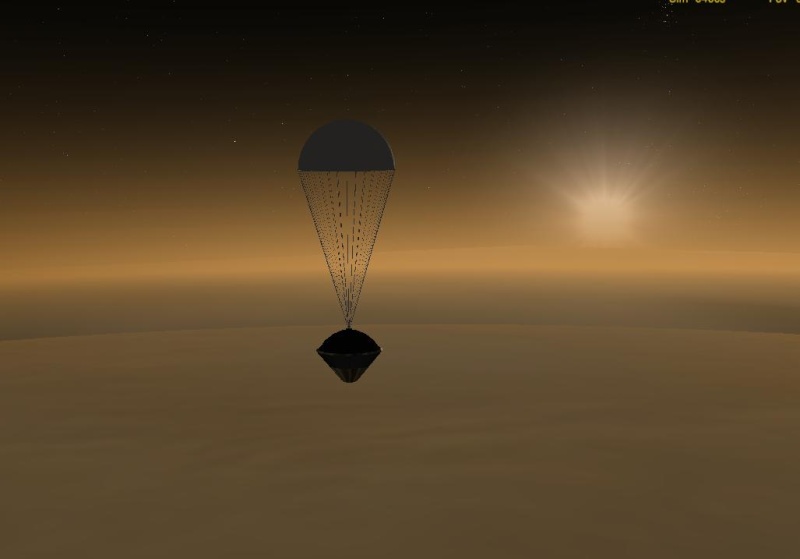
- a descent probe to study the fiery Venusian atmosphere and surface
- an orbiter for remote observations.
Venus arrival is scheduled for April 8, 2014.

Launch is scheduled for Sunday, October 13 at 10:36:00 UTC from Capo Passero, Pad J-C

Mission launch will be broadcasted live on Orbiter Live Missions:

http://www.livestream.com/orbiterlivemissions

descen10.jpg


---------- Post added at 06:22 PM ---------- Previous post was at 06:19 PM ----------

The spacecraft is a derivation of another probe under development, the Shakespeare/Pope space probe for Uranus.


Last edited:
FOI is the most ambitious space agency in the world.
 
I'm guessing that the Shakespeare/Pope probe uses RTGs in place of the solar panels this one uses...
 
Venus surface probe

Back when I was working on my Ph.D (Aerospace Engineering) my classmates and I used to run contests to see who could design a space probe to last the longest on the surface of Venus. We made the assumption that the probes would reach the surface in the same state so we didn't have to worry about getting to the surface.

It was always fun to see which environmental condition killed a probe. Was it the 900 degree F heat that melted the spacecraft, the 90 atmospheres of pressure that crushed it, or the sulfuric acid in the air that disolved it.

By the end of my third year we were all able to build probes that would survive any 1 of those conditions indefinitely, but eventually, the other 2 would cause a failure that would doom the probe.

We had a nifty little FORTRAN program that did all the heat and pressure analysis with a custom module to represent the acid effects.

Longest any of our probes lasted? A little over 6 hours. But that didn't take into account what damage would be done to the probe on the way to the surface.

Dantassii
HUMONGOUS IMS shipbuilder
 
We had a nifty little FORTRAN program that did all the heat and pressure analysis with a custom module to represent the acid effects.

Could you share the program, or, at least, the algorithms used?
 
Could you share the program, or, at least, the algorithms used?

Or a student paper based on that program... could be turned into an add-on for Orbiter. :lol:
 
Could you share the program, or, at least, the algorithms used?

I didn't write the code, so I don't know what the algorithm was. Sadly, the only copy I had of the source code was stored on a 3.5" floppy disk (it wasn't that big) and I lost all of my 3.5" floppies when I moved to my current abode in 1999. Something about the magnets on the side of the moving truck that we used to move all my worldly belongings...

Dantassii
HUMONGOUS IMS shipbuilder
 
The work continues. Integration simulation with Neptune-1. The launcher will make use of a third stage Fregat for the last part of the TVI manoeuvre.


---------- Post added 09-25-13 at 09:05 AM ---------- Previous post was 09-24-13 at 06:25 PM ----------

Where do you get the textures for your spacecraft?

I don't remember exactly where...
surely i googled "goldfoil", nothing more...
 
Specifically, I've been looking for a good texture for the gold foil-like insulation.


If it helps, it's called kapton.

[ame="http://en.wikipedia.org/wiki/Kapton"]Kapton - Wikipedia, the free encyclopedia[/ame]
 
If it helps, it's called kapton.

Actually, the real term is "MLI" or "multilayer insulation".

http://en.wikipedia.org/wiki/Multi-layer_insulation

If you want to make your own texture, just buy a cheap thermal blanket as you have in your cars first aid kit, fold it a few times, and photograph it. Its just Kapton MLI as well, just with less layers and sophistication.

The difference is the price: The thermal blanket costs a few dozen cent per square meter, the MLI starts around 10,000 € per square meter. (But I am sure, would more applications for spacegrade MLI be found on Earth, the market price could be a few Euros per square meter, the low production pushes the prices)
 
Detail of the integration with the Neptune launcher (only the third stage Fregat is showed).


In the red circle, the FOIsat, a cubesat that will fly as secondary payload for this launch.
This particular FOIsat will be released after the TVI maneuvre, short time before Efesto and will be the first interplanetary cubesat of this series. Is a 60x60x60 cm cube with some basic instruments (temperature and radiation sensors; micrometeoroid detector) and an overall weight of 16 kg. The tracking of the FOIsat is expected to last some days after the LEO departure.

---------- Post added at 03:51 PM ---------- Previous post was at 09:52 AM ----------

Here, a list of the instruments carried by the spacecraft.

Orbiter:
- UV Spectrometer
- Visual and Infrared Mapping Spectrometer (VIMS)
- Multispectral camera
- Solar-Occultation Fourier Transform Spectrometer
- Cosmic dust analyzer
- Magnetometers
- Radio and Plasma Wave
- Langmuir probes
- Magnetic search coils
- Charge energy mass spectrometer
- Low energy mass spectrometer
- Radar

Atmospheric probe:
- IR radiometer
- Stereoscophic camera
- Gas Chromatograph / mass spectrometer (GCMS)
- Lightning detector
- Net Flux Radiometer
- Nephelometer
- Anemometer
- Radar altimeter
- Temperature and pressure sensors

All the orbiter instruments, except for the Fourier spectrometer and the multispectral camera, are identical to those carried by the upcoming Shakespeare probe, that, in turn, are a reduction and semplification of the Galileo II's instruments.
The atmospheric probe instruments are unchanged from the original, and simpler, version of the mission.

 
Last edited:
A classic comparison between Efesto and the Flagship-class Galileo II spacecraft.


Efesto, orbiter+probe, has an overall weight, fully fueled, of 2,351 kg.
The Galileo II overall weight is 12,731 kg.
 
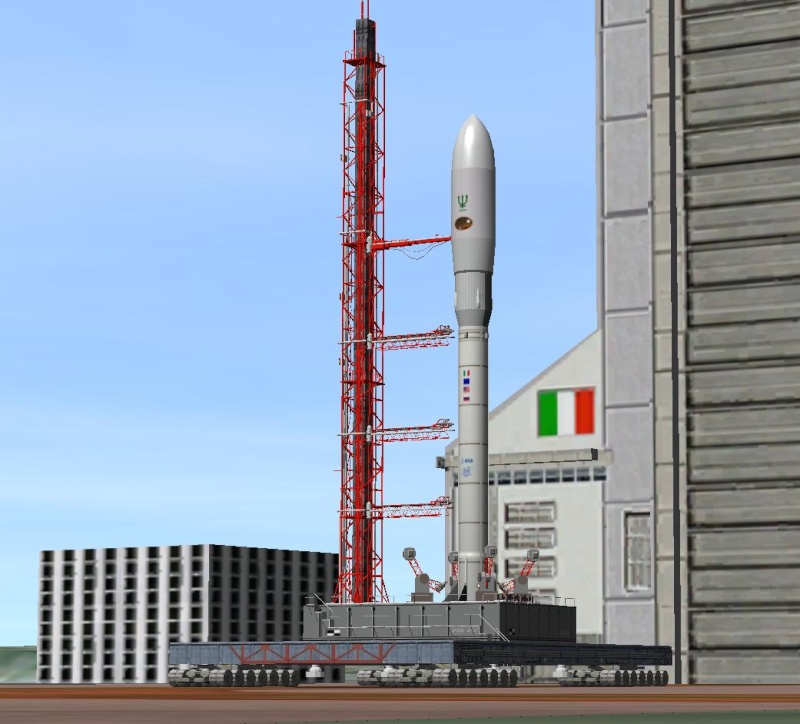
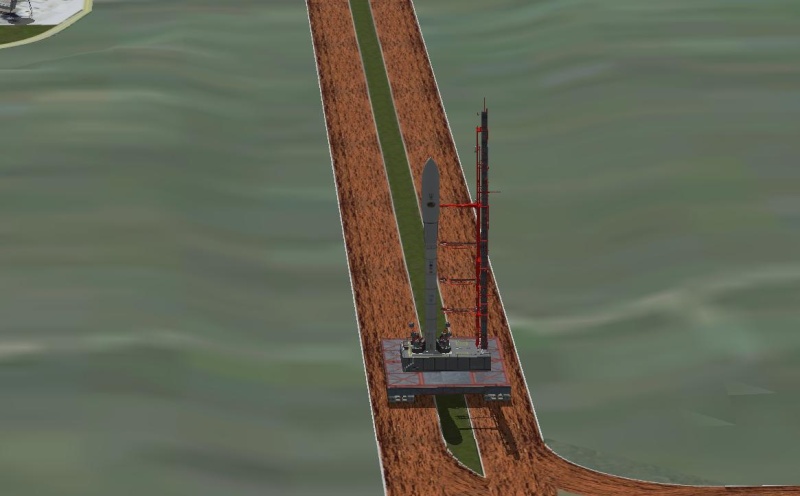
This morning at Capo Passero, rollout of the Giano transporter, carrying the Neptune-1 rocket and the Efesto interplanetary probe.

rollou10.jpg


rollou11.jpg
 
The classic slides depicting the spacecraft.


Last edited:
Back
Top