

Well the end of year is fast approaching! But just before we celebrate the coming of 2014, here's one last Proton launch in just an hour from now. And maybe it's time to get scared too, as the payload is Express-AM5, the latest member of communication satellites owned by the state-owned Russian Satellite Communications Company. Would the Russian-built 3.4 tonne satellite, based on a new designed satellite platform, make it to the planned orbit? We shall see, we shall see....


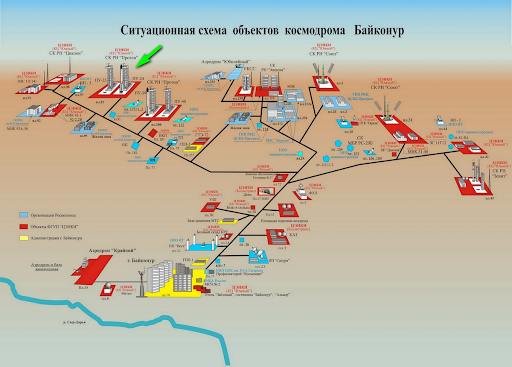
Launch location:
Baikonur Launch pad no. 81/24 46°4'15.38"N, 62°59'5.11"E
Launch dates and times:
[table="head"]{colsp=6}Launch times
Time Zone|
{colsp=6}
[/table]
Live Coverage Of The Launch:
PAYLOAD
Express-AM5 communication satellite:

Mission Summary
The Ekspress-AM 5 is a communications satellites for russian domestic communication services. The lifetime of the spacecraft has been increased to 15 years. While the spacecraft itself is built by russian RSCC (Kosmicheskiya Svyaz), the communication payloads are built by MacDonald, Dettwiler and Associates Ltd. (MDA). It consists of 30 C-band, 40 Ku-band, 12 Ka-band and 2 L-band transponders.
On Aug. 12, 2009, ISS Reshetnev reached an agreement with Russian Satellite Communications Company, RSCC, to develop a pair of new-generation communications satellites, Ekspress-AM5 and Ekspress-AM-6. The 3,400-kilogram Ekspress-AM5 would be the first spacecraft based on ISS Reshetnev's Ekspress-2000 platform, the company's largest standard bus. According to ISS Reshetnev, Ekspress-2000 could accommodate 10 antennas and 84 transponders. The 1,070-kilogram communications payload onboard Ekspress-AM5 included C-band, Ku-band, L-band transponders and, for the first time in the Russian practice, Ka-band transponders. The Canadian company, MDA, won a contract to build transponders and antennas for the spacecraft.
The satellite will provide a broad range of digital communications and broadcast services, including government communications.
The onboard power supply system featuring for the first time five-section solar panels with a total area of 84 square meters and a span of more than 33 meters, was designed to provide at least 12.1 kilowatts of electricity to the payload and a total power output of 15 kilowatts.
Ekspress-AM5 and AM6 were also equipped with four electric engines, SPD-100V, using 300 kilograms of xenon gas as a propellant to insert these satellites into their final orbits three or four months after launch. The new propulsion system helped to resolve the payload limitations of the Proton rocket providing a total of 150 kilograms in mass savings.
The spacecraft was to be positioned at 140 degrees East longitude over the Equator and have a life span of 15 years. The satellite was ensured for 7.08 billion rubles.
The satellite is 7.723 millimeters tall.
[table="head"]{colsp=2}Summary
Parameter|Value
[/table]
[table="head"]Characteristics|
|
 [/table]
Launch Vehicle:
[table="head"]{colsp=2}Characteristics
 |[table="head"]{colsp=2}

[/table]
[/table]
The vehicle's reliability statistics according to http://www.spacelaunchreport.com/log2013.html#rate:
Proton-M Ascent Profile
The Proton-M first three stages place the orbital unit (OU), which consists of a Breeze-M upper stage, adapter system and the two satellites, into a 51.5° inclination suborbital trajectory.
Proton-M powered flight lasts 582 seconds. The OU powered flight begins at the moment of the third stage separation.

Immediately after the separation of the third stage booster, the Breeze-M stability engines start, damping the angular velocities of the third stage separation and then providing orbital unit orientation and stability during coast flight along a suborbital trajectory to await the first burn. The upper stage follows a five-burn injection profile.

Express-AM5 Ascent Timeline
(to be posted later)
Weather forecast for Baikonur, Kazakhstan on December 26, 2013 (5 p.m.)
Snow flurries early. Cloudy with a few snow showers possible late at night. Low -6C. Winds NNW at 15 to 25 kmh. Chance of snow 30%.
Time|Temps|Dew Point|Relative Humidity|Precip|Snow|Cloud cover|Pressure|Wind|Weather
5 PM|-1°C|-3°C|90%|0%|10%|76%|1026 hPa|23 km/h WNW|
 Mostly Cloudy
References
http://www.federalspace.ru
http://tvroscosmos.ru
http://www.khrunichev.ru
http://tihiy.fromru.com/Rn/RN_Proton.htm
http://www.satlaunch.net
http://rscc.ru
http://www.russianspaceweb.com/proton_ekspress_am5.html
http://space.skyrocket.de
http://www.tsenki.com
http://forum.nasaspaceflight.com
http://www.novosti-kosmonavtiki.ru
http://www.spacelaunchreport.com
http://english.wunderground.com/q/locid:KZXX0055
Launch location:
Baikonur Launch pad no. 81/24 46°4'15.38"N, 62°59'5.11"E
Launch dates and times:
[table="head"]{colsp=6}Launch times
Time Zone|
Baikonur / UTC+6
| Moscow / UTC+4
| Universal / UTC
| Washington / EST
| Los Angeles / PST
Launch time (Primary):
|16:49:56
|14:49:56
|10:49:56
|05:49:56
|02:49:56
on:
|Dec. 26, 2013
|Dec. 26, 2013
|Dec. 26, 2013
|Dec. 26, 2013
|Dec. 26, 2013
{colsp=6}
[highlight][eventTimer]2013-12-26 10:49:56?before|after;%dd% Days %hh% Hours %mm% Minutes %ss% Seconds %c%[/eventTimer] Express-AM5 Launch[/highlight]
[/table]
Live Coverage Of The Launch:
- TSENKI Video Streams: http://www.tv-tsenki.com/livechoose.php
- Khrunichev COOPI (login: ? password: ?): http://coopi.khrunichev.ru/main.php?id=200
- Owners of PDA can watch the launch in test mode on: http://www.space-center.ru
PAYLOAD
Express-AM5 communication satellite:
Mission Summary
The Ekspress-AM 5 is a communications satellites for russian domestic communication services. The lifetime of the spacecraft has been increased to 15 years. While the spacecraft itself is built by russian RSCC (Kosmicheskiya Svyaz), the communication payloads are built by MacDonald, Dettwiler and Associates Ltd. (MDA). It consists of 30 C-band, 40 Ku-band, 12 Ka-band and 2 L-band transponders.
On Aug. 12, 2009, ISS Reshetnev reached an agreement with Russian Satellite Communications Company, RSCC, to develop a pair of new-generation communications satellites, Ekspress-AM5 and Ekspress-AM-6. The 3,400-kilogram Ekspress-AM5 would be the first spacecraft based on ISS Reshetnev's Ekspress-2000 platform, the company's largest standard bus. According to ISS Reshetnev, Ekspress-2000 could accommodate 10 antennas and 84 transponders. The 1,070-kilogram communications payload onboard Ekspress-AM5 included C-band, Ku-band, L-band transponders and, for the first time in the Russian practice, Ka-band transponders. The Canadian company, MDA, won a contract to build transponders and antennas for the spacecraft.
The satellite will provide a broad range of digital communications and broadcast services, including government communications.
The onboard power supply system featuring for the first time five-section solar panels with a total area of 84 square meters and a span of more than 33 meters, was designed to provide at least 12.1 kilowatts of electricity to the payload and a total power output of 15 kilowatts.
Ekspress-AM5 and AM6 were also equipped with four electric engines, SPD-100V, using 300 kilograms of xenon gas as a propellant to insert these satellites into their final orbits three or four months after launch. The new propulsion system helped to resolve the payload limitations of the Proton rocket providing a total of 150 kilograms in mass savings.
The spacecraft was to be positioned at 140 degrees East longitude over the Equator and have a life span of 15 years. The satellite was ensured for 7.08 billion rubles.
The satellite is 7.723 millimeters tall.
[table="head"]{colsp=2}Summary
Parameter|Value
Working Orbit:
|GEOOrbital Location:
|140° EastCoverage:
|Siberia/Far-eastern RussiaApA at separation:
|35401 kmPeA at separation:
|35401 kmInc at separation:
|0°[/table]
[table="head"]Characteristics|
Express-AM5
Customer:
|- Russian Satellite Communications Company
Prime contractor:
|- JSC Information Satellite Systems
Platform:
|- Express-2000
Mass at Separation:
|- 3400 kg
Dry Mass:
|- ?
Stabilization:
|- 3 axis stabilized
Dimensions (stowed):
|- ?
Batteries:
|- five-section solar panels with total area = 84 m^2 and a span of >33 m, providing 15 kW of power
Payload:
|- 30 C-band transponders
- 40 Ku-band transponders
- 12 Ka-band transponders
- 2 L-band transponders
Life time:
|- 15 years
C-band coverage:
|

Ka-band coverage:
|
Ku-band coverage:
|


|
Launch Vehicle:
[table="head"]{colsp=2}Characteristics
Proton-M / Briz-M
Prime contractor:
|- Khrunichev Space Centre

GRAU Index:
|- 8K82KM
Height:
| 58.2 m with upper stage and payload fairingDiameter:
| max 7.4 mLiftoff mass:
| 705 metric tonnesPayload mass:
| ~22 tonnes at LEO1st stage:
|- 6 X RD-275 engines
- Empty 30.6 tonnes
- Propellants 419.41 tonnes (UDMH and NTO)
- Thrust in vacuum 1069.8 tonnes of force
- Thrust at sea level 971.4 tonnes of force
2nd stage:
|- 1 X RD-0211 engine 3 X RD-0210 engines
- Empty 11.4 tonnes
- Propellants 156.113 tonnes (UDMH and NTO)
- Thrust in vacuum 237.4 tonnes of force
3rd stage:
|- 1 X RD-0213 engine & 1 X RD-0214 vernier engine
- Empty 3.7 tonnes
- Propellants 46.562 tonnes (UDMH and NTO)
- Thrust in vacuum 59.36 (core) + 3.15 (vernier) tonnes of force
Upper Stage:
|
- GRAU Index: 14S43
- Common Name: Briz-M
- Designer & Manufacturer: Khrunichev Space Centre
- Dimensions: Length 2.654 m, Diameter 4 m
- Empty Mass 2.2 tonnes
- Propellants 6 660 kg UDMH + 13 260 kg N2O4
- Flight time: no less than 24 hours
- Main Engine: 1 X 14D30
- Thrust in vacuum 2.0 tonnes of force
- ISP 328.6 s
- Main engine restarts: up to 8 times
- Precision Manoeuvering Engines: 4 X 11D458
- Thrust in vacuum 400 N each
- ISP 252 s
- RCS Engines: 12 X 17D58E
- Thrust in vacuum 13.3 N each
- ISP 274 s
Payload Fairing:
|- Diameter 4.35 m
- Length 11.6 m
[/table]
[/table]
The vehicle's reliability statistics according to http://www.spacelaunchreport.com/log2013.html#rate:
Code:
================================================================
Vehicle     Successes/Tries Realzd Pred  Consc. Last     Dates
                             Rate  Rate* Succes Fail
================================================================
Proton-M/Briz-M   64    70    .91  .90      8    12/08/12 2001-
Proton-M Ascent Profile
The Proton-M first three stages place the orbital unit (OU), which consists of a Breeze-M upper stage, adapter system and the two satellites, into a 51.5° inclination suborbital trajectory.
Proton-M powered flight lasts 582 seconds. The OU powered flight begins at the moment of the third stage separation.
Immediately after the separation of the third stage booster, the Breeze-M stability engines start, damping the angular velocities of the third stage separation and then providing orbital unit orientation and stability during coast flight along a suborbital trajectory to await the first burn. The upper stage follows a five-burn injection profile.
Express-AM5 Ascent Timeline
(to be posted later)
Weather forecast for Baikonur, Kazakhstan on December 26, 2013 (5 p.m.)
Snow flurries early. Cloudy with a few snow showers possible late at night. Low -6C. Winds NNW at 15 to 25 kmh. Chance of snow 30%.
5 PM|-1°C|-3°C|90%|0%|10%|76%|1026 hPa|23 km/h WNW|
References
http://www.federalspace.ru
http://tvroscosmos.ru
http://www.khrunichev.ru
http://tihiy.fromru.com/Rn/RN_Proton.htm
http://www.satlaunch.net
http://rscc.ru
http://www.russianspaceweb.com/proton_ekspress_am5.html
http://space.skyrocket.de
http://www.tsenki.com
http://forum.nasaspaceflight.com
http://www.novosti-kosmonavtiki.ru
http://www.spacelaunchreport.com
http://english.wunderground.com/q/locid:KZXX0055
Last edited:


