Let me ask a question: if you are asked to list what you would think worth the name "paper rocket", what would you list?
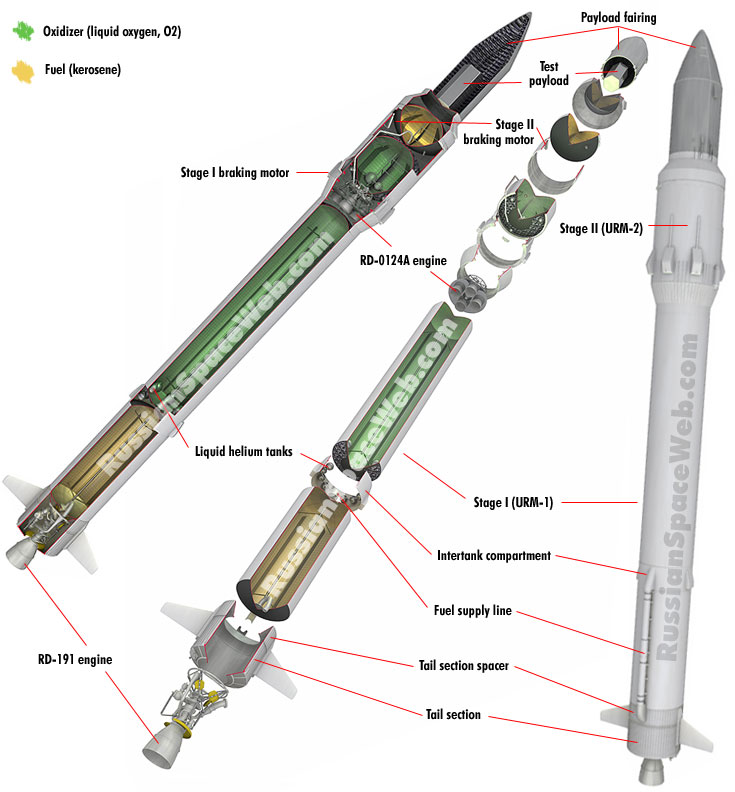
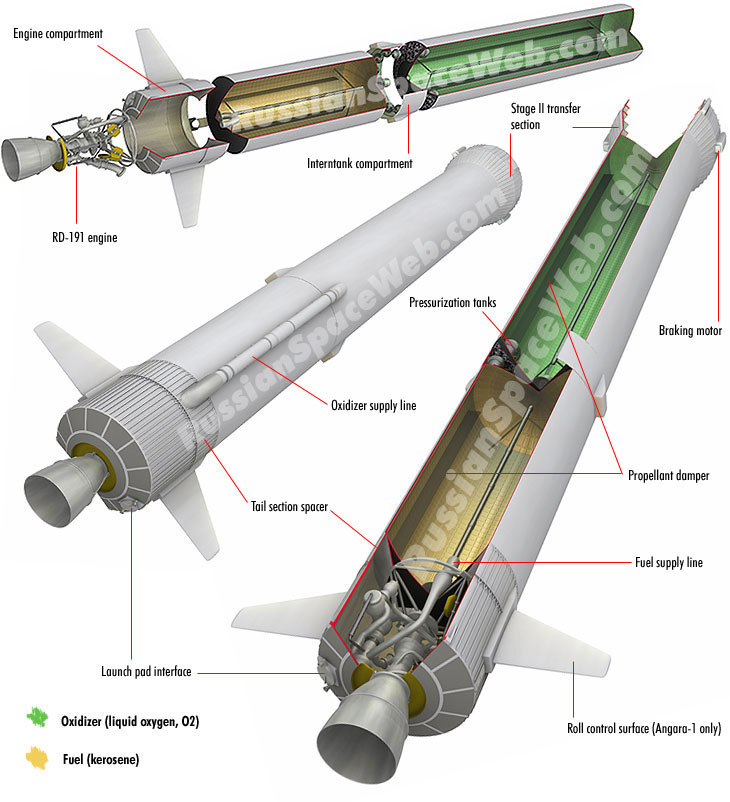
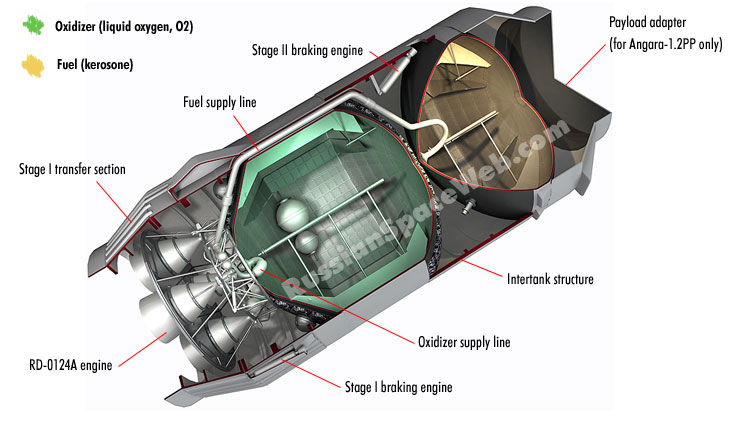
Well Ares V and SLS shifty and Nova comes to mind, but one solid long time member of this list is Russia's "always in the future" mainstay rocket family - Khrunichev's Angara rocket. Poised as the one-stop-for-all solution to replace the notorious Proton rocket and also various smaller sized rockets (like the Rocokt and the retired Tsyklon), one of the main selling points of Russia's next-generation satellite lifting workhorse was the use of common rocket stages (Universal Rocket Module, URM) as the building blocks across all configurations, with tried-and-true kerosene powered engines powering them. The URM-1 first stage/boosters uses the RD-191 engine, i.e. "half-a-RD-180" or "one-quarter-RD-171" that shares lineage to the engines powering the Energia, Atlas V and Zenit rockets, and has already powered KSLV-I, the first (south) Korean rocket; the URM-2 second stage uses the RD-0124 engine already flown on the Soyuz-2 series. On paper at least, the Angara is a well-conceived design that would be very competitive in the commercial market and provide better reliability than the Proton and Rocokt for Russian government missions.
Except there's one thing - the first launch of the Angara seems to be always "2 years in the future". Conceived in the early 1990s at the formation of the new Russia and formally endorsed since the turn of the millennium, the project has been plagued by finanical problems for many years and wasn't even in full force till about 10 years ago. Even after that, development problems pushed the maiden flight year after year until it all seems that Russia's "paper trampoline" is going nowhere.
But the day has finally come. Tomorrow is the day that Russia's future rocket flagship will finally fly - a day that may turn out to be the watershed of its spaceflight history.
Good luck! :tiphat:
(details coming soon.....)


Well Ares V and SLS
shifty and Nova comes to mind, but one solid long time member of this list is Russia's "always in the future" mainstay rocket family - Khrunichev's Angara rocket. Poised as the one-stop-for-all solution to replace the notorious Proton rocket and also various smaller sized rockets (like the Rocokt and the retired Tsyklon), one of the main selling points of Russia's next-generation satellite lifting workhorse was the use of common rocket stages (Universal Rocket Module, URM) as the building blocks across all configurations, with tried-and-true kerosene powered engines powering them. The URM-1 first stage/boosters uses the RD-191 engine, i.e. "half-a-RD-180" or "one-quarter-RD-171" that shares lineage to the engines powering the Energia, Atlas V and Zenit rockets, and has already powered KSLV-I, the first (south) Korean rocket; the URM-2 second stage uses the RD-0124 engine already flown on the Soyuz-2 series. On paper at least, the Angara is a well-conceived design that would be very competitive in the commercial market and provide better reliability than the Proton and Rocokt for Russian government missions.Except there's one thing - the first launch of the Angara seems to be always "2 years in the future". Conceived in the early 1990s at the formation of the new Russia and formally endorsed since the turn of the millennium, the project has been plagued by finanical problems for many years and wasn't even in full force till about 10 years ago. Even after that, development problems pushed the maiden flight year after year until it all seems that Russia's "paper trampoline" is going nowhere.
But the day has finally come. Tomorrow is the day that Russia's future rocket flagship will finally fly - a day that may turn out to be the watershed of its spaceflight history.
Good luck! :tiphat:
(details coming soon.....)
Last edited: