Request Any SLS and Orion MPCV in development?

NextBigLeap

Member
Joined
Jul 17, 2014
Messages
66
Reaction score
0
Points
6
Location
Portsmouth, RI
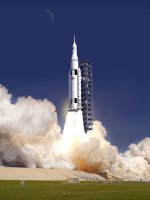
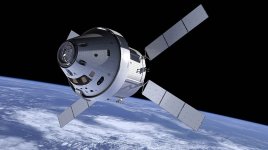
Ever since i downloaded Orbiter back in Jan i was surprised to see no add-on based on current plans of NASA's next launcher the Space Launch Sytem or the Orion MPCV, the only thing up for download is the cancelled Orion CEV. Is there anything any of you know of in the works right now? Art_of_SLS_launch.jpg
1024px-Orion_with_ATV_SM.jpg
 
Last edited:
There isn't enough data on SLS/Orion for a credible addon at the moment. There are a few guys working on it, but nbody wants to make a monumentous effort for something when we are not even sure what the final project is even going to look like.
 
Could we assume, given that the SLS will have elements of the shuttle, and that someone modeled a vehicle that sort of looks like an SLS/shuttle hybrid that we could make an external tank with the 4 RS-25 engines and SRB's (5 sections instead of 3) that a reasonable vehicle could be modeled. The Orion's gross weight (capsule and SM) are available for the test occurring HOPEFULLY Dec. 4th. What has to be figured is the additional weight of a larger external tank and an upper cryogenic stage.

Also the Orion plan involves two types of SLS, the 30 ton crew and the 70 ton heavy cargo lift. Orion would rendezvous with a long duration module on LEO and use its cryo stage to burn out of LEO. For realism the 70 ton SLS would have to deposit the transfer vehicle to LEO before the crew launch.

Complicated?

Sure.

Worth the effort?

DEFINITELY!
 
Oh yeah, the abort assembly! More weight to factor in.

And here's a fact sheet on the SLS:

http://www.nasa.gov/pdf/664158main_sls_fs_master.pdf

Not very specific though.

---------- Post added 09-12-14 at 05:26 PM ---------- Previous post was 09-11-14 at 08:34 PM ----------

Wow did I give this a lot of thought last night, and a fair amount of reading too. So I was wrong about those configurations, the SLS Block 1 is a crew rated 70 ton lift capability, the cargo version Block 1A design will put up 105 tons.

The core stage of all the designs is consistent, 209 ft. (63.7 meters) and 330 in. diameter (8.4 m). The SRBs are 5 section (shuttle's were 3) and will burn for approx. the same 124 seconds like the shuttle's did but putting out 3,600,000 lbf while the shuttle's pair produced 2,589,799 lbf.

The top faring section is were the differences are. Block 1 SLS will fly with the interim cryogenic propulsion stage, the Delta CSS that is in use now but will later feature the Exploration Upper Stage that will be much like the Saturn IV stage but with 4 RL-10's (99,000 lbf).

Assuming someone could model the vehicle based on the Block 1 crew design featuring the Delta upper stage we'd get something that looks like what all the NASA animations are depicting.

A Block 1-A crew appears to have the space for the larger Exploration Upper Stage. And I would run with the idea that a cargo SLS has delivered a lander/duration habitat/additional cryo stage to LEO and the crew launch would have to rendezvous, dock and connect the vehicles for deep space flight.

Here's a pic of the SLS configs:
http://upload.wikimedia.org/wikiped...nfigurations.png/779px-SLS_configurations.png

I'm also looking at the modeling tutorials over the weekend, if it isn't too impossible for someone as inept as I can be at times I might give it a shot.

Unless there's someone more talented out there that would be willing to try. :thumbup:

 
The modeling of the rockets is pretty simple. The devil is in the details. ;)
 
Research needed for correct plumbing, sizes, texturing,animations, and coding if you bring it that far.
 
Research needed for correct plumbing

Fuel manifolds? Consumption rate? Specs for the LOX tanks are available if that's what you mean.

Donamy;481063 texturing said:
I had thought of maybe copying the Saturn V textures since they look similar, since it uses SSME's in the core there was a thought that the rocket thrust could be modeled after what exists for the Atlantis sim.

Coding...........not my strong point. I'm artistic but that's about the extent of it.

I would like to try, and I say this now.....having not looked at a tutorial yet, so that attitude MAY change.
 
Research needed for correct plumbing, sizes, texturing,animations, and coding if you bring it that far.

These might help. If not, there's still a lot more at their gallery.

infographic3-revised2.jpg


757415main_SLS_Core_stage_cutout_4_2400x1800.jpg


I had thought of maybe copying the Saturn V textures since they look similar, since it uses SSME's in the core there was a thought that the rocket thrust could be modeled after what exists for the Atlantis sim.

The individual SSME thrust is somewhat more than that of the shuttles'.

Engines on the shuttle ran at 491,000 pounds vacuum thrust (104.5-percent of rated power level). After analyzing temperature and other factors on the engine, the power level was increased for SLS to 512,000 pounds vacuum thrust (109 percent of rated power level).
 
I have wanted to make a complete Orion MPCV and SLS addon right from the time I got into Orbiter, but I have never made an addon, so I am probably not the one to do it. :dry:
 
I have wanted to make a complete Orion MPCV and SLS addon right from the time I got into Orbiter, but I have never made an addon, so I am probably not the one to do it. :dry:

Why? You have to start somewhere. Start with the SLS, make a simple Multistage2 configuration file for it and begin working on the MPCV. You can do great things with the Spacecraft3 configuration files.
 
Looks good.

I'd go with velcro, so that the rocket could be used with any existing vessel / cargo.
Multistage is nice but you can't use UCGO/UMMU, or any spacecraft that needs parameters set by scenario with it.
 
Thanks. The booster were velco. I was doing a Dll. One thing I haven't gotten correctly are the touchdown points. Because for these rockets the touchdown are different. The z axis needs to be facing up and down rather than parallel.
 
Thanks. The booster were velco. I was doing a Dll. One thing I haven't gotten correctly are the touchdown points. Because for these rockets the touchdown are different. The z axis needs to be facing up and down rather than parallel.

And the problem there is just simple geometry: In your imagination, take a tricycle gear of a DG and install it on the aft end of the rocket; enable the coordinate system of Orbiter in your imaginary CAD space in your head... et voila, you already can read the approximate coordinates of the touchdown points.

So... usually, you have a configuration like that on a plane:

NLG: (0, -Y, +Z)
LMLG: (-X, -Y, -Z)
RMLG: (X, -Y, -Z)

Rotate by 90° (around the X or pitch axis) and you can for example get this for a tail-sitter:

NLG: (0, Y, -Z)
LMLG: (-X, -Y, -Z)
RMLG: (X, -Y, -Z)

Compared to some animation, robot arm or thruster stuff, this is pretty simple and does not result in you posing strange three-finger gang signs in your lab.
 
Last edited:
Back
Top