
You are using an out of date browser. It may not display this or other websites correctly.
You should upgrade or use an alternative browser.
You should upgrade or use an alternative browser.
Updates Boeing's CST-100 Starliner
- Thread starter Orbinaut Pete
- Start date

- Joined
- Oct 30, 2009
- Messages
- 14,018
- Reaction score
- 4
- Points
- 0
Parabolic Arc: Boeing Might Invest More to Move Up CST-100 Flights

RGClark
Mathematician
- Joined
- Jan 27, 2010
- Messages
- 1,632
- Reaction score
- 1
- Points
- 36
- Location
- Philadelphia
- Website
- exoscientist.blogspot.com
Like to see what those specs are. Are they comparable to the Dragon?
Bob Clark
- Joined
- Oct 30, 2009
- Messages
- 14,018
- Reaction score
- 4
- Points
- 0

Boeing's crew capsule tested for launch environment
[FONT=VERDANA, ARIAL, HELVETICA, SANS-SERIF][SIZE=+2]Boeing's crew capsule tested for launch environment[/SIZE][/FONT]
[FONT=VERDANA, ARIAL, HELVETICA, SANS-SERIF][SIZE=-2]BY STEPHEN CLARK
SPACEFLIGHT NOW
Posted: June 2, 2013[/SIZE][/FONT]

Boeing's CST-100 human-rated commercial crew capsule has moved two steps closer to reality with the successful completion of aerodynamic testing in a wind tunnel and a propellant plumbing system for the craft's Atlas 5 launch vehicle, NASA and Boeing announced Friday.

[FONT=Verdana, Arial, Helvetica, sans-serif][SIZE=-2]Photo of a scale model of the CST-100 spacecraft and Atlas 5 rocket in the wind tunnel at NASA's Ames Research Center in Moffett Field, Calif. Credit: Boeing Co.[/SIZE][/FONT]
The venerable aerospace contractor is working with NASA under an agreement worth $460 million, leading the development of an economical space capsule capable of transporting up to seven people to the International Space Station.
The CST-100 spacecraft, one of three vehicles vying to win business to carry NASA astronauts to the space station, will launch on United Launch Alliance Atlas 5 rockets from Cape Canaveral Air Force Station, Fla.
NASA funds Boeing's work under a series of financial milestones, bestowing payments as the company completes testing and design reviews.
One of the milestones, completed in March, involved the testing of a liquid oxygen feed line on the Atlas 5 rocket, in which cryogenic fluid courses from the rocket's Centaur upper stage propellant tanks to two RL10 engines.
The CST-100 spacecraft will launch on Atlas 5s with a twin-engine Centaur upper stage. All of the expendable rocket's 38 flights to date have flown with single-engine Centaur stages.
So far, all of the Atlas 5 rocket's missions have used a single-engine Centaur stage. The manned CST-100 missions will add the complexity of two RL10 engines, requiring a change in the plumbing feeding hydrogen and oxygen propellants into the engines, which will inject the capsule into orbit.
Boeing and ULA completed a wind tunnel test at NASA's Ames Research Center in California in May, gathering data on how the Atlas 5 and CST-100 respond to aerodynamic forces.
"The CST-100 and Atlas 5, connected with the launch vehicle adaptor, performed exactly as expected and confirmed our expectations of how they will perform together in flight," said John Mulholland, Boeing's vice president and manager of commercial programs, in a statement.
Engineers installed a scale model of the integrated Atlas 5 and CST-100 into an 11-foot-diameter transonic wind tunnel at Ames and evaluated the airflow over the launch vehicle.
Boeing and two competitors, SpaceX and Sierra Nevada Corp., won Space Act Agreements from NASA in August 2012 totaling more than $1.1 billion.
The space agency awarded the agreements - called Commercial Crew integrated Capability, or CCiCap - to advance human spacecraft concepts already being developed by each company.
NASA started funneling money into the commercial crew program in 2010, establishing a public-private partnership in which companies manage their own development but receive financing and guidance from NASA.

[FONT=Verdana, Arial, Helvetica, sans-serif][SIZE=-2]Artist's concept of the CST-100 spacecraft. Credit: Boeing Co.[/SIZE][/FONT]
In a statement released Friday, NASA said Boeing is on track to complete all 19 of its CCiCap milestones by mid-2014. In the next few months, Boeing plans a test of the capsule's orbital maneuvering engine, an interface test with mission control in Houston, and testing of software and the Atlas 5 rocket's emergency detection system.
Boeing's 21-month CCiCap agreement is due to conclude with the CST-100's critical design review.
The wind tunnel and liquid oxygen duct testing were the first two performance milestones achieved by Boeing in the CCiCap program. The company has finished six other design milestones since August 2012.
NASA is in the process of refining its procurement strategy for the next round of the commercial crew program, leading to crewed test flights in a few years and operational missions by 2017.
Boeing officials said in April they expect the first piloted orbital flight of a CST-100 capsule to occur some time in 2016.
NASA plans to switch from Space Act Agreements to contracts in mid-2014 with at least two commercial crew firms, assuming Congress appropriates sufficient funding for the program. If not, NASA will be forced to pick a single provider, running the risk of raising the cost of the initiative and eliminating the element of competition - an objective highly prized by NASA officials.
NASA will award the second phase of commercial crew certification contracts in the spring or summer of 2014. Those contracts will contain work to demonstrate spacecraft and rockets in flight and put suppliers on a path to to be certified by NASA for trips to the space station, according to Phil McAlister, director of commercial spaceflight at NASA Headquarters.
[FONT=VERDANA, ARIAL, HELVETICA, SANS-SERIF][SIZE=+2]Boeing's crew capsule tested for launch environment[/SIZE][/FONT]
[FONT=VERDANA, ARIAL, HELVETICA, SANS-SERIF][SIZE=-2]BY STEPHEN CLARK
SPACEFLIGHT NOW
Posted: June 2, 2013[/SIZE][/FONT]
Boeing's CST-100 human-rated commercial crew capsule has moved two steps closer to reality with the successful completion of aerodynamic testing in a wind tunnel and a propellant plumbing system for the craft's Atlas 5 launch vehicle, NASA and Boeing announced Friday.
[FONT=Verdana, Arial, Helvetica, sans-serif][SIZE=-2]Photo of a scale model of the CST-100 spacecraft and Atlas 5 rocket in the wind tunnel at NASA's Ames Research Center in Moffett Field, Calif. Credit: Boeing Co.[/SIZE][/FONT]
The venerable aerospace contractor is working with NASA under an agreement worth $460 million, leading the development of an economical space capsule capable of transporting up to seven people to the International Space Station.
The CST-100 spacecraft, one of three vehicles vying to win business to carry NASA astronauts to the space station, will launch on United Launch Alliance Atlas 5 rockets from Cape Canaveral Air Force Station, Fla.
NASA funds Boeing's work under a series of financial milestones, bestowing payments as the company completes testing and design reviews.
One of the milestones, completed in March, involved the testing of a liquid oxygen feed line on the Atlas 5 rocket, in which cryogenic fluid courses from the rocket's Centaur upper stage propellant tanks to two RL10 engines.
The CST-100 spacecraft will launch on Atlas 5s with a twin-engine Centaur upper stage. All of the expendable rocket's 38 flights to date have flown with single-engine Centaur stages.
So far, all of the Atlas 5 rocket's missions have used a single-engine Centaur stage. The manned CST-100 missions will add the complexity of two RL10 engines, requiring a change in the plumbing feeding hydrogen and oxygen propellants into the engines, which will inject the capsule into orbit.
Boeing and ULA completed a wind tunnel test at NASA's Ames Research Center in California in May, gathering data on how the Atlas 5 and CST-100 respond to aerodynamic forces.
"The CST-100 and Atlas 5, connected with the launch vehicle adaptor, performed exactly as expected and confirmed our expectations of how they will perform together in flight," said John Mulholland, Boeing's vice president and manager of commercial programs, in a statement.
Engineers installed a scale model of the integrated Atlas 5 and CST-100 into an 11-foot-diameter transonic wind tunnel at Ames and evaluated the airflow over the launch vehicle.
Boeing and two competitors, SpaceX and Sierra Nevada Corp., won Space Act Agreements from NASA in August 2012 totaling more than $1.1 billion.
The space agency awarded the agreements - called Commercial Crew integrated Capability, or CCiCap - to advance human spacecraft concepts already being developed by each company.
NASA started funneling money into the commercial crew program in 2010, establishing a public-private partnership in which companies manage their own development but receive financing and guidance from NASA.
[FONT=Verdana, Arial, Helvetica, sans-serif][SIZE=-2]Artist's concept of the CST-100 spacecraft. Credit: Boeing Co.[/SIZE][/FONT]
In a statement released Friday, NASA said Boeing is on track to complete all 19 of its CCiCap milestones by mid-2014. In the next few months, Boeing plans a test of the capsule's orbital maneuvering engine, an interface test with mission control in Houston, and testing of software and the Atlas 5 rocket's emergency detection system.
Boeing's 21-month CCiCap agreement is due to conclude with the CST-100's critical design review.
The wind tunnel and liquid oxygen duct testing were the first two performance milestones achieved by Boeing in the CCiCap program. The company has finished six other design milestones since August 2012.
NASA is in the process of refining its procurement strategy for the next round of the commercial crew program, leading to crewed test flights in a few years and operational missions by 2017.
Boeing officials said in April they expect the first piloted orbital flight of a CST-100 capsule to occur some time in 2016.
NASA plans to switch from Space Act Agreements to contracts in mid-2014 with at least two commercial crew firms, assuming Congress appropriates sufficient funding for the program. If not, NASA will be forced to pick a single provider, running the risk of raising the cost of the initiative and eliminating the element of competition - an objective highly prized by NASA officials.
NASA will award the second phase of commercial crew certification contracts in the spring or summer of 2014. Those contracts will contain work to demonstrate spacecraft and rockets in flight and put suppliers on a path to to be certified by NASA for trips to the space station, according to Phil McAlister, director of commercial spaceflight at NASA Headquarters.
- Joined
- Oct 30, 2009
- Messages
- 14,018
- Reaction score
- 4
- Points
- 0
Florida Today: Boeing plans to move into former shuttle hangar at KSC this spring:
Boeing: Boeing Finalizes Agreement for Kennedy Space Center Facility
The Boeing Co. said today it plans to move into a former shuttle hangar at Kennedy Space Center in the spring of 2014, where it will assemble CST-100 commercial crew capsules.
One of three companies competing to launch NASA crews to the International Space Station, Boeing hopes to launch a first test flight of the CST-100 in 2016.
In a press release, Boeing said it had finalized a lease agreement with Space Florida, which took over Orbiter Processing Facility 3, a former shuttle main engine shop and adjacent office facilities from NASA.
{...}
Boeing: Boeing Finalizes Agreement for Kennedy Space Center Facility

- Joined
- May 14, 2008
- Messages
- 10,548
- Reaction score
- 349
- Points
- 173
- Location
- East Sussex
- Website
- blog.gdwnet.com
- Preferred Pronouns
- He/Him
Last Shuttle commander virtually flies (and docks) CST-100
More, source and a very cool video -> http://www.boeing.com/boeing/Features/2014/02/bds_cst_100_02_27_14.page
Chris Ferguson, commander of the final space shuttle flight, virtually returned to space in the Boeing Crew Space Transportation (CST)-100 simulator, when he recently performed manual piloting activities, including on-orbit attitude and translation maneuvers, docking and backing away from a virtual International Space Station, and a manual re-entry to Earth.
“We used our actual flight software, we’ve used model displays, and our real jet model to show that we have a vehicle that can stay under control, can dock with the international space station, and fly a re-entry, equipped with all the visuals that one could expect from a spacecraft,” said Ferguson.
More, source and a very cool video -> http://www.boeing.com/boeing/Features/2014/02/bds_cst_100_02_27_14.page
RGClark
Mathematician
- Joined
- Jan 27, 2010
- Messages
- 1,632
- Reaction score
- 1
- Points
- 36
- Location
- Philadelphia
- Website
- exoscientist.blogspot.com
Good news on the progress of NASA's commercial crew program:
NASA’s commercial partners make strides toward launching astronauts.
March 2nd, 2014
Bob Clark
NASA’s commercial partners make strides toward launching astronauts.
March 2nd, 2014
http://www.spaceflightinsider.com/s...ers-make-strides-toward-launching-astronauts/An official working on the CCP, Kathy Lueders, the project’s acting program commented on the latest progress.
“Already this year, NASA and its industry partners are making tremendous progress toward achieving the nation’s goal of restoring America’s capability to launch commercial passengers, including astronauts, from U.S. soil to low-Earth orbit. This year, we’ll see hardware testing, flight demonstrations and the award of the Commercial Crew Transportation Capability contract. We’re excited for what the rest of this year holds and look forward to highlighting the tremendous progress our partners make to advance commercial human spaceflight,” Lueders said.
Bob Clark

Star Voyager
Space Shuttle Refugee
- Joined
- Oct 25, 2008
- Messages
- 1,980
- Reaction score
- 38
- Points
- 48
I hope this isn't necroposting, but Boeing is going to announce the crew for the first CST-100 flight this summer. One crewmember will be a company pilot and the other will be a NASA astronaut. Would the NASA astronaut be a pilot or MS? I would think that this would be like a checkride in an airplane where you have two pilots: the "instructor" and the "student". What do y'all think?

- Joined
- Oct 11, 2009
- Messages
- 3,486
- Reaction score
- 407
- Points
- 123
- Location
- Utrecht
- Website
- www.spaceflightnewsapi.net
I hope this isn't necroposting, but Boeing is going to announce the crew for the first CST-100 flight this summer. One crewmember will be a company pilot and the other will be a NASA astronaut. Would the NASA astronaut be a pilot or MS? I would think that this would be like a checkride in an airplane where you have two pilots: the "instructor" and the "student". What do y'all think?
I think the NASA astronaut is not some kind of "student". I think it will be a full worthy astronaut with the same amount of experience on the CST-100 as the Boeing astronaut. It wouldn't even surprise me if the NASA astronaut has some space experience already.
Star Voyager
Space Shuttle Refugee
- Joined
- Oct 25, 2008
- Messages
- 1,980
- Reaction score
- 38
- Points
- 48
I was using the term "student" kind of loosely here. Even though the NASA astronaut is fully qualified and gone through the proper CST-100 training, they still has to take their "checkride". Kind of like an airplane pilot getting a type rating.
Last edited:
- Joined
- Oct 30, 2009
- Messages
- 14,018
- Reaction score
- 4
- Points
- 0
Spaceflight Now: Boeing nears fix for CST-100 Starliner design hitch

Boeing Starts Assembly of 1st Flightworthy Starliner Crew Taxi Vehicle at Kennedy Spaceport
http://www.universetoday.com/129356...iner-crew-taxi-vehicle-at-kennedy-spaceport/#
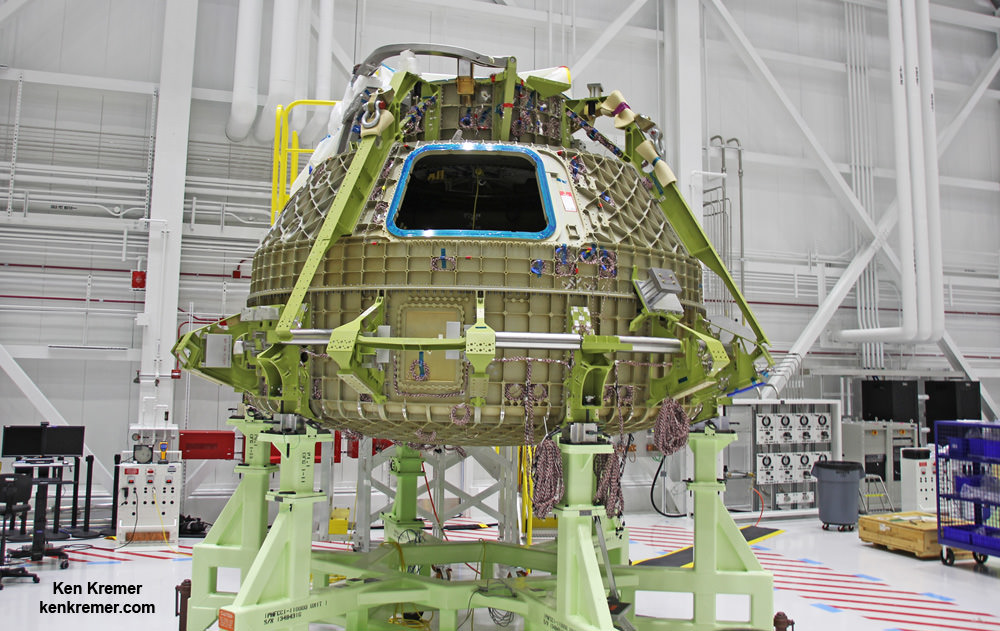
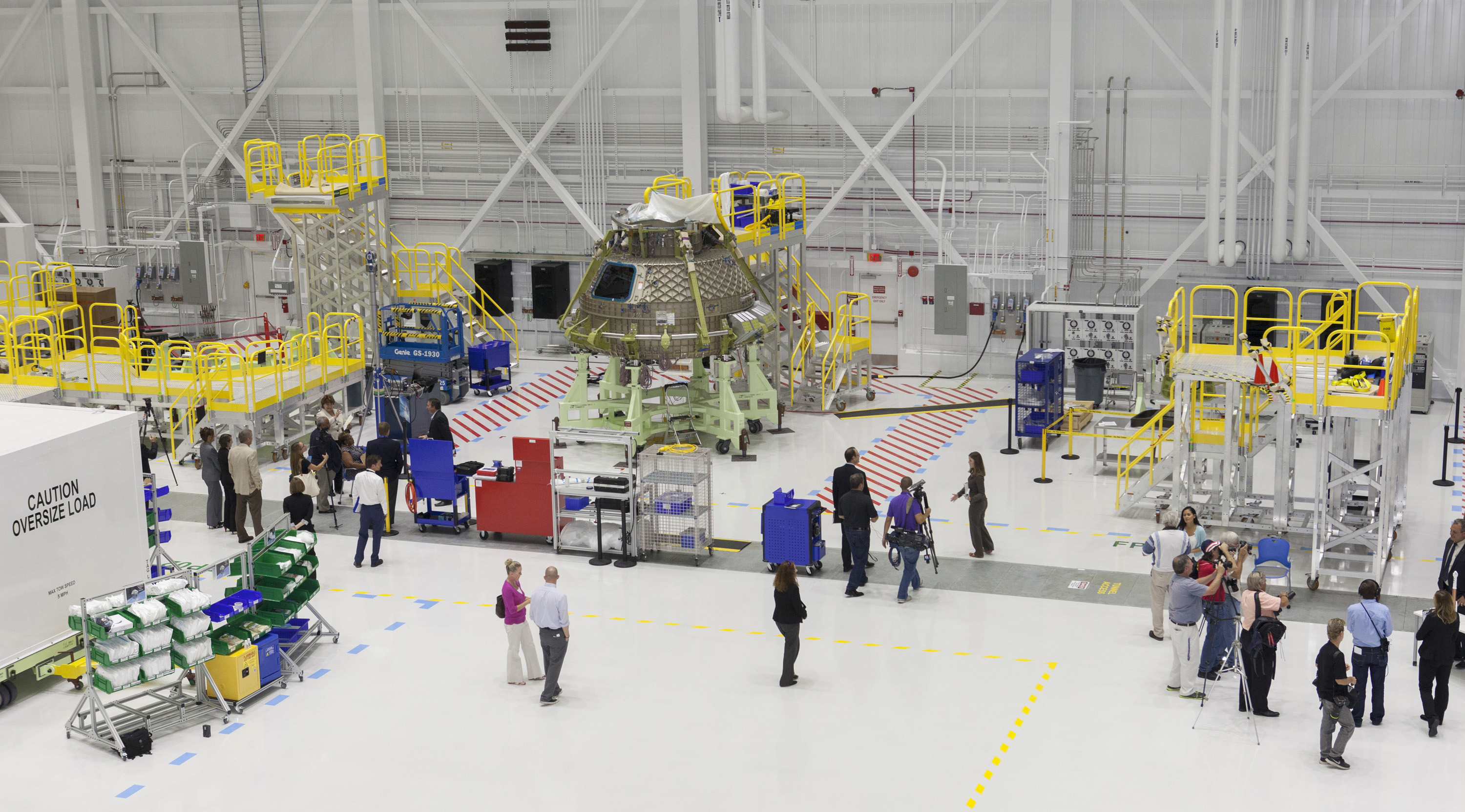
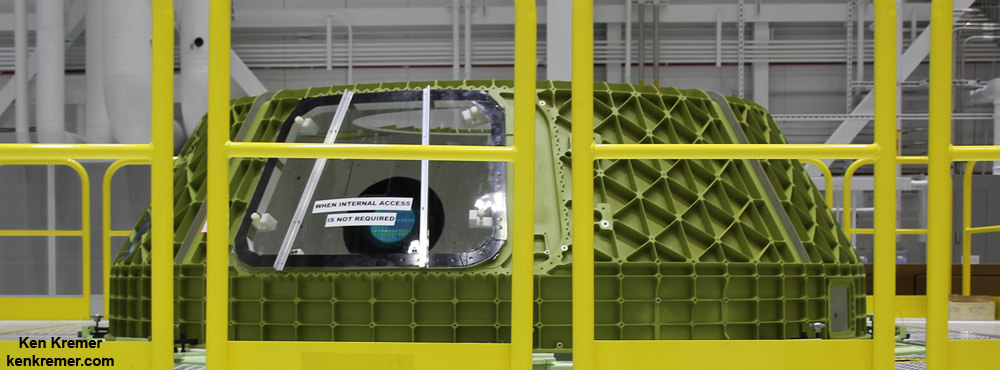
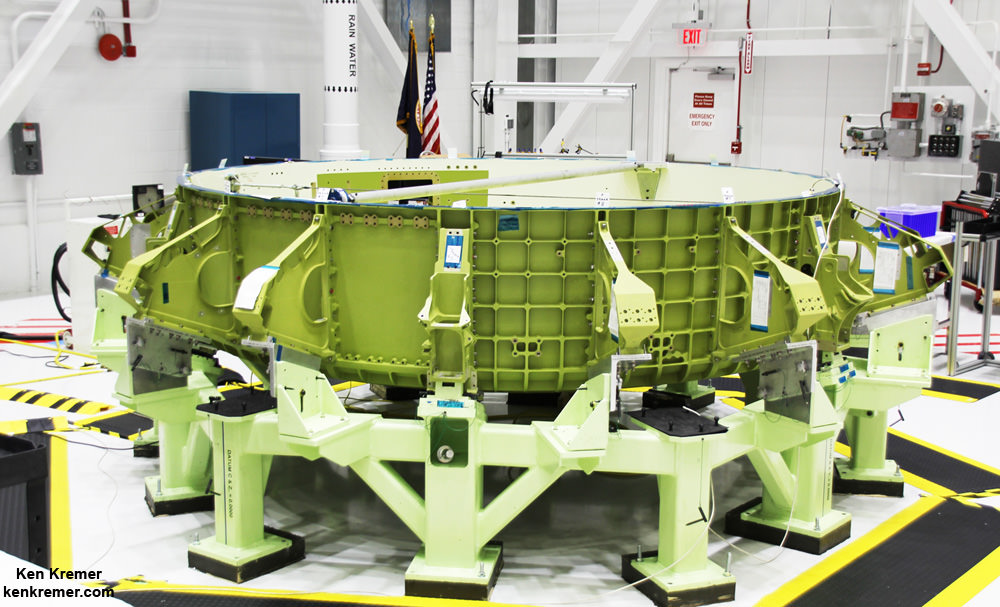
This used to be OPF-3:
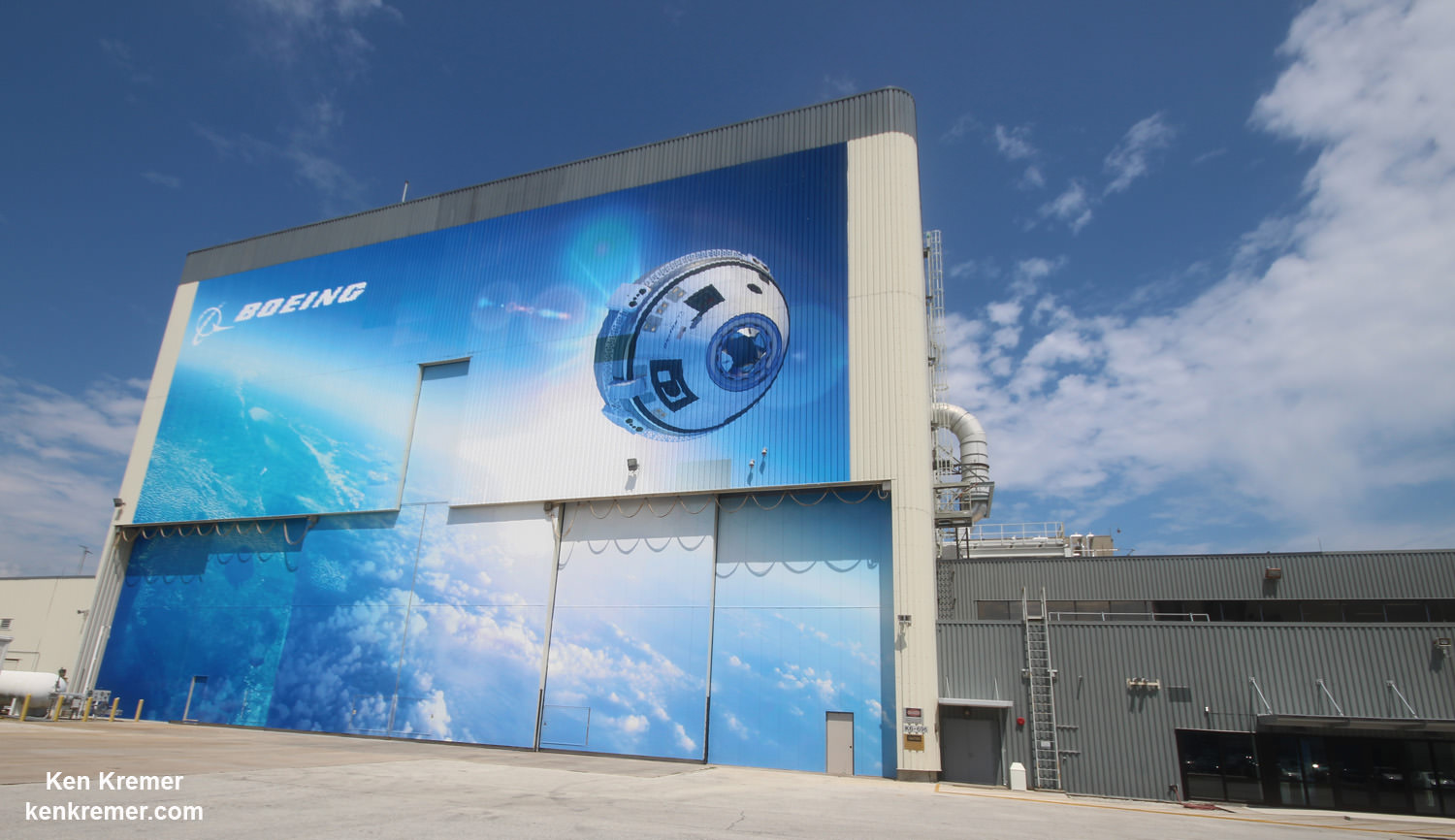
http://www.universetoday.com/129356...iner-crew-taxi-vehicle-at-kennedy-spaceport/#
Components for the first Starliner that will actually fly in space – known as Spacecraft 1 – began arriving recently at the C3PF. These include the upper and lower domes, as well as the docking hatch for the spacecrafts pressure vessel.
This used to be OPF-3:

- Joined
- Mar 23, 2008
- Messages
- 1,327
- Reaction score
- 1,657
- Points
- 128
- Website
- francisdrakex.deviantart.com
With the Boeing CST-100 slowly becoming reality, I wonder if there is an addon of this vehicle? On Orbithangar I found a dated project in work, with a 3ds max file only.

Interceptor
Well-known member
I think OF member Kyle was working on one,and N_Molson was working on an atlas 5 rocket to take it up.With the Boeing CST-100 slowly becoming reality, I wonder if there is an addon of this vehicle? On Orbithangar I found a dated project in work, with a 3ds max file only.
Last edited:
- Joined
- Oct 30, 2009
- Messages
- 14,018
- Reaction score
- 4
- Points
- 0
- Joined
- Oct 11, 2009
- Messages
- 3,486
- Reaction score
- 407
- Points
- 123
- Location
- Utrecht
- Website
- www.spaceflightnewsapi.net
Arstechnica.com: Boeing delays Starliner again, casting doubt on commercial flights in 2018
:ninja:'ed
After an initial delay from late 2017 into early 2018, Boeing has acknowledged a second slippage of its schedule for the first commercial crew flights of its Starliner spacecraft. According to a report in Aviation Week, the company now says it will not be ready to begin operational flights until December 2018, a full year after NASA had originally hoped its commercial crew providers would be ready.
:ninja:'ed

ULA unveils new configuration for Atlas V rocket to carry astronauts
Official ULA Press Statement: http://www.ulalaunch.com/ula-and-boeing-unveil-atlasv-starliner-config.aspx

Official ULA Press Statement: http://www.ulalaunch.com/ula-and-boeing-unveil-atlasv-starliner-config.aspx
Cape Canaveral Air Force Station, Fla. (Oct. 13, 2016) – United Launch Alliance (ULA) and The Boeing Company today unveiled an updated aerodynamic configuration of the Atlas V that will launch Boeing’s CST-100 Starliner capsule for NASA after encountering unique challenges with aerodynamic stability and loads.
This new configuration incorporates an aeroskirt aft of the spacecraft, extending the Starliner Service Module cylindrical surface to improve the aerodynamic characteristics of the integrated launch configuration and bring loads margins back to acceptable flight levels.
The aeroskirt is a metallic orthogrid structure designed to be jettisoned for improved performance. In the unlikely event that an emergency occurs during boost phase of flight, the aeroskirt has venting provisions to control over-pressurization if the Starliner’s abort engines are fired. Fabrication of the aeroskirt is scheduled to begin this month at ULA’s factory in Decatur, Alabama, following completion of a Production Readiness Review.
Similar threads


- Replies
- 0
- Views
- 3K


- Replies
- 66
- Views
- 38K
