Discussion Falcon 9 1.1 1st stage hypersonic reentry

RGClark

Mathematician
Joined
Jan 27, 2010
Messages
1,635
Reaction score
1
Points
36
Location
Philadelphia
Website
exoscientist.blogspot.com
How much are you willed to bet yourself on SpaceX managing to even get a two-digit market share on the geostationary market?
Also, a statement by SpaceX from SpaceX best fanboy in a ESA thread is pretty funny, since the test on the Falcon 9 1.1 launch failed exactly because of the pieces that they did not have: Everything that they did not test on Grasshopper went wrong.

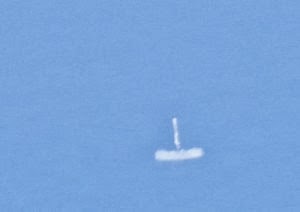
Actually they could not test hypersonic reentry either and that went well, to the surprise of everyone, including SpaceX. Using propulsion to decelerate during hypersonic reentry had not been done before. NASA in fact is puzzling over whether this is feasible for manned Mars missions. Because SpaceX succeeded at this makes NASA want to talk to them about it.
SpaceX says the absence of landings legs affected the spin, which is easy to remedy for the actual version just with landing legs. If it does require higher spin control probably that could be done with venier type thrusters or perhaps the Draco thrusters planned to be on the Dragon capsule.
Compared to the number of things that could have gone wrong, these seem minor.

Bob Clark
 
Last edited:
Actually they could not test hypersonic reentry either and that went well, to the surprise of everyone, including SpaceX. Using propulsion to decelerate during hypersonic reentry had not been done before. NASA in fact is puzzling over whether this is feasible for manned Mars missions. Because SpaceX succeeded at this makes NASA want to talk to them about it.

:facepalm:


Why did the hypersonic reentry go well, when it tumbled out of control?
Why is NASA puzzling over whether this is feasible for manned Mars missions, if this capability was never needed for landing unmanned rovers?
Why should NASA talk to them?

SpaceX says the absence of landings legs affected the spin, which is easy to remedy for the actual version just with landing legs. If it does require higher spin control probably that could be done with venier type thrusters or perhaps the Draco thrusters planned to be on the Dragon capsule.
Compared to the number things that could have gone wrong, these seem minor.

The main problem was, that the rocket was already tumbling, sloshing and vortexing. Something that the Grasshopper never had to compensate and which no spaceflight agency has yet found a good solution for except brute force.

Also, the landing legs will not easily remedy the spin. Sorry, but hypersonic aerodynamics don't work like that. Even adding planar fins does not solve this automatically - it can even induce sloshing.

Really, and I really hope you understand me one day:

If everything would be as easy as you claim things to be, SpaceX would already been doing daily manned landings on the sun.
 
By deciding on the solid-fueled Ariane 6, ESA is, unwittingly, betting on SpaceX to fail on reusability. For if SpaceX succeeds then the solid-fueled Ariane 6 becomes obsolete, with billions of dollars and years wasted. ESA would then have to start all over again to develop a liquid-fueled version which can be made reusable.

Musk lays out plans for reusability of the Falcon 9 rocket.
October 3, 2013 by Yves-A. Grondin
“The most important thing is that we now believe we have all the pieces of the puzzle (for recovery). If you take the Grasshopper tests, where we were able to do a precision takeoff and landing of a Falcon 9 first stage and you combine it with the results from this flight where we were able to successfully transition from vacuum to hypersonic, through supersonic, through transonic and light the engines all the way through and control the stage all the way through.
“We have all the pieces necessary to achieve a full recovery of the boost stage.”

http://www.nasaspaceflight.com/2013/10/musk-plans-reusability-falcon-9-rocket/

falcon9_relit_stage2-300x212.jpg


I think it's a bad bet on ESA's part.

Bob Clark

Well, so far I know SpaceX didn't have reach that reusability goal. Sure, you can say and wise you fingers to the Grasshopper, but that is just a simple rocket who so far I know not even can go supersonic. And even if it can, then still it got only one engine on it, and the landing legs it got on the Grasshopper are totally not made for the first stage of the Falcon 9.

The first try of having a 'semi-soft landing' for the Falcon 9 did fail, no matter what your view is about it, you come always to the concussion that it did fail.

I still don't see really that SpaceX can promise to have a re-usable first stage next year at least. There did only test serious reusability on the Grasshopper, and the difference between the Grasshopper and the Falcon-9 first stage is more then just 8 engines more on the rocket.
 
Glad to see that some people are still lucid about all this... :yes:

Musk made a lot of promises and was over-optimistic about its abilities to fulfill them all. Why SpaceX has been created ? First to restore a manned Earth-to-LEO capability for the United States, and that's a lot of work already, secondly to make that vehicle and its launcher as cheap and safe as possible. Do that Mr Musk, that already will be great.

BTW this is off-topic and has nothing to do in ESA's thread.
 
Last edited:
Why SpaceX has been created ?

Actually, it is the same like for any other company: To produce something and make profit with it.

But some people here seem to think, SpaceX exists for making their wet dreams come true, because NASA does not get a 100 trillion budget.
 
Actually, it is the same like for any other company: To produce something and make profit with it.

I'm even not convinced by that. Unlike other (US) companies, SpaceX has been heavily subventionned by the Federal State...

BTW this is off-topic and has nothing to do in ESA's thread.
 
Why did the hypersonic reentry go well, when it tumbled out of control?
Tumbling out of control was not caused by hypersonic reentry.

Stage that started tumbling during or just after reentry would breakup, and certainly would not be able to perform second burn and generally be in one piece and functional 3 meters above water.

So yes, there is at least one thing not tested on Grasshopper, yet successful - hypersonic reentry.
 
Stage that started tumbling during or just after reentry would breakup

Again, lets be clear :

- The Falcon 9 first stage is not a SSTO and did not had reenter from LEO.
- I don't know the exact trajectory it follows, but the idea is to use upper atmosphere to slow down the stage more or less progressively, the first burn point is to bend the trajectory and reduce the velocity. Once it is performed correctly, the stage shoud be on a "safe" trajectory, tumbling or not.
- An object can tumble in high atmosphere without damage, and be disintegrated by the same motion in dense atmosphere. Dynamic pressure makes all the difference. The tumbling motion is dampened as the atmosphere gains in density and tends to stop the motion by friction of the air molecules on the object (here, mostly a cylinder). It is even simulated in Orbiter if you enter the right numbers (cross sections, PMI, drag)...,
- Rocket stages are not that fragile. Fairings are, as they have to be very light and just strong enough to perform their duty. But tanks and engine tend to have a good structural resistance (we are not Kerbals).

BTW those SpaceX-posts are clearly off-topic and have nothing to do in ESA's thread.
 
Last edited:
Stage that started tumbling during or just after reentry would breakup, and certainly would not be able to perform second burn and generally be in one piece and functional 3 meters above water.

Yes - but that result of the final burn didn't happen. The burn took place, but failed - it was no successful burn, it was an attempted ignition sequence of a gas generator cycle engine.

Aerodynamically, the tumbling can be expected to be conically in a limited angle - because the majority of the mass of an empty rocket stage is concentrated in the engines and the thrust structure. You can test that behavior by putting a bit of weight at the end of a cardboard tube. Even if it stabilizes around one attitude, the situation is not controlled, you can't make it easily stop tumbling and steer it into the attitude that you need.

Also break-up is not mandatory, a rocket stage is very flexible, especially if empty - it can have structurally failed, without it appearing like that from the distance. Only strain gauge telemetry and a post-mortem analysis can really tell that.

(If you think that the wobbling rockets in KSP are unrealistic and just gameplay - in reality, it is not much different, there can be a few many tenths of a degree bending in a rocket, just look at a Space Shuttle in the final 6 seconds before launch - the SRBs are bend by about 2.8° between base and nose and back again. And its designed for just that)
 
Last edited:
Yes - but that result of the final burn didn't happen
Yep. Even if that spin was related to non-perfect reentry, I consider surviving hypersonic reentry with functional stage as an achievment in itself. So point that at least one thing untried on Grasshopper was successful still stands.
 
Yep. Even if that spin was related to non-perfect reentry, I consider surviving hypersonic reentry with functional stage as an achievment in itself. So point that at least one thing untried on Grasshopper was successful still stands.

Never watch the final seconds of a Soyuz booster stage before impact. You might be surprised, even the aftermath of the impact is pretty surprising. :lol:
 
SpaceX Challenge Has Arianespace Rethinking Pricing Policies
By Peter B. de Selding | Nov. 25, 2013
“I have sent a signal to our customers telling them that I could review our pricing policy, within certain limits,” Israel said in an interview with Les Echos, a French financial newspaper. “I think they have appreciated this.”
...

IF SpaceX succeeds in cutting prices by reusability, then no readjustment of the pricing will be effective. SpaceX is already undercutting them on pricing and if reusability really does cut the SpaceX prices again by a factor of 4 to 10 then ArianeSpace simply will not be able to compete.
...

Bob Clark

Edit: I moved the discussion to the "Will the SpaceX push to reusability make ArianeSpace obsolete?" thread.
 
Last edited:
Wrong :censored: thread!

I didn't want to bring a long discussion of the likelihood of SpaceX succeeding in reusability into the "ESA's Future: The News and Updates" thread, which necessarily this topic will open up a discussion into.
I think people will be less annoyed at discussing Ariane on a SpaceX thread than they would be at discussing SpaceX on an Ariane thread.

Bob Clark
 
Last edited:
I didn't want to bring a long discussion of the likelihood of SpaceX succeeding in reusability into the "ESA's Future: The News and Updates" thread, which necessarily this topic will open up a discussion into.
I think people will be less annoyed at discussing Ariane on a SpaceX thread than they would be at discussing SpaceX on an Ariane thread.

Bob Clark

What about just starting a new thread for a new topic instead of just hijacking the next best SpaceX or Ariane related (FYI: ESA is not Ariane or Arianespace) thread for your dubious claims?
 
Your comparison is... lacking. But hey, if you want to have last word, you can have it.

Oh, thank you, too kind of you.

So, you have not noticed that these stages are, after going through the same conditions as the F9 first stage, are actually quite intact from afar until shortly before impact? (Of course, if you would take a closer look, they would be quite damaged)
 
So, you have not noticed that these stages are, after going through the same conditions as the F9 first stage
I somehow doubt conditions are exactly same. It does not matter anyway, because...

are actually quite intact from afar until shortly before impact? (Of course, if you would take a closer look, they would be quite damaged)
...SpaceX claims stage was in one piece and fully functional (except that darn spin) 3 meters over water.

Your argument is basically "they did hypersonic reentry, but it does not count". Whatever. :shrug:
 
...SpaceX claims stage was in one piece and fully functional (except that darn spin) 3 meters over water.

"Its just a flesh wound"

Your claim is, that hypersonic reentry with a stage appearing to be intact is an achievement - which it isn't. Even if the claim is, that the stage was fully functional, obviously by the outcome, it wasn't functional.
 
Back
Top