
You are using an out of date browser. It may not display this or other websites correctly.
You should upgrade or use an alternative browser.
You should upgrade or use an alternative browser.
Updates Mars Science Laboratory (Curiosity)
- Thread starter Unstung
- Start date

THe heatshield impact looks like when Wile E. Coyote falls off a cliff. 

RGClark
Mathematician
- Joined
- Jan 27, 2010
- Messages
- 1,632
- Reaction score
- 1
- Points
- 36
- Location
- Philadelphia
- Website
- exoscientist.blogspot.com
Above freezing max temperature at Curiosity landing site.
In Friday's teleconference lead Curiosity scientist John Grotzinger initially gave the max temperature at the landing site as 1 degree above freezing:
http://www.ustream.tv/recorded/24773693
However, later in response to a question for clarification on that temperature at about 22 minutes into the teleconference, he gave the temperature as 276 degrees Kelvin. This is about 3 degrees C, or 37 degrees F.
The temperatures are expected to go higher as we get into Spring at the landing site.
Bob Clark
In Friday's teleconference lead Curiosity scientist John Grotzinger initially gave the max temperature at the landing site as 1 degree above freezing:
http://www.ustream.tv/recorded/24773693
However, later in response to a question for clarification on that temperature at about 22 minutes into the teleconference, he gave the temperature as 276 degrees Kelvin. This is about 3 degrees C, or 37 degrees F.
The temperatures are expected to go higher as we get into Spring at the landing site.
Bob Clark
JPL: Rover's Laser Instrument Zaps First Martian Rock
Five one-billionths of a second to melt the surface of a rock...
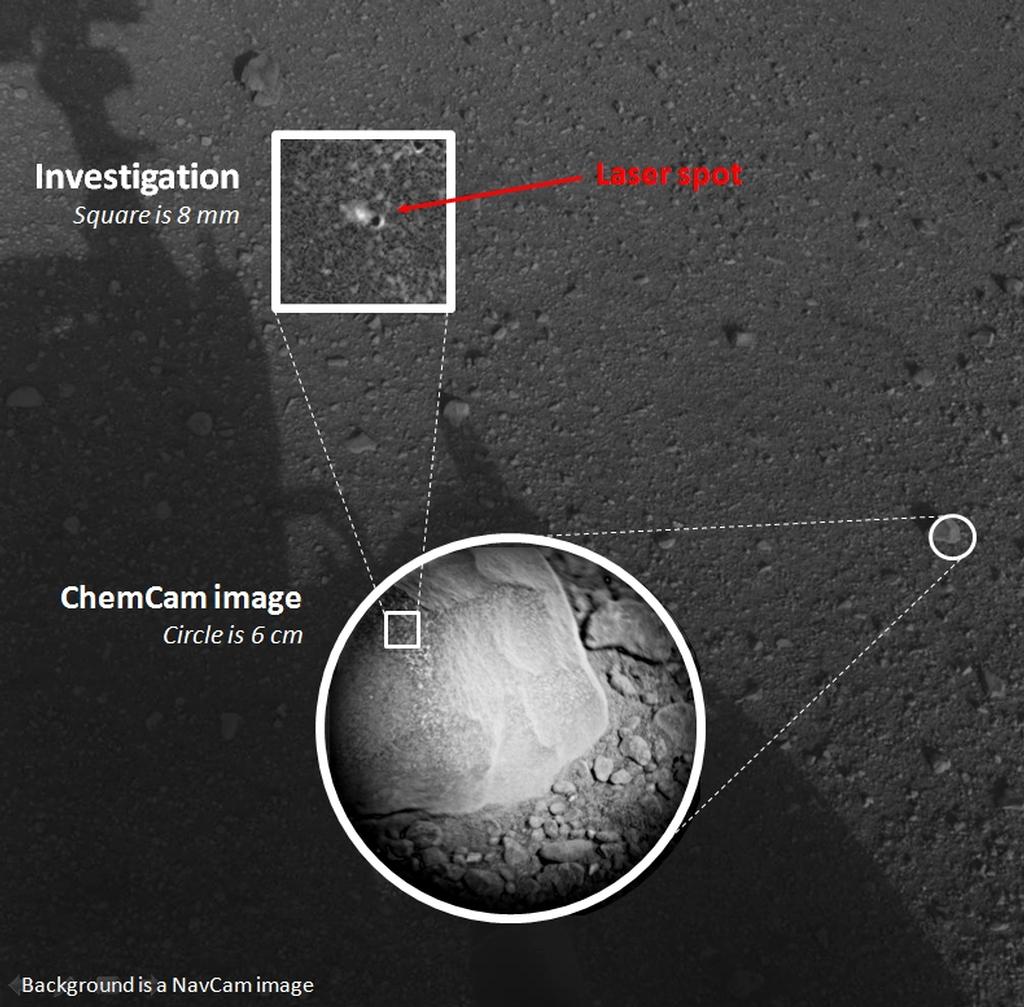
Today, NASA's Mars rover Curiosity fired its laser for the first time on Mars, using the beam from a science instrument to interrogate a fist-size rock called "Coronation."
The mission's Chemistry and Camera instrument, or ChemCam, hit the fist-sized rock with 30 pulses of its laser during a 10-second period. Each pulse delivers more than a million watts of power for about five one-billionths of a second.
The energy from the laser excites atoms in the rock into an ionized, glowing plasma. ChemCam catches the light from that spark with a telescope and analyzes it with three spectrometers for information about what elements are in the target.
"We got a great spectrum of Coronation -- lots of signal," said ChemCam Principal Investigator Roger Wiens of Los Alamos National Laboratory, N.M. "Our team is both thrilled and working hard, looking at the results. After eight years building the instrument, it's payoff time!"
ChemCam was developed, built and tested by the U.S. Department of Energy's Los Alamos National Laboratory in partnership with scientists and engineers funded by the French national space agency, Centre National d'Etudes Spatiales (CNES) and research agency, Centre National de la Recherche Scientifique (CNRS).
Five one-billionths of a second to melt the surface of a rock...

- Joined
- Jun 16, 2011
- Messages
- 3,594
- Reaction score
- 14
- Points
- 63
- Location
- Huntsville, AL
- Preferred Pronouns
- He/Him
Here's a picture.


This version shows a label where the heat shield impact occurs:Here are all the frames at full resolution, it's definitely stunning:
- Joined
- Mar 28, 2008
- Messages
- 669
- Reaction score
- 32
- Points
- 43
So true...Here are all the frames at full resolution, it's definitely stunning:
This is the first video which shows the landing on another planet isn't it?
This is the same one but with more frames:
[Edit]
Oh just saw that tblaxland's video has the same no. of frames... But i let the link because it's without label...
Don't forget to switch to highest resolution! (1080p)
Last edited:

Columbia42
Member
Has anyone seen an HD video of the landing in real time? The last couple posted have been sped up a lot, it seems.

- Joined
- Oct 30, 2009
- Messages
- 14,018
- Reaction score
- 4
- Points
- 0
NASA / NASA JPL:
Curiosity Stretches its Arm
August 20, 2012
Mars Science Laboratory Mission Status Report
PASADENA, Calif. -- NASA's Mars rover Curiosity flexed its robotic arm today for the first time since before launch in November 2011.
The 7-foot-long (2.1-meter-long) arm maneuvers a turret of tools including a camera, a drill, a spectrometer, a scoop and mechanisms for sieving and portioning samples of powdered rock and soil.
"We have had to sit tight for the first two weeks since landing, while other parts of the rover were checked out, so to see the arm extended in these images is a huge moment for us," said Matt Robinson of NASA's Jet Propulsion Laboratory, lead engineer for Curiosity's robotic arm testing and operations. "The arm is how we are going to get samples into the laboratory instruments and how we place other instruments onto surface targets."
Weeks of testing and calibrating arm movements are ahead before the arm delivers a first sample of Martian soil to instruments inside the rover. Monday's maneuver checked motors and joints by unstowing the arm for the first time, extending it forward using all five joints, then stowing it again in preparation for the rover's first drive.
"It worked just as we planned," said JPL's Louise Jandura, sample system chief engineer for Curiosity. "From telemetry and from the images received this morning, we can confirm that the arm went to the positions we commanded it to go to."
The image of Curiosity's arm is online at: http://1.usa.gov/OSyG3B.
The turret has a mass of about 66 pounds (30 kilograms). Its diameter, including the tools mounted on it, is nearly 2 feet (60 centimeters).
"We'll start using our sampling system in the weeks ahead, and we're getting ready to try our first drive later this week," said Mars Science Laboratory Deputy Project Manager Richard Cook of JPL.
{...}
CBS News Space: Curiosity rover flexes robot arm for first time
SPACE.com: Mars Rover Curiosity Flexes Robotic Arm for 1st Time
Aviation Week: Photo: Curiosity's Arm (from Mars)
Curiosity Stretches its Arm
August 20, 2012
Mars Science Laboratory Mission Status Report
PASADENA, Calif. -- NASA's Mars rover Curiosity flexed its robotic arm today for the first time since before launch in November 2011.
The 7-foot-long (2.1-meter-long) arm maneuvers a turret of tools including a camera, a drill, a spectrometer, a scoop and mechanisms for sieving and portioning samples of powdered rock and soil.
"We have had to sit tight for the first two weeks since landing, while other parts of the rover were checked out, so to see the arm extended in these images is a huge moment for us," said Matt Robinson of NASA's Jet Propulsion Laboratory, lead engineer for Curiosity's robotic arm testing and operations. "The arm is how we are going to get samples into the laboratory instruments and how we place other instruments onto surface targets."
[table="head;width=225"]

NASA's Mars rover Curiosity extended its robotic arm on Aug. 20, 2012, for the first time on Mars and used its Navigation Camera (Navcam) to capture this view of the extended arm.
Click on image for details
NASA's Mars rover Curiosity extended its robotic arm on Aug. 20, 2012, for the first time on Mars and used its Navigation Camera (Navcam) to capture this view of the extended arm.
Image credit: NASA/JPL-Caltech
[/table]Weeks of testing and calibrating arm movements are ahead before the arm delivers a first sample of Martian soil to instruments inside the rover. Monday's maneuver checked motors and joints by unstowing the arm for the first time, extending it forward using all five joints, then stowing it again in preparation for the rover's first drive.
"It worked just as we planned," said JPL's Louise Jandura, sample system chief engineer for Curiosity. "From telemetry and from the images received this morning, we can confirm that the arm went to the positions we commanded it to go to."
The image of Curiosity's arm is online at: http://1.usa.gov/OSyG3B.
The turret has a mass of about 66 pounds (30 kilograms). Its diameter, including the tools mounted on it, is nearly 2 feet (60 centimeters).
"We'll start using our sampling system in the weeks ahead, and we're getting ready to try our first drive later this week," said Mars Science Laboratory Deputy Project Manager Richard Cook of JPL.
{...}
CBS News Space: Curiosity rover flexes robot arm for first time
SPACE.com: Mars Rover Curiosity Flexes Robotic Arm for 1st Time
Aviation Week: Photo: Curiosity's Arm (from Mars)

- Joined
- Mar 28, 2008
- Messages
- 669
- Reaction score
- 32
- Points
- 43
Has anyone seen an HD video of the landing in real time? The last couple posted have been sped up a lot, it seems.
Just saw this, it's with sound and some more frames...
So it should be real time...
[Edit]
I was wrong, description:
Ok, so here's the deal: 934/1504 frames ran at 10 frames per second. Real-time was at 4 frames per second. As far as the audio is concerned, I just took the most important snippets from the mission control audio and filled the silent gaps with the audio when they were not talking, so it sounds seamless. I believe I got it pretty accurate, but nothing would be as accurate as 4 frames per second (the real rate it was filmed).
I like to put it at 10 FPS because it's smoother, and being that I'm better with audio, it was a snap.
Last edited:
- Joined
- Oct 30, 2009
- Messages
- 14,018
- Reaction score
- 4
- Points
- 0
SPACE.com: Mars Rover Curiosity to Take 1st Martian Drive Wednesday
CBS News Space: After steering test, Mars rover set for initial test drive
Florida Today: Curiosity gets closer to first test drive
Discover Magazine - Bad Astronomy: Curiosity spins its wheels!
CBS News Space: After steering test, Mars rover set for initial test drive
Florida Today: Curiosity gets closer to first test drive
Discover Magazine - Bad Astronomy: Curiosity spins its wheels!
RGClark
Mathematician
- Joined
- Jan 27, 2010
- Messages
- 1,632
- Reaction score
- 1
- Points
- 36
- Location
- Philadelphia
- Website
- exoscientist.blogspot.com
Surface temperature and pressure in liquid water range.
Just saw this posted to the www.marsroverblog.com forum:
PIA16081: Taking Mars' Temperature.
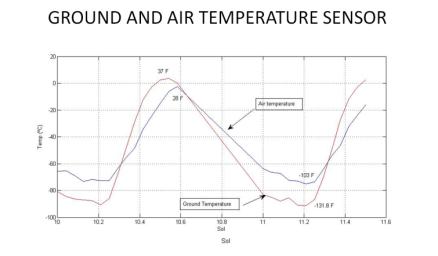
http://photojournal.jpl.nasa.gov/catalog/PIA16081
PIA16080: First Pressure Readings on Mars..
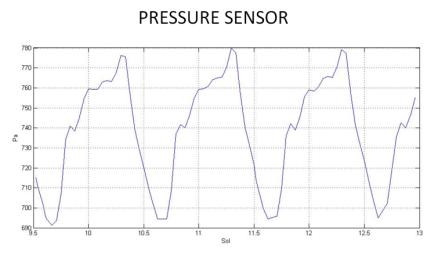
http://photojournal.jpl.nasa.gov/catalog/PIA16080
Note that the pressure never fell below the 6.1 mbars pressure required for pure water to remain liquid, i.e., not boil off.
Also, eyeballing the temperature graph it looks like surface temperatures remain above 0C for perhaps 3 hours per day.
Bob Clark
Just saw this posted to the www.marsroverblog.com forum:
PIA16081: Taking Mars' Temperature.
http://photojournal.jpl.nasa.gov/catalog/PIA16081
PIA16080: First Pressure Readings on Mars..
http://photojournal.jpl.nasa.gov/catalog/PIA16080
Note that the pressure never fell below the 6.1 mbars pressure required for pure water to remain liquid, i.e., not boil off.
Also, eyeballing the temperature graph it looks like surface temperatures remain above 0C for perhaps 3 hours per day.
Bob Clark

Screamer7
Member
Now that is very interesting.
Is that data what they expected?
Is that data what they expected?
- Joined
- Oct 30, 2009
- Messages
- 14,018
- Reaction score
- 4
- Points
- 0
RGClark
Mathematician
- Joined
- Jan 27, 2010
- Messages
- 1,632
- Reaction score
- 1
- Points
- 36
- Location
- Philadelphia
- Website
- exoscientist.blogspot.com
Now that is very interesting.
Is that data what they expected?
I believe also Spirit and Opportunity showed above freezing daytime surface temperatures and above triple point (6.1 millibars) pressure readings.
Bob Clark

- Joined
- Nov 20, 2007
- Messages
- 11,971
- Reaction score
- 772
- Points
- 188
Similar threads

- Replies
- 12
- Views
- 7K


- Replies
- 7
- Views
- 6K


- Replies
- 0
- Views
- 2K
- Replies
- 5
- Views
- 4K