New black spot on Jupiter

Perhaps another comet struck Jupiter without us noticing.
 
Perhaps another comet struck Jupiter without us noticing.

Extremely likely, also such spots didn't require very large comet fragments to be produced in the past.
 
IT WAS NIBIRU!!!!!!!! EARTH IS SAVED!!!!!!!!


On a more serious note: If it was an impact, that's a shame that we missed it...
 
It was a crashing UFO that exploded, leaving silicon fragments of its control panel with alien writing shattered everywhere. Wait, nevermind, that was Tunguska.... :rofl:

---------- Post added at 07:59 AM ---------- Previous post was at 07:58 AM ----------

Seriously though, shame no one caught the impact.
 
Perhaps there are precovery images of the comet?
 
It was a small ShuttlePB that caused the impact, as a newbie pilot did not make planet approach correctly...

Or could it be the shadow of a rock that is closer to the sun?
 
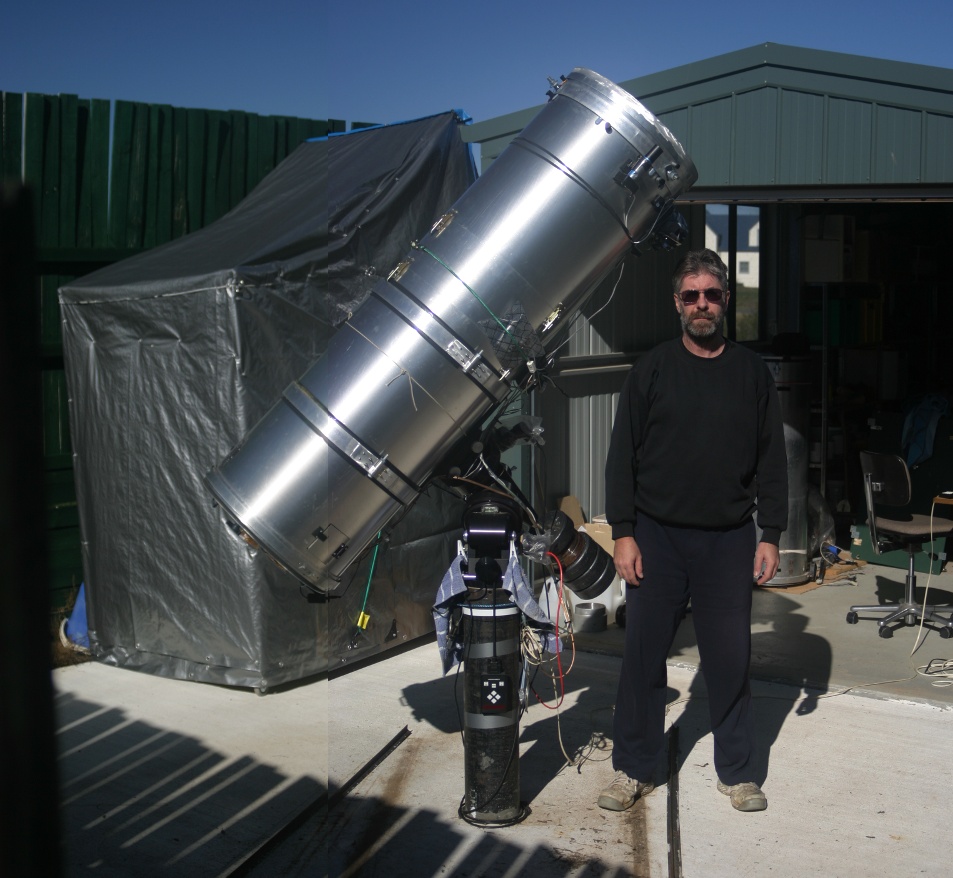
This black spot is featured on APOD today and it made me realise that one thing that has been neglected from most of the news is that this discovery was made by an amateur Australian astronomer using a homebrew telescope. It is good to see amateur astronomers still making an impact in this world of ultra-high-tech observatories. Cheers Anthony Wesley :cheers:
AnthonyWesley.jpg
 
This black spot is featured on APOD today and it made me realise that one thing that has been neglected from most of the news is that this discovery was made by an amateur Australian astronomer using a homebrew telescope. It is good to see amateur astronomers still making an impact in this world of ultra-high-tech observatories. Cheers Anthony Wesley :cheers:
AnthonyWesley.jpg

Here's an article about that:

http://www.csmonitor.com/2009/0723/p02s05-usgn.html
 
Hmmm.......

I wonder if there's a chance that this might be one of the fragments of SL-9 that might have passed by the planet 15 years ago. I haven't found the data for it's orbit to be able to do any meaningful calculations...
 
The Hubble Space Telescope’s new Wide Field Camera 3 (WFC3) captures rare Jupiter collision:

372847main_p0923ay_516.jpg

www.nasa.gov/mission_pages/hubble/main/jupiter-hubble.html

Hubble is about 73 percent through its post STS-125 mission testing.
The gyroscopes, batteries and fine guidance sensor have all passed their tests.
The scientific instruments are more complicated and will take a little longer.
 
Back
Top