

- Joined
- Feb 13, 2008
- Messages
- 5,398
- Reaction score
- 8
- Points
- 0
- Location
- Khimki
- Website
- tigerofsiberia.livejournal.com


On March, 30th, Russia will launch the last of Oko-2 Early Missile Attack warning satellites on the last produced Proton-K launcher. This GEO-bound satellite should perform constant survelliance of Earth and detect launches of ballistic missiles that might pose threat to Russian territory. Oko sats, analogous to US DSP system have a long heritage, and still no operating replacement of a newer generation (which is known to be in development, though). Proton-K will use Block DM-2 upper stage for this launch.
Launch location:
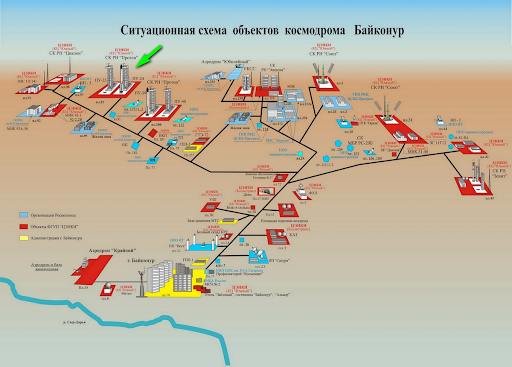
Baikonur Baikonur Launch pad no. 81/24 46°4'15.38"N, 62°59'5.11"E
Launch dates and times:
[table="head"]{colsp=6}Launch times
Time Zone|
Australia - Sydney/UTC+11
| Baikonur / UTC+6
| Moscow / UTC+4/
| Universal / UTC
| Washington / EDT
Launch time (Primary):
|4:49 p.m.
|11:49
|09:49
|05:49
|12:49 a.m.
on:
|Mar. 30, 2012
|Mar. 30, 2012
|Mar. 30, 2012
|Mar. 30, 2012
|Mar. 30, 2012
{colsp=6}
[highlight][eventTimer]2012-03-30 05:49?before|after;%dd% Days %hh% Hours %mm% Minutes %ss% Seconds %c%[/eventTimer] Oko-2 (US-KMO) launch[/highlight]
[/table]Live Coverage Of The Launch:
None available, sorry.
PAYLOAD
Oko-2 (US-KMO) is a military Early Missile Warning satellite. Oko means Eye in high style Russian.
The US-KMO early warning satellites of the second generation were developed as part of the Oko-1 system, which was supposed to complement and then replace the first generation US-KS satellite in the Oko space-based early warning system. Development of the US-KMO system began in 1979. In contrast to the first-generation system, which was designed to detect only launches of ICBMs from bases in U.S. territory, the US-KMO system was designed to provide coverage of SLBM launches from oceans as well.
The satellites feature an IR-telescope with diameter of main mirror of 1 m. Length of the deployable sunshade is 4.5 m. The most important distinguishing feature of the second-generation satellites was their look-down capability. These satellites were to be deployed in geosynchronous orbits, from which they could provide coverage of most of the oceans. It is likely that these satellites are supposed to replace the US-KS first-generation satellites in GEO and supplement the US-K satellites in HEO orbits.
[table="head"]Characteristics|
US-KMO
Customer:
|- Roscosmos, Russian Ministry of Defense
Prime contractor:
|- Lavochkin Association (NPO)
Mission:
|- Missile Attack Early Warning System
GRAU Index:
|- 71Kh6
Type of Platform:
|- Pressurized
Mass:
|- 2 600 kg
Stabilization:
|- 3 axis stabilized
Observation Payload:
|- IR telescope with 1m aperture
On-board power:
|- ?
Life time:
|- 5-7 years
Coverage area:
|- Global
|

Launch Vehicle:
[table="head"]{colsp=2}Characteristics

Proton-K / Block DM2
Prime contractor:
|- Khrunichev Space Centre
GRAU Index:
|- 8K82K
Height:
| ~57 m with upper stage and payload fairingDiameter:
| max 7.4 mLiftoff mass:
| ~700 tonnesPayload mass:
| ~22 tonnes at LEO1st stage:
|- 6 X RD-275 engines
- Empty 30.6 tonnes
- Propellants 419.41 tonnes (UDMH and NTO)
- Thrust in vacuum 1069.8 tonnes of force
- Thrust at sea level 971.4 tonnes of force
2nd stage:
|- 1 X RD-0211 engine 3 X RD-0210 engines
- Empty 11.4 tonnes
- Propellants 156.113 tonnes (UDMH and NTO)
- Thrust in vacuum 237.4 tonnes of force
3rd stage:
|- 1 X RD-0213 engine & 1 X RD-0214 vernier engine
- Empty 3.7 tonnes
- Propellants 46.562 tonnes (UDMH and NTO)
- Thrust in vacuum 59.36 (core) + 3.15 (vernier) tonnes of force
Upper Stage:
|
- GRAU Index: 11S861
- Common Name: Block DM2
- Designer: RKK Energia
- Manufacturer: "Krasmash" Krasnoyarsk Machine Building Plant
- 1 X RD-58M engine
- Empty 2.2 tonnes
- Diameter 4.1 m
- Length 6.26 m
- Propellants 15.095 tonnes (LOX and Kerosene RG-1)
- Thrust in vacuum 8.67 tonnes of force
- ISP 254 s
- Flight time 7-21 hours
Payload Fairing:
|- Diameter 4.35 m
- Length 10 m
[/table]
[/table]
The vehicle's reliability statistics according to http://www.spacelaunchreport.com/log2011.html#rate:
Code:
================================================================
Vehicle     Successes/Tries Realzd Pred  Consc. Last     Dates
                             Rate  Rate* Succes Fail
================================================================
Proton-K/DM-2 100 108 .93 .92 14 10/27/99 1982-12 PM|10°C|8°C|10°C|4 Moderate|0°C|48%|0%|0%|3%|16KM|ENE 3.1 m/s |

http://www.federalspace.ru
http://tvroscosmos.ru
http://www.tsenki.com/launch_services/help_information/launch/2011/?EID=88633
http://www.khrunichev.ru
http://tihiy.fromru.com/Rn/RN_Proton.htm
http://arkos.kharkov.ua/
http://claw.ru/a-kosmos/347.html
http://forum.nasaspaceflight.com
http://www.novosti-kosmonavtiki.ru
http://www.spacelaunchreport.com
http://www.intellicast.com/Local/Forecast.aspx
Last edited:


