
Photographing the upcoming Solar Eclipse

StarLost

Member
Joined
Apr 6, 2008
Messages
74
Reaction score
0
Points
6
A couple of other threads have had the upcoming solar eclipse mentioned. For those of you who might be planning on imaging this event here are a couple of links to articles to how to SAFELY accomplish your goal:

http://www.space.com/scienceastronomy/solarsystem/solar_eclipse_view.html

http://www.stargazing.net/David/Nikon990/projected.html

If you do not have access to a good solar filter or you plan on using a camera that might not normally mount on a telescope, I would highly recommend that you take photographs of a solar image projected onto a screen by a telescope.

Wish I was in Barnaul watching this one with a friend.
 
The solar eclipse maps

StarLost,

Thank you very much for posting :cheers:. The maps for the moon shadow's pass can be found here:
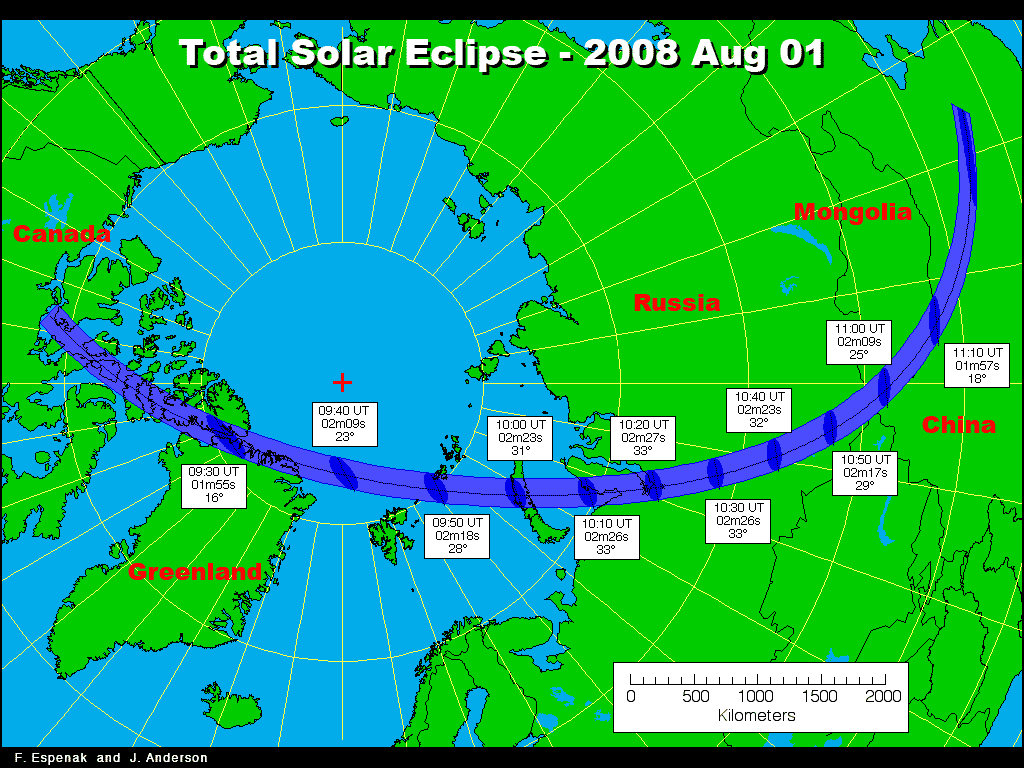
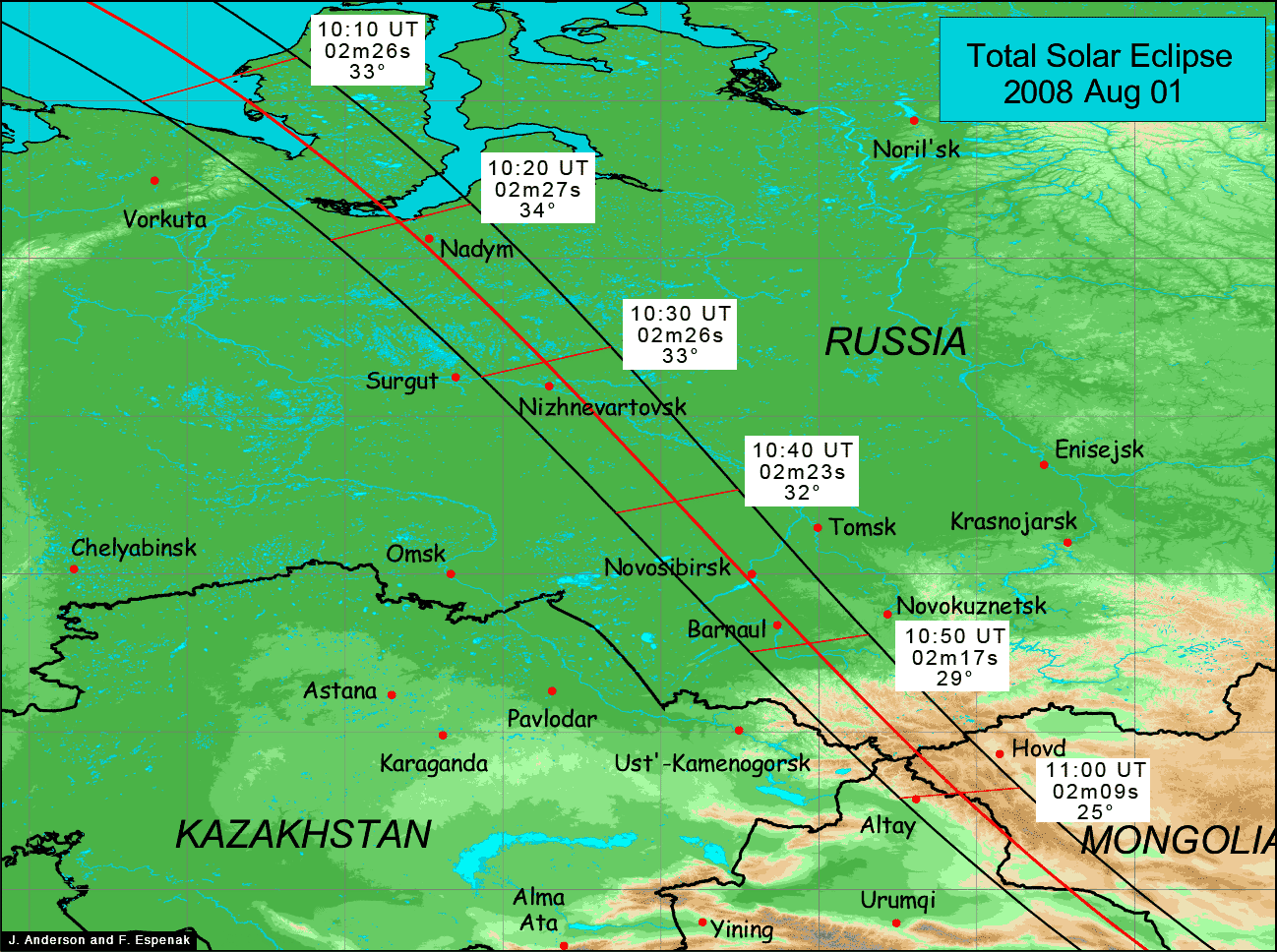
http://eclipse.gsfc.nasa.gov/SEmono/TSE2008/TSE2008.html


TSE2008-fig02.GIF


TSE2008-fig05.GIF
 
In addition to the links above, I'll just state here to be safe.
Do not look directly at the sun without approved solar filters, either through a camera, telescope or naked eye. Do not use makeshift filters - these can still let through harmful IR and/or UV light that will permanently scar your retina even if it 'looks' safe.
 
Just a reminder to all out there that the solar eclipse is tomorrow (morning for those of us in the UK). It would be good to hear from any orbiteers who are present watching it (especially if there are some on the line of totality), or even if some people are flying the shadow's ground track in realtime in a DG!
 
I'm hoping to see a little nibble out of the Sun tomorrow, if it's clear here. One question, though: Will my Eclipse glasses from 1999 still be OK to use nearly 10 years on? They don't worsen with time or anything?
 
I'm hoping to see a little nibble out of the Sun tomorrow, if it's clear here. One question, though: Will my Eclipse glasses from 1999 still be OK to use nearly 10 years on? They don't worsen with time or anything?
Hold them up to a bright lamp and look for any tiny spots where light shines through unobstructed. If there are too many spots, don't risk it, otherwise you can cover up a spot or two with a sharpy marker or a tiny bit of electrical tape. Also look for any irregularities in the density of the filtration when looking at your lamp. If there are any, don't risk it.
 
only partial eclipse here

According to:
http://in.news.yahoo.com/48/20080731/804/tnl-partial-solar-eclipse-in-india-on-fr.html

The southern parts of India will see between 20-40 per cent of the diameter of the sun.


I have never seen a real solar eclipse live :) in person. Hopefully tomorrow, the rain won't spoil it. Though I am not exactly sure how I am gonna view it. I don't have any filter equipment. I do have a few telecope eyepieces. ( 25mm, 12 mm etc. ) ans well as a couple of barlow lenses, and a 6'' reflector. Any way to use these to set up some kind of projection system?
 
And flying along the ground track with a DG will also be funny. The earth is not shadowed but your ship :lol:.
View attachment 909 It didn't shadow my DG on my end. But can see the moon in front of the sun in the scenario I made for this eclipse. Possibly the coordinates aren't precise enough. I've never had much luck getting coordinates extremely accurate in orbiter.
 
Last edited:
View attachment 909 It didn't shadow my DG on my end. But can see the moon in front of the sun in the scenario I made for this eclipse. Possibly the coordinates aren't precise enough. I've never had much luck getting coordinates extremely accurate in orbiter.

Strange.. my DG was shadowed by earth at the last lunar eclipse.
 
I tried a 'by feel' flight to track the eclipse just earlier. Flying around northern Greenland, I could see the Moon in front of the Sun, but with no precise co-ordinates I couldn't get into the Moon's shadow. Pretty cool to see it, though.
 
Back
Top