

Well hello it's me again! :hello: The apparence of me in this part of the forum usually means...........
...........yes it's another launch day! Or actually two, because there are two coming up in the next 36 hours. Interestingly, both launches involves important payloads for the Repulic of Kazakhstan, the Silk Road nation that is most famous for being the site of the Baikonur Cosmodrome.
Well more about the second launch later. But first, I would like to report on the launch of the 3rd new Russian data relay and tracking satellite under the Luch system (which will complete the initial system after the launch of Luch 5A in 2011 and Luch 5B in 2012, allowing finally for tests aboard the ISS later this year) and Kazakhstan's 3rd communication satellite (which will boost their satellite communication and broadcasting abilities from that of KazSat-2, in service since 2011). :tiphat:
Interestingly due to the Crimean Crisis all ILS launches (originally there were none till June anyway) have been grounded as the satellites can't get the export license required by the US, so all Proton launches right now are of Russian payloads, which luckily has plenty to go this year.


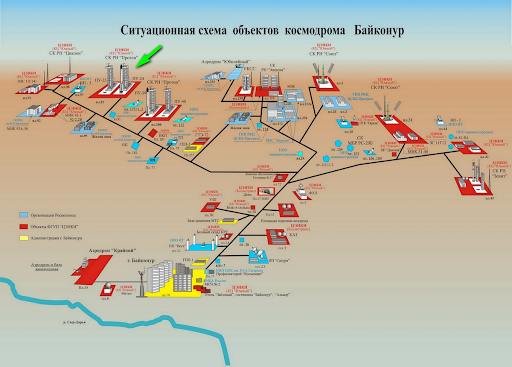
Launch location:
Baikonur Launch pad no. 81/24 46°4'15.38"N, 62°59'5.11"E
Launch dates and times:
[table="head"]{colsp=6}Launch times
Time Zone|
{colsp=6}
[/table]
Live Coverage Of The Launch:
PAYLOAD 1
Luch 5V tracking and data relay satellite:

Mission Summary
The Luch-5 will be the russian follow-on relay satellites, which replace the Luch (Altair) and Luch-2 (Gelios) satellites. Two satellites named Luch 5A and Luch 5B were procured for launches in 2010 and 2011. The smaller satellites are based on the Ekspress-1000 bus and were be launched with a co-passenger on Proton-M Briz-M boosters.
S- and Ku-band data relay channels of each satellite will be linked with receive/transmit points via satellite communications links.
Each data relay satellite is capable of orienting its high-precision antennas towards low-flying space objects so as to “catch” and “track” them along their trajectories. Moreover, each of the two user antennas is capable of tracking its “own” low-flying space object. One antenna will operate in the Ku-band, the other – in the S-band, with the Ku-band channel capacity at 150 Mbit/s and the S-band channel capacity at up to 5 Mbit/s.
The Luch-5A spacecraft is also intended to receive COSPAS/SARSAT signals in the P-band and relay them in the L-band to the ground data receiving points. In addition, Luch-5A will allow collection and transmission of the Planet-S System hydrometeorological data.
By the time Luch-5A was launched in 2011 and the preliminary design of the Luch-4 was completed, plans had surfaced to replace the Luch-4 spacecraft with the third copy of the Luch-5 satellite. Designated Luch-5V, it would ride to orbit above the KazSat-3 satellite on the same Proton rocket. As of beginning of 2012, Luch-5V was to be manufactured by the end of 2013. As of March 2012, the launch was promised for December 2013 or beginning of 2014, however in May 2012, a Russian document indicated that the mission had slipped to March 2014.
[table="head"]{colsp=2}Summary
Parameter|Value
[/table]
[table="head"]Characteristics|
|
 [/table]
PAYLOAD 2
KazSat-3 communication satellite:

Mission Summary
Kazakhstan’s National Center of Space Communications (RTSKS) and Russian Information Satellite Systems-Reshetnev Company in June 2011 signed a deal to build the KazSat 3 satellite.
Thales Alenia Space will be the communications payload supplier. The satellite will be based on an Ekspress-1000NTA platform provided by ISS Reshetnev” and the satellite will be integrated and tested in ISS’ premises, Zheleznogorsk, Russia.
KazSat 3 will operate at 58,5°E for a 15 years lifetime. The payload power is about 5.5 kW. KazSat 3 will carry 28 active Ku-band transponders covering Kazakhstan.
[table="head"]{colsp=2}Summary
Parameter|Value
[/table]
[table="head"]Characteristics|
|
 [/table]
Launch Vehicle:
[table="head"]{colsp=2}Characteristics
 |[table="head"]{colsp=2}

[/table]
[/table]
The vehicle's reliability statistics according to http://www.spacelaunchreport.com/log2014.html#rate:
Proton-M Ascent Profile
The Proton-M first three stages place the orbital unit (OU), which consists of a Breeze-M upper stage, adapter system and the two satellites, into a 51.5° inclination suborbital trajectory.
Proton-M powered flight lasts 582 seconds. The OU powered flight begins at the moment of the third stage separation.
Immediately after the separation of the third stage booster, the Breeze-M stability engines start, damping the angular velocities of the third stage separation and then providing orbital unit orientation and stability during coast flight along a suborbital trajectory to await the first burn. The upper stage follows a four-burn injection profile.
Luch 5V and KazSat-3 Ascent Timeline
[TABLE="head"]Event|Time rel lift-off|Time UTC|Comment
Ignition Start Sequence|-00:00:02.5|04:24:57.5|
Stage 1 Ignition (40% thrust)|-00:00:01.75|04:24:58.25|
Command Stage 1 (100% thrust)|-00:00:00.9|04:24:59.1|
Maximum Dynamic Pressure|00:01:02|04:26:02|
1st/2nd Stage Separation|00:02:03|04:27:03|
2nd/3rd Stage Separation|00:05:31|04:30:31|
Payload Fairing Separation|00:05:47|04:30:47|
3rd Stage/Breeze M Separation|00:09:45|04:34:45|
1st Burn Ignition|00:11:16|04:36:16|
1st Burn Shutdown|00:15:22|04:40:22|1st Burn's Duration 00:04:06
2nd Burn Ignition|01:07:35|05:32:35|
2nd Burn Shutdown|01:25:26|05:50:26|2nd Burn's Duration 00:17:51
3rd Burn Ignition|03:28:05|07:53:05|
3rd Burn Shutdown|03:56:09|08:11:09|3rd Burn's Duration 00:28:04
APT Jettison|03:57:00|08:12:00|
4th Burn Ignition|08:38:46|13:03:46|
4th Burn Shutdown|08:50:16|13:16:16|4th Burn's Duration 00:12:30
Luch 5V Separation|08:52:27|13:17:27|
5th Burn Ignition|09:30:05|13:55:05|
5th Burn Shutdown|09:30:51|13:55:51|5th Burn's Duration 00:00:46
KazSat-3 Separation|09:32:00|13:57:01|
[/TABLE]
Weather forecast for Baikonur, Kazakhstan on April 28, 2014 (10 a.m.)
Abundant sunshine. High around 16C. Winds ENE at 10 to 15 kmh.
Time|Temps|Dew Point|Relative Humidity|Precip|Snow|Cloud cover|Pressure|Wind|Weather
10 AM|7°C|-8°C|34%|0%|0%|19%|1029 hPa|13 km/h ENE|
 Clear
Clear
References
http://www.federalspace.ru
http://www.mcc.rsa.ru/luch_5v.htm
http://www.russianspaceweb.com/luch5v_kazsat3.html
http://iss-reshetnev.ru/
http://tvroscosmos.ru
http://www.khrunichev.ru
http://tihiy.fromru.com/Rn/RN_Proton.htm
http://space.skyrocket.de
http://www.tsenki.com
http://forum.nasaspaceflight.com
http://www.novosti-kosmonavtiki.ru
http://www.spacelaunchreport.com
http://english.wunderground.com/q/locid:KZXX0055
...........yes it's another launch day! Or actually two, because there are two coming up in the next 36 hours. Interestingly, both launches involves important payloads for the Repulic of Kazakhstan, the Silk Road nation that is most famous for being the site of the Baikonur Cosmodrome.
Well more about the second launch later. But first, I would like to report on the launch of the 3rd new Russian data relay and tracking satellite under the Luch system (which will complete the initial system after the launch of Luch 5A in 2011 and Luch 5B in 2012, allowing finally for tests aboard the ISS later this year) and Kazakhstan's 3rd communication satellite (which will boost their satellite communication and broadcasting abilities from that of KazSat-2, in service since 2011). :tiphat:
Interestingly due to the Crimean Crisis all ILS launches (originally there were none till June anyway) have been grounded as the satellites can't get the export license required by the US, so all Proton launches right now are of Russian payloads, which luckily has plenty to go this year.
Launch location:
Baikonur Launch pad no. 81/24 46°4'15.38"N, 62°59'5.11"E
Launch dates and times:
[table="head"]{colsp=6}Launch times
Time Zone|
Baikonur / UTC+6
| Moscow / UTC+4
| Universal / UTC
| Washington / EDT
| Los Angeles / PDT
Launch time (Primary):
|10:25:00
|08:25:00
|04:25:00
|00:25:00
|21:25:00
on:
|Apr. 28, 2014
|Apr. 28, 2014
|Apr. 28, 2014
|Apr. 28, 2014
|Apr. 27, 2014
{colsp=6}
[highlight][eventTimer]2014-04-28 04:25:00?before|after;%dd% Days %hh% Hours %mm% Minutes %ss% Seconds %c%[/eventTimer] Luch 5V and KazSat-3 Launch[/highlight]
[/table]
Live Coverage Of The Launch:
- TSENKI Video Streams: http://www.tv-tsenki.com/livechoose.php
- Khrunichev COOPI (login: ? password: ?): http://coopi.khrunichev.ru/main.php?id=200
- Owners of PDA can watch the launch in test mode on: http://www.space-center.ru
PAYLOAD 1
Luch 5V tracking and data relay satellite:
Mission Summary
The Luch-5 will be the russian follow-on relay satellites, which replace the Luch (Altair) and Luch-2 (Gelios) satellites. Two satellites named Luch 5A and Luch 5B were procured for launches in 2010 and 2011. The smaller satellites are based on the Ekspress-1000 bus and were be launched with a co-passenger on Proton-M Briz-M boosters.
S- and Ku-band data relay channels of each satellite will be linked with receive/transmit points via satellite communications links.
Each data relay satellite is capable of orienting its high-precision antennas towards low-flying space objects so as to “catch” and “track” them along their trajectories. Moreover, each of the two user antennas is capable of tracking its “own” low-flying space object. One antenna will operate in the Ku-band, the other – in the S-band, with the Ku-band channel capacity at 150 Mbit/s and the S-band channel capacity at up to 5 Mbit/s.
The Luch-5A spacecraft is also intended to receive COSPAS/SARSAT signals in the P-band and relay them in the L-band to the ground data receiving points. In addition, Luch-5A will allow collection and transmission of the Planet-S System hydrometeorological data.
By the time Luch-5A was launched in 2011 and the preliminary design of the Luch-4 was completed, plans had surfaced to replace the Luch-4 spacecraft with the third copy of the Luch-5 satellite. Designated Luch-5V, it would ride to orbit above the KazSat-3 satellite on the same Proton rocket. As of beginning of 2012, Luch-5V was to be manufactured by the end of 2013. As of March 2012, the launch was promised for December 2013 or beginning of 2014, however in May 2012, a Russian document indicated that the mission had slipped to March 2014.
[table="head"]{colsp=2}Summary
Parameter|Value
Working Orbit:
|GEOOrbital Location:
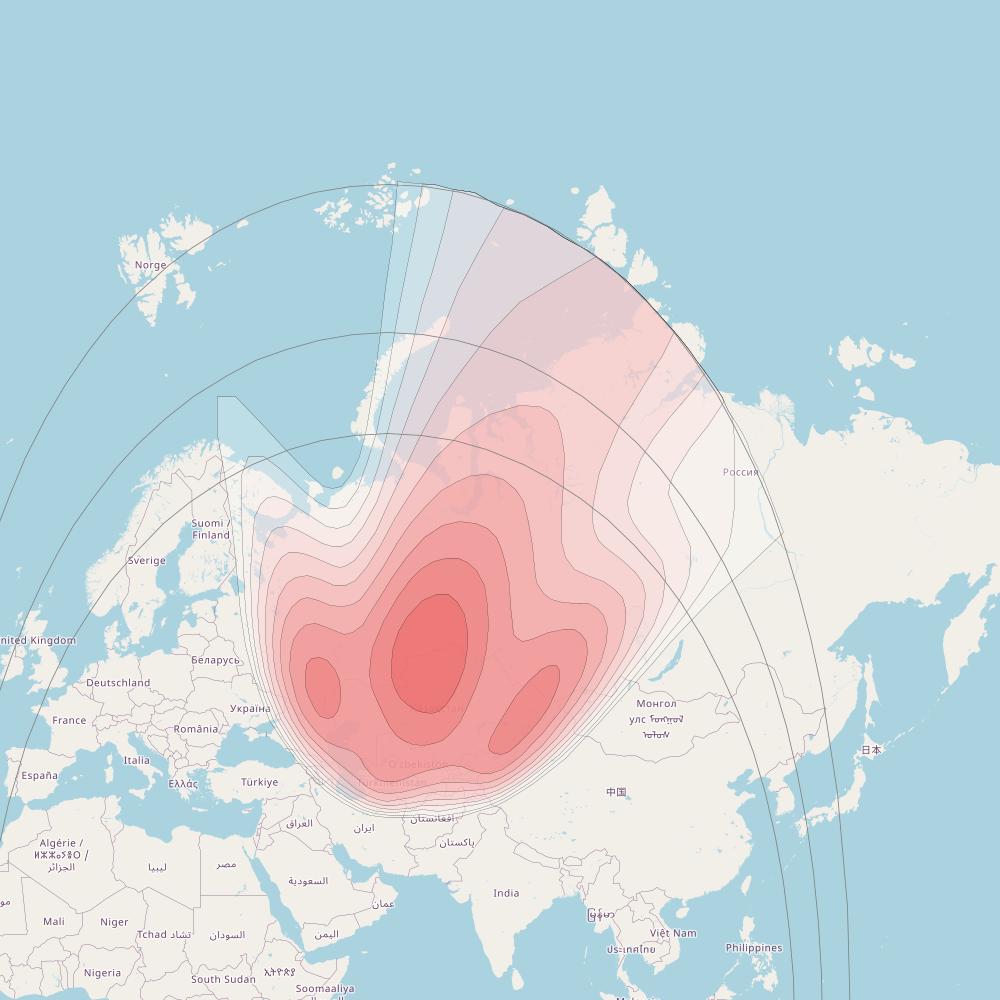
|95° EastCoverage:
|Eastern Europe/Western Russia/SiberiaApA at separation:
|35793 kmPeA at separation:
|35793 kmInc at separation:
|5°[/table]
[table="head"]Characteristics|
Luch 5V
Customer:
|- Roscosmos
Prime contractor:
|- JSC Information Satellite Systems
Platform:
|- Express-1000A
Mass at Separation:
|- 1148 kg
Dry Mass:
|- ?
Stabilization:
|- 3 axis stabilized
Dimensions (deployed):
|- 6.26 m x 19.436 m x 11.661 m
Batteries:
|- three-section solar panels providing 2.2 kW of power
Payload:
|- 8 Ku-band/S-band transponders
Life time:
|- 10 years
Coverage:
|
|
PAYLOAD 2
KazSat-3 communication satellite:
Mission Summary
Kazakhstan’s National Center of Space Communications (RTSKS) and Russian Information Satellite Systems-Reshetnev Company in June 2011 signed a deal to build the KazSat 3 satellite.
Thales Alenia Space will be the communications payload supplier. The satellite will be based on an Ekspress-1000NTA platform provided by ISS Reshetnev” and the satellite will be integrated and tested in ISS’ premises, Zheleznogorsk, Russia.
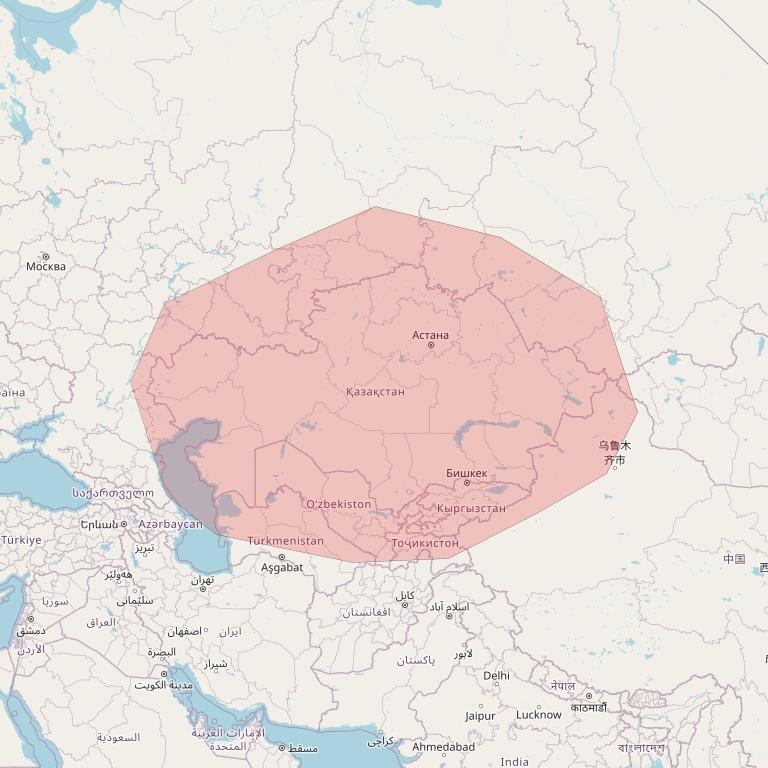
KazSat 3 will operate at 58,5°E for a 15 years lifetime. The payload power is about 5.5 kW. KazSat 3 will carry 28 active Ku-band transponders covering Kazakhstan.
[table="head"]{colsp=2}Summary
Parameter|Value
Working Orbit:
|GEOOrbital Location:
|58.5° EastCoverage:
|Kazakhstan, Central AsiaApA at separation:
|35793 kmPeA at separation:
|35793 kmInc at separation:
|0°[/table]
[table="head"]Characteristics|
KazSat-3
Customer:
|- KazKosmos
Prime contractor:
|- JSC Information Satellite Systems
Platform:
|- Express-1000NTA
Mass at Separation:
|- ~1900 kg
Dry Mass:
|- ?
Stabilization:
|- 3 axis stabilized
Dimensions (stowed):
|- ?
Batteries:
|- three-section solar panels providing 5.5 kW of power
Payload:
|- 28 Ku-band transponders
Life time:
|- 15 years
Ku-band coverage:
|
|
Launch Vehicle:
[table="head"]{colsp=2}Characteristics
Proton-M / Briz-M
Prime contractor:
|- Khrunichev Space Centre

GRAU Index:
|- 8K82KM
Height:
| 58.2 m with upper stage and payload fairingDiameter:
| max 7.4 mLiftoff mass:
| 705 metric tonnesPayload mass:
| ~22 tonnes at LEO1st stage:
|- 6 X RD-275 engines
- Empty 30.6 tonnes
- Propellants 419.41 tonnes (UDMH and NTO)
- Thrust in vacuum 1069.8 tonnes of force
- Thrust at sea level 971.4 tonnes of force
2nd stage:
|- 1 X RD-0211 engine 3 X RD-0210 engines
- Empty 11.4 tonnes
- Propellants 156.113 tonnes (UDMH and NTO)
- Thrust in vacuum 237.4 tonnes of force
3rd stage:
|- 1 X RD-0213 engine & 1 X RD-0214 vernier engine
- Empty 3.7 tonnes
- Propellants 46.562 tonnes (UDMH and NTO)
- Thrust in vacuum 59.36 (core) + 3.15 (vernier) tonnes of force
Upper Stage:
|
- GRAU Index: 14S43
- Common Name: Briz-M
- Designer & Manufacturer: Khrunichev Space Centre
- Dimensions: Length 2.654 m, Diameter 4 m
- Empty Mass 2.2 tonnes
- Propellants 6 660 kg UDMH + 13 260 kg N2O4
- Flight time: no less than 24 hours
- Main Engine: 1 X 14D30
- Thrust in vacuum 2.0 tonnes of force
- ISP 328.6 s
- Main engine restarts: up to 8 times
- Precision Manoeuvering Engines: 4 X 11D458
- Thrust in vacuum 400 N each
- ISP 252 s
- RCS Engines: 12 X 17D58E
- Thrust in vacuum 13.3 N each
- ISP 274 s
Payload Fairing:
|- Diameter 4.35 m
- Length 11.6 m
[/table]
[/table]
The vehicle's reliability statistics according to http://www.spacelaunchreport.com/log2014.html#rate:
Code:
================================================================
Vehicle     Successes/Tries Realzd Pred  Consc. Last     Dates
                             Rate  Rate* Succes Fail
================================================================
Proton-M/Briz-M   67    73    .92  .91     11    12/08/12 2001-
Proton-M Ascent Profile
The Proton-M first three stages place the orbital unit (OU), which consists of a Breeze-M upper stage, adapter system and the two satellites, into a 51.5° inclination suborbital trajectory.
Proton-M powered flight lasts 582 seconds. The OU powered flight begins at the moment of the third stage separation.
Immediately after the separation of the third stage booster, the Breeze-M stability engines start, damping the angular velocities of the third stage separation and then providing orbital unit orientation and stability during coast flight along a suborbital trajectory to await the first burn. The upper stage follows a four-burn injection profile.
Luch 5V and KazSat-3 Ascent Timeline
[TABLE="head"]Event|Time rel lift-off|Time UTC|Comment
Ignition Start Sequence|-00:00:02.5|04:24:57.5|
Stage 1 Ignition (40% thrust)|-00:00:01.75|04:24:58.25|
Command Stage 1 (100% thrust)|-00:00:00.9|04:24:59.1|
Maximum Dynamic Pressure|00:01:02|04:26:02|
1st/2nd Stage Separation|00:02:03|04:27:03|
2nd/3rd Stage Separation|00:05:31|04:30:31|
Payload Fairing Separation|00:05:47|04:30:47|
3rd Stage/Breeze M Separation|00:09:45|04:34:45|
1st Burn Ignition|00:11:16|04:36:16|
1st Burn Shutdown|00:15:22|04:40:22|1st Burn's Duration 00:04:06
2nd Burn Ignition|01:07:35|05:32:35|
2nd Burn Shutdown|01:25:26|05:50:26|2nd Burn's Duration 00:17:51
3rd Burn Ignition|03:28:05|07:53:05|
3rd Burn Shutdown|03:56:09|08:11:09|3rd Burn's Duration 00:28:04
APT Jettison|03:57:00|08:12:00|
4th Burn Ignition|08:38:46|13:03:46|
4th Burn Shutdown|08:50:16|13:16:16|4th Burn's Duration 00:12:30
Luch 5V Separation|08:52:27|13:17:27|
5th Burn Ignition|09:30:05|13:55:05|
5th Burn Shutdown|09:30:51|13:55:51|5th Burn's Duration 00:00:46
KazSat-3 Separation|09:32:00|13:57:01|
[/TABLE]
Weather forecast for Baikonur, Kazakhstan on April 28, 2014 (10 a.m.)
Abundant sunshine. High around 16C. Winds ENE at 10 to 15 kmh.
10 AM|7°C|-8°C|34%|0%|0%|19%|1029 hPa|13 km/h ENE|
References
http://www.federalspace.ru
http://www.mcc.rsa.ru/luch_5v.htm
http://www.russianspaceweb.com/luch5v_kazsat3.html
http://iss-reshetnev.ru/
http://tvroscosmos.ru
http://www.khrunichev.ru
http://tihiy.fromru.com/Rn/RN_Proton.htm
http://space.skyrocket.de
http://www.tsenki.com
http://forum.nasaspaceflight.com
http://www.novosti-kosmonavtiki.ru
http://www.spacelaunchreport.com
http://english.wunderground.com/q/locid:KZXX0055


 )
)


