

(Editor's note: Lack of motivation has delayed this report by more than 2 weeks :rofl
The weird accident during the last seconds of the ascent to space of Progress M-27M on April 28 continues to puzzle everyone even after the Russians announced that the investigation found that the spacecraft was damaged by internal oscillations of the third stage of the Soyuz-2.1a rocket that was not found until this 2nd flight of the rocket/spacecraft configuration.
However the Russians were apparently satisfied enough that they returned the Soyuz rocket back to flight secretly shortly after the announcement - and it was no ordinary spacecraft, for it probably marked the end of one long era of spaceflight history.
On June 5 at 15:24 UTC, just 5 weeks after the Soyuz rocket was grounded, a Soyuz-2.1a rocket - the same sub-type that was involved in the Progress accident - lifted off from the secret Plestesk Cosmodrome's pad 43/4. The payload entered its target orbit within 10 minutes time.
What makes this launch stands out - apart from the Soyuz rocket's RTF - is that the payload involved is the last of its line, or indeed possibly the last descendent of one of the most secret yet history-defining satellite families ever. For Kosmos 2505 is known to be the 10th and final Cobalt-M film-return optical spysat to fly.
A member of the Yantar series of film-return optical spysats, this 6.7 tonne satellite has a lifetime in orbit of about 4-5 months and has a reported resolution of ~0.3 meters. After the film is used up, the cone ("Mecury-shaped") return module would separate and return to Earth aiming at the flat plains east of the Ural mountains. The previous flights were launched in November 2008, April 2009, April 2010, June 2011, May 2012 and May 2014.
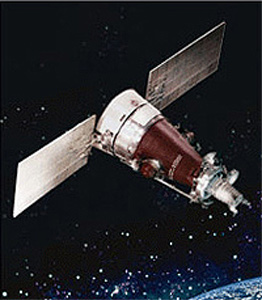
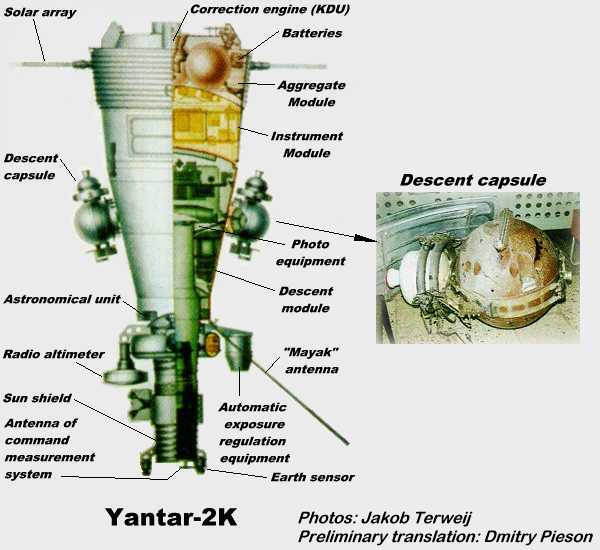
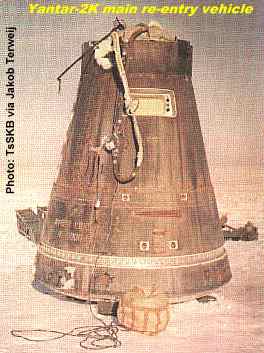
With new Russian spysats rapidly entering service over these few years (including another that should fly tomorrow from the very same pad), the long overdue phasing out of the film-return spysats in Russia has now finally reached its last note, ending its 53 years of service since the first Zenit-2 spysat - a sibling of the Vostok spacecraft also developed by Sergei Korolev - was launched in December 1961. With the other 2 countries that have used spysats using film having long retired them (the US since 1986 and China since 2005), the extremely long history of photographing targets from space on film since the Corona program started flying in 1959 is now coming to an end.

NASASpaceflight.com: Russia conducts surprise Soyuz 2-1A launch carrying Kobalt-M
RussiaSpaceWeb.com: Kobalt-M reconnaissance satellite series


The weird accident during the last seconds of the ascent to space of Progress M-27M on April 28 continues to puzzle everyone even after the Russians announced that the investigation found that the spacecraft was damaged by internal oscillations of the third stage of the Soyuz-2.1a rocket that was not found until this 2nd flight of the rocket/spacecraft configuration.
However the Russians were apparently satisfied enough that they returned the Soyuz rocket back to flight secretly shortly after the announcement - and it was no ordinary spacecraft, for it probably marked the end of one long era of spaceflight history.
On June 5 at 15:24 UTC, just 5 weeks after the Soyuz rocket was grounded, a Soyuz-2.1a rocket - the same sub-type that was involved in the Progress accident - lifted off from the secret Plestesk Cosmodrome's pad 43/4. The payload entered its target orbit within 10 minutes time.
What makes this launch stands out - apart from the Soyuz rocket's RTF - is that the payload involved is the last of its line, or indeed possibly the last descendent of one of the most secret yet history-defining satellite families ever. For Kosmos 2505 is known to be the 10th and final Cobalt-M film-return optical spysat to fly.
A member of the Yantar series of film-return optical spysats, this 6.7 tonne satellite has a lifetime in orbit of about 4-5 months and has a reported resolution of ~0.3 meters. After the film is used up, the cone ("Mecury-shaped") return module would separate and return to Earth aiming at the flat plains east of the Ural mountains. The previous flights were launched in November 2008, April 2009, April 2010, June 2011, May 2012 and May 2014.
With new Russian spysats rapidly entering service over these few years (including another that should fly tomorrow from the very same pad), the long overdue phasing out of the film-return spysats in Russia has now finally reached its last note, ending its 53 years of service since the first Zenit-2 spysat - a sibling of the Vostok spacecraft also developed by Sergei Korolev - was launched in December 1961. With the other 2 countries that have used spysats using film having long retired them (the US since 1986 and China since 2005), the extremely long history of photographing targets from space on film since the Corona program started flying in 1959 is now coming to an end.
NASASpaceflight.com: Russia conducts surprise Soyuz 2-1A launch carrying Kobalt-M
RussiaSpaceWeb.com: Kobalt-M reconnaissance satellite series

