Launch News SpaceX Falcon 9 F3 COTS2+ Updates

It doesn't say which GTO. Also the prices are only at first glance much better than Ariane 5. A single Ariane 5 launch to GTO is currently at 150 million Dollar, AFAIR, which is expensive for a launcher.

But the important qualitative difference is which inclination and periapsis the GTO has. The Ariane 5 can launch into a pretty excellent GTO with low inclination and high periapsis. What will the Falcon 9 Heavy do? sure not into a low inclination GTO, so it will cost the satellites much more fuel mass for the GSO insertion.
 
What will the Falcon 9 Heavy do? sure not into a low inclination GTO, so it will cost the satellites much more fuel mass for the GSO insertion.

AFAIK they are still looking at new launch sites.
 
What I want to know is this.
If there where people (astronauts) inside the Dragon capsule from launch to splashdown, would they survived? I assumed that there was life support inside the capsule of course.
I think they would survive the mission.
Everything went so smoothly, it is scary to think about it.
And the splashdown was 2 minutes ahead of schedule.
Did they start the de-orbit burn 2 minutes early or is there other factors I don't know about.
 
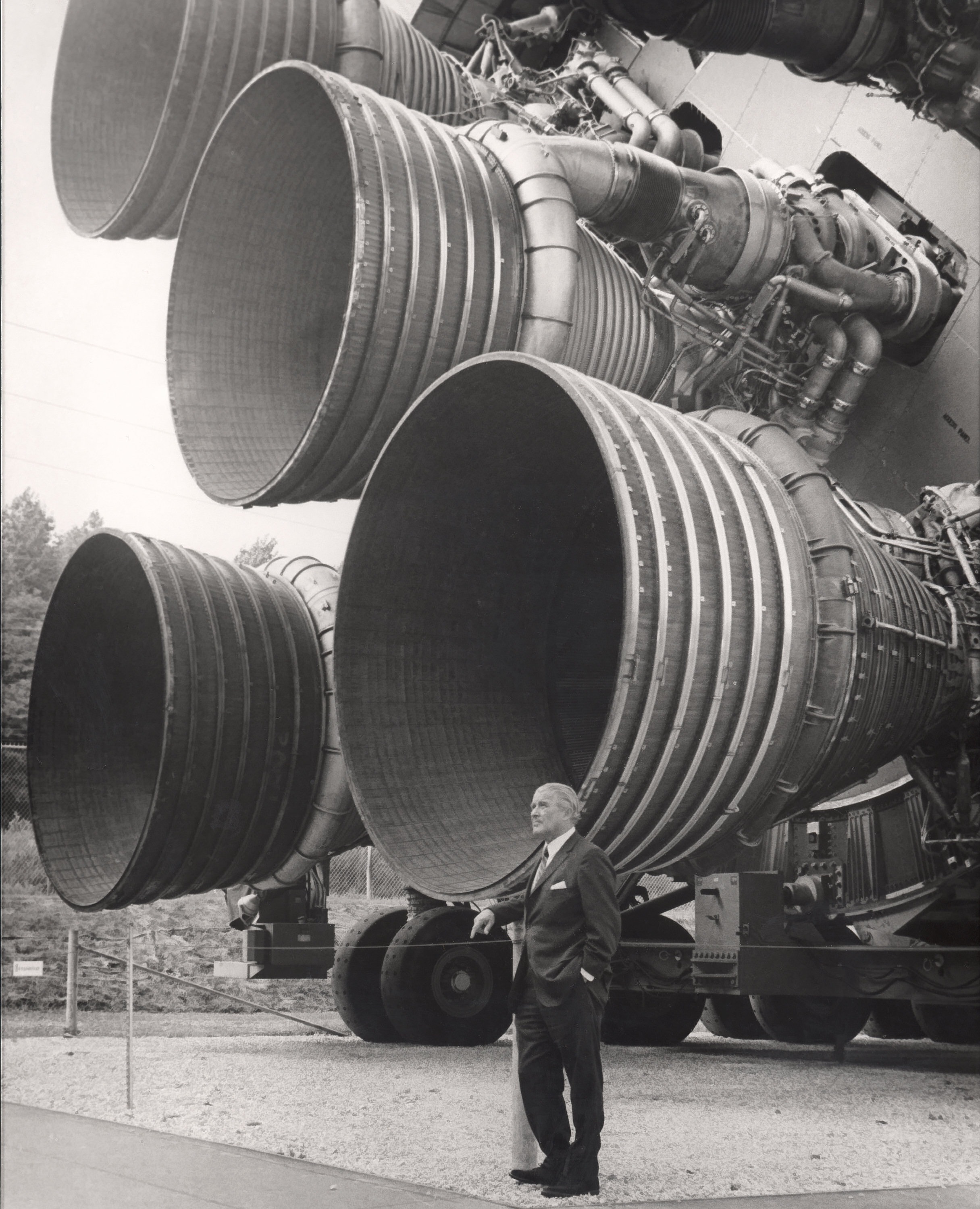
20th Century:

saturn_5_booster_wernher_von_braun_huge_desktop_2431x3000_wallpaper-222278.jpg


21st Century:

6a00d8341bf67c53ef0133edecc86a970b-800wi


:cool:

(I think both are equal visionaries, but just from different eras)

They were designed with completely different purposes in mind. That's like comparing a small yacht to cruiseliner.
 
Musk has stated that they could have had someone stow away inside the Dragon to the ISS, and then return to Earth. It may have been possible in air pressure, acceleration and thermal terms, but whether they would have suffered hypercapnia or hypoxia due to the lack of provision for human habitation is another issue.

The issue isn't just getting people into space and back- that could be done relatively easily. The issue is doing it safely and routinely, and that is where things such as seats and controls, as well as more technologically demanding additions (like a LAS) are essential.

They were designed with completely different purposes in mind. That's like comparing a small yacht to cruiseliner.

One of the best yachts of today is not necessarily any less of a feat than one of the biggest cruiseliners of a bygone era. ;)
 
What I want to know is this.
If there where people (astronauts) inside the Dragon capsule from launch to splashdown, would they survived? I assumed that there was life support inside the capsule of course.

Dragon is not yet man-rated. But I think it already has a working life support system. Together with the flawless mission we have seen, I would say it should not be an issue to take a seat already. At least on the way back to earth (no launch escape system yet).

And the splashdown was 2 minutes ahead of schedule.
Did they start the de-orbit burn 2 minutes early or is there other factors I don't know about.

I think it is not really possible to calculate the time of splashdown precisely to the tick. The descent of the capsule depends on local winds which are not very precisely predictable.

The calculated time for splashdown of Apollo 13 for example also was "inaccurate". Splashdown occurred more than 30 seconds later if I remember correctly. I was thinking about it during the descent of Dragon. But then its splashdown happened too early :)
 
One of the best yachts of today is not necessarily any less of a feat than one of the biggest cruiseliners of a bygone era. ;)

I'm not saying it isn't impressive or a feat, but the Falcon 9 and Saturn V were built for different purposes. The Saturn V was built to get everything you needed to the Moon in one launch. The Falcon 9 is designed to get cargo and maybe people to LEO.
 
They were designed with completely different purposes in mind. That's like comparing a small yacht to cruiseliner.

I wasn't comparing the launch vehicles you see on the images. I was comparing von Braun and Musk. Both are the same type of visionaries. Von Braun had the Moon and Mars in mind, as well as space stations. Musk has the Moon and Mars in mind, and supports a space station.

As for the launchers: the reason for Saturn V and Falcon 9 / Falcon Heavy are almost entirely political. The Saturn V only became alive because everything had to go as quick as possible back then, not matter the costs, just to beat the Russians. Falcon 9 and Falcon Heavy only exist because it is possible economically. And because NASA is in trouble, self-inflicted.

Ares I and V do not exist because it is not economical. You can expect the same to happen with the SLS. NASA won't get the chance to propel uneconomic vehicles off the ground anymore during these days. The Saturn V was amazing in the 1960s. But only then.
 
Last edited:
You can expect the same to happen with the SLS. NASA won't get the chance to propel uneconomic vehicles off the ground anymore during these days. The Saturn V was amazing in the 1960s. But only then.

I'll reserve judgement on that program.
 
About the reusability:
When being asked if future Dragon capsules will get names, Elon Musk answered that NASA purchased all-new capsules for the contracted supply missions, and they will not get individual names until they can be reused. I think while the Dragon has been designed with reusabilty in mind, they will not reuse the generation we see here on the first flights.

It might very well be that reusabilty starts only when the propulsive landing on dry land is available. I guess a splashdown in seawater is quite unhealthy to a lot of materials and systems, so refurbishing a splashed-down capsule and certifiy it space-worthy again may not be worth the cost.
 
Well, what does Soyuz or did the Apollo Command Module look like after entry? ;)

I think there is one major difference between th ACM and Dragon.
The ACM enter the Earth's atmosphere at mach 39 and the Dragon at mach 27.
 
I'm not saying it isn't impressive or a feat, but the Falcon 9 and Saturn V were built for different purposes. The Saturn V was built to get everything you needed to the Moon in one launch. The Falcon 9 is designed to get cargo and maybe people to LEO.

And why exactly is this relevant? Noone was trying to claim that Falcon is designed to enact the Apollo program- or that the Saturn V was a shining example of a medium-lift people/cargo/satellite launcher. Regardless, there wasn't even any comparison between the vehicles- just people influential in their development.
 
I think there is one major difference between th ACM and Dragon.
The ACM enter the Earth's atmosphere at mach 39 and the Dragon at mach 27.

Not only. And it did not differ optically whether the Apollo Command Module did enter from low earth orbit or after returning from deep space. It did enter the atmosphere from low earth orbit 6 times manned, if I remember correctly (Apollo 7 and 9; Skylab 2, 3 and 4; and ASTP).

Dragon also is capable to enter the atmosphere after returning from deep space missions. At least SpaceX says so.

The major difference is that the Apollo Command Module consisted of different heat shield materials than Dragon. Just like Soyuz also differs. But all three have one thing in common after returning home: they look crusty.
 
No offense FADEC. I just wonder how crispy the Dragon would look like when entering from deep space.
I am a bit worried by the upper head shield of Dragon.
The way they installed the parachute lines in the "crack":) of the hull.
If that lines get burned trough it is bye bye Dragon.
I think the upper hull of Dragon get pretty warm during re-entry.
 
No offense FADEC. I just wonder how crispy the Dragon would look like when entering from deep space.
I am a bit worried by the upper head shield of Dragon.
The way they installed the parachute lines in the "crack":) of the hull.
If that lines get burned trough it is bye bye Dragon.
I think the upper hull of Dragon get pretty warm during re-entry.

I think you better alert SpaceX about this, maybe they don't realise this.:facepalm:
 
No offense FADEC. I just wonder how crispy the Dragon would look like when entering from deep space.
I am a bit worried by the upper head shield of Dragon.
The way they installed the parachute lines in the "crack":) of the hull.
If that lines get burned trough it is bye bye Dragon.
I think the upper hull of Dragon get pretty warm during re-entry.

I think you have missed the point of how it's supposed to work. :)

The lines are installed under the upper heat-shield and the tension on the lines makes part of the shield break away. The shield is no longer needed when the main shutes are deployed.
 
Yes, I know the lines are under the upper heat shield.
I know "now" :) that the lines rips of some pieces of the upper heat shield.
I saw the video's....
I maybe wrong, but it looks like some of the upper heat shield in other areas, burned away BEFORE the deployment of the drogue chutes.
 
I maybe wrong, but it looks like some of the upper heat shield in other areas, burned away BEFORE the deployment of the drogue chutes.

Yes, it was scorched by plasma. Not burned away - it is just a chemical reaction, not a thermal.

It is just thermal protection for space, that has the unlucky fate to also double as thermal protection during reentry. The parachutes are, if you pay attention at the drop test, on the bottom of the spacecraft during reentry, on the "wind protected" side.

The damage won't change for higher reentry speeds, plasma will always touch the spacecraft, but it will not be hot. The hot side is the main PICA-X heatshield, which can survive a lot more mistreatment.
 
I maybe wrong, but it looks like some of the upper heat shield in other areas, burned away BEFORE the deployment of the drogue chutes.

The heat shield of Dragon is not ablative I think. I can't see anything that burned away. The heat shield just changed its color from white to brown and black. The scratches and cracks on the heat shield are caused by parachute deployment (certain panels are separated, which you can see in the video I posted earlier).

Something always becomes intentionally damaged for splash down on such capsules. For parachute deployment the entire forward heat shield of the Apollo Command Module was separated. And the heat shield was ablative. It literally burned away. That's why the Apollo capsule was not reusable. Also because it's structure cracked during splashdown.
 
The heat shield of Dragon is not ablative I think. I can't see anything that burned away.

PICA-X is ablative. But with very good properties.
 
Back
Top