
Question Wind speed limit in commercial aviation ?

N_Molson

Addon Developer
Addon Developer
Donator
Joined
Mar 5, 2010
Messages
10,002
Reaction score
4,418
Points
203
Location
Toulouse
Hello,

I have to take a short jet flight tomorrow (very early) inside France. But a big storm is quickly gaining strenght, and it's maximal force will be reached during the precise hour my flight is scheduled. The windspeed at ground level could reach 130 km/h (70 knots+), with an atmospheric pressure of 975 hPa. The wind will be more or less in the axis of the landing runway, however, as the direction is not unusual.

Medias say there could be "perturbations" in the airports caused by this storm. But anyway there will be, as a part of the luggage-checking security personnel is on strike (yeah, I'm lucky... :facepalm:).

Of course, the airport sites are down, because everyone is rushing for information, and the same for the call centers.

So do you know if there is an international wind speed limit that can prevent a plane to takeoff or to land (assuming they don't takeoff if the meteo says they can't land ?).

The aircraft is a CRJ-700, a "small" jet with a rather good mass/thrust ratio. But I guess all the planes share the same certifications and limitations.

I think it could be a good idea to bring a book or two with me...
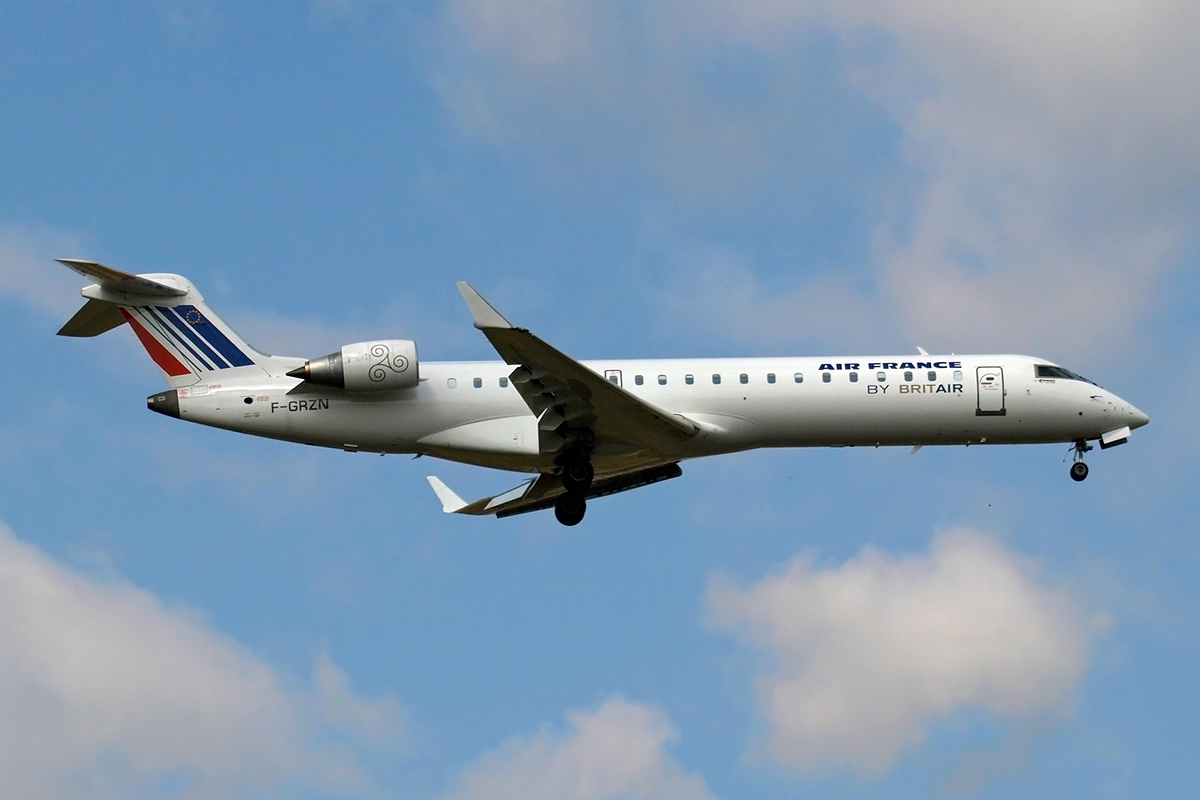
CRJ700_AF_FGRZN_080917.jpg
 
If its too windy to service the aircraft it cant get fuel, so cant take-off.
As for the Aircraft each aircraft type has a crosswind component which limits takeoff and landing crosswinds.
At my local airport, (its a private, ex-ww2 raf base) they close down if there is more than 40 knots of wind.
 
With those kinds of expected winds you will most likely not go very far.....
My suggestion: take a laptop and work on some add-ons :) (You'll have plenty of time)
 
take a laptop and work on some add-ons (You'll have plenty of time)

Yeah, I wish I had one. The current project VS files and O2010P1 base zip file are already in my USB key... :yes:
 
I took a look at the charts and didn't see any minima for the field regarding winds. Airports tend to only care themsevles about minima concerning visibility and cloud ceiling, as it can relate to the ability to see surrounding obstructions.

Wind speed is often left to the airframe minimum, and I am sure each and every airline has established minimums. And of course there are personal minimums, but it has become quite common for a pilot to get a quick call from his chief pilot if he deems his personal minimum to be higher than what the airline calls for.

On a note, due to that 737-800 AAL flight that crashed in Jamaica, the FAA is looking hard at having such a hard rule regarding tailwind operations. A heavy headwind is most of the time not a bad thing. It allows the plane to take off and land at lower speeds, and lower speeds are often far safer than what happened in Jamaica, where the guy tried to land the plane with a huge tail wind, and floated (as the 800 so likes to do) some 4,000 feet down the runway before the wheels finally touched the ground. And one of the first rules you learn as a pilot, the plane best brakes when on the ground. Spoilers, stall, whatever, nothing in the air will stop a plane better than lift killed wheels on the ground, and good old brakes.
 
Can I ask what your destination airfield is?
 
As long as the wind is "down" the runway with respect to heading, then most aircraft can handle winds up to 70-ish knots. It just depends on the operators own restrictions.

However, crosswind components are aircraft specific, the CRJ-700 has limits of Takeoff: 28 kts, Landing: 30 kts, for a 90 degree crosswind. But again, the operator of the aircraft may have lower limits placed on the aircraft.
This means that for takeoff, 28kts blowing directly across the runway is redline, but, if its oblique, say 30 degrees of the nose, then even if its blowing at 40kts, the actual sidewind component is only 20kts.

The crosswind component for "off the nose" angles is calculated thus:
if angle off nose = 10 deg then crosswind component = 1/6 wind strength
if angle off nose = 20 deg then crosswind component = 1/3 wind strength
if angle off nose = 30 deg then crosswind component = 1/2 wind strength
if angle off nose = 40 deg then crosswind component = 2/3 wind strength
if angle off nose = 50 deg then crosswind component = 5/6 wind strength
if angle off nose = 60+ deg then crosswind component = wind strength
 
Last edited:
Can I ask what your destination airfield is?

LFRS, Nantes-Atlantique

Departure airport : LFBO, Toulouse-Blagnac
 
Last edited:
This is the current weather for LFRS:

==================================================
ICAO : LFRS
Station Name : Nantes/Chateau B
Country : France
Location : 47-10N 001-36W
Elevation : 27m
Time : 15 / 19:30Z
Temperature : 12.0°C
Dew Point : 11.0°C
RH : 94%
Wind : WSW (250 degrees) at 31 km/h
Visibility : 6000m
Pressure : 1005.1 mb
Sky Condition : Broken clouds at 400m, Overcast at 700m
Weather : Light Rain
Remarks :
Heat Index : N/A
Wind Chill : N/A
==================================================
 
This is the current weather for LFRS:

==================================================
ICAO : LFRS
Station Name : Nantes/Chateau B
Country : France
Location : 47-10N 001-36W
Elevation : 27m
Time : 15 / 19:30Z
Temperature : 12.0°C
Dew Point : 11.0°C
RH : 94%
Wind : WSW (250 degrees) at 31 km/h
Visibility : 6000m
Pressure : 1005.1 mb
Sky Condition : Broken clouds at 400m, Overcast at 700m
Weather : Light Rain
Remarks :
Heat Index : N/A
Wind Chill : N/A
==================================================

Checked the forecast values, and they do gust up to 60kts, but mostly in the direction of the runway centreline, so unless the operator has its own limitations, the CRJ is more than capable of that flight . . . . just might be bumpy!
 
I notice a huge difference between the wind values given on the mass-medias sites and specialized aviation sites...

Maybe the medias are just over-reacting, I'll see...

Anyway, there is also the security strike problem, so :hailprobe: !

---------- Post added 12-16-11 at 04:18 AM ---------- Previous post was 12-15-11 at 07:57 PM ----------

OK, looks like the weather is within limit ; the wind is always blowing almost right on the runway axis :

Nantes, France (LFRS) 47-10N 001-36W 27M
Dec 15, 2011 - 10:30 PM EST / 2011.12.16 0330 UTC
Wind: from the WSW (240 degrees) at 31 MPH (27 KT) gusting to 48 MPH (42 KT):0
Visibility: 1 mile(s):0
Sky conditions: overcast
Weather: rain; mist
Temperature: 55 F (13 C)
Dew Point: 55 F (13 C)
Relative Humidity: 100%
Pressure (altimeter): 29.26 in. Hg (0991 hPa)
ob: LFRS 160330Z AUTO 24027G42KT 2300 RA BR OVC011 13/13 Q0991
cycle: 3
So I'm going to the airport, should get a nice sunrise once over the clouds ! :cool:
 
It was a nice one. The major issue was the security personnel strike, which delayed the flight by 1 hour. There was a huge file to get scanned ; even worse the only available checkpoint and my boarding gate were on the opposite side of the airport terminal, so I had to run 2x 500 meters and got quite stressed to miss the plane. :shifty:

The flight itself went very smoothly. Light shaking when we got through the cloud on the ascent. Exactly as described by the forecast, there were 2 cloud layers : broken at 400 meters, overcast at 700 meters. Then the Sun, and above that nice dark blue tint. Descent was very smooth, though there was quite a lot of wind I felt when I stepped down on the tarmac. It was perfectly in the runway axis. :thumbup:

The girl next seat slept most of the flight on my shoulder ; in fact she got awakened by the landing (not by the ground contact, but when the plane braked on the runway with flaps, wheelbrakes and full jet reflectors, which applies a nice negative G-force on such a 20-30 tons aircraft). She looked completely lost, it was fun. "Are you ok ?" I asked with a smile, then she looked around, realized where she was and replied "oh sorry, I'm soooo tired !". ;)

I took a few pics of the sunrise above the clouds and tried to zoom at some other jets we crossed, I'll upload some of them. Also I was seated near the right wing, I noticed that the leading edge was "down" during the whole ascent (to add lift and climb as fast as possible I guess) then up during the rest of the flight. I guess that the strong face wind allowed the wings to produce enough lift for landing without having to move the leading edges.
 
The girl next seat slept most of the flight on my shoulder ; in fact she got awakened by the landing (not by the ground contact, but when the plane braked on the runway with flaps, wheelbrakes and full jet reflectors, which applies a nice negative G-force on such a 20-30 tons aircraft). She looked completely lost, it was fun. "Are you ok ?" I asked with a smile, then she looked around, realized where she was and replied "oh sorry, I'm soooo tired !". ;)
Did you get a picture of her, or her number? :P

Also I was seated near the right wing, I noticed that the leading edge was "down" during the whole ascent (to add lift and climb as fast as possible I guess) then up during the rest of the flight. I guess that the strong face wind allowed the wings to produce enough lift for landing without having to move the leading edges.
[ame="http://en.wikipedia.org/wiki/Leading_edge_slats"]Leading edge slats[/ame]. Actually, the reason they were up for landing, I would guess--because of the high wind speed, the pilots actually maintained a higher speed on landing than normal, which made the slats not necessary. It sounds paradoxical, I know, but especially if the wind is gusty you want to carry extra speed--just in case the wind suddenly dies down.

The wind doesn't cause the airplane to produce any extra lift. Airplanes fly with respect to the air, not the ground--once they're airborne, they don't really care what the wind is doing, aerodynamically speaking.
 
Airlines and manufacturers set wind limits for airplanes. While not familiar with all airlines, many will prohibit take-off or landing with winds over 50kts. Each airplane will have a maximum demonstrated crosswind. For a 737-800, it is 33kts. Triple 7, 38kts. Each airline may then further reduce it's maximum crosswind for various weather conditions: wet runway, braking action reported less than good, CAT III, etc. As far as the Jamaica incident with AAL, the tailwind was within limits (I think, dont have my source material handy). Other factors were involved...the tailwind just compounded the problem. In response to SWA running off the end of the runway at Midway (Chicago) a couple of years ago, the FAA now requires every airline flight to check landing distance charts before each landing.

Airports dont really ever close. They may evacuate the tower for a tornado or hurricane, which just makes it another uncontrolled airport. They may temporarily close a runway to remove snow, but it is ultimately up to the pilot, given the airfield conditions and weather, to determine if it is safe and legal to land or takeoff.

Fly Safe, watch out for Santa (non standard lighting)

Dave
 
Back
Top