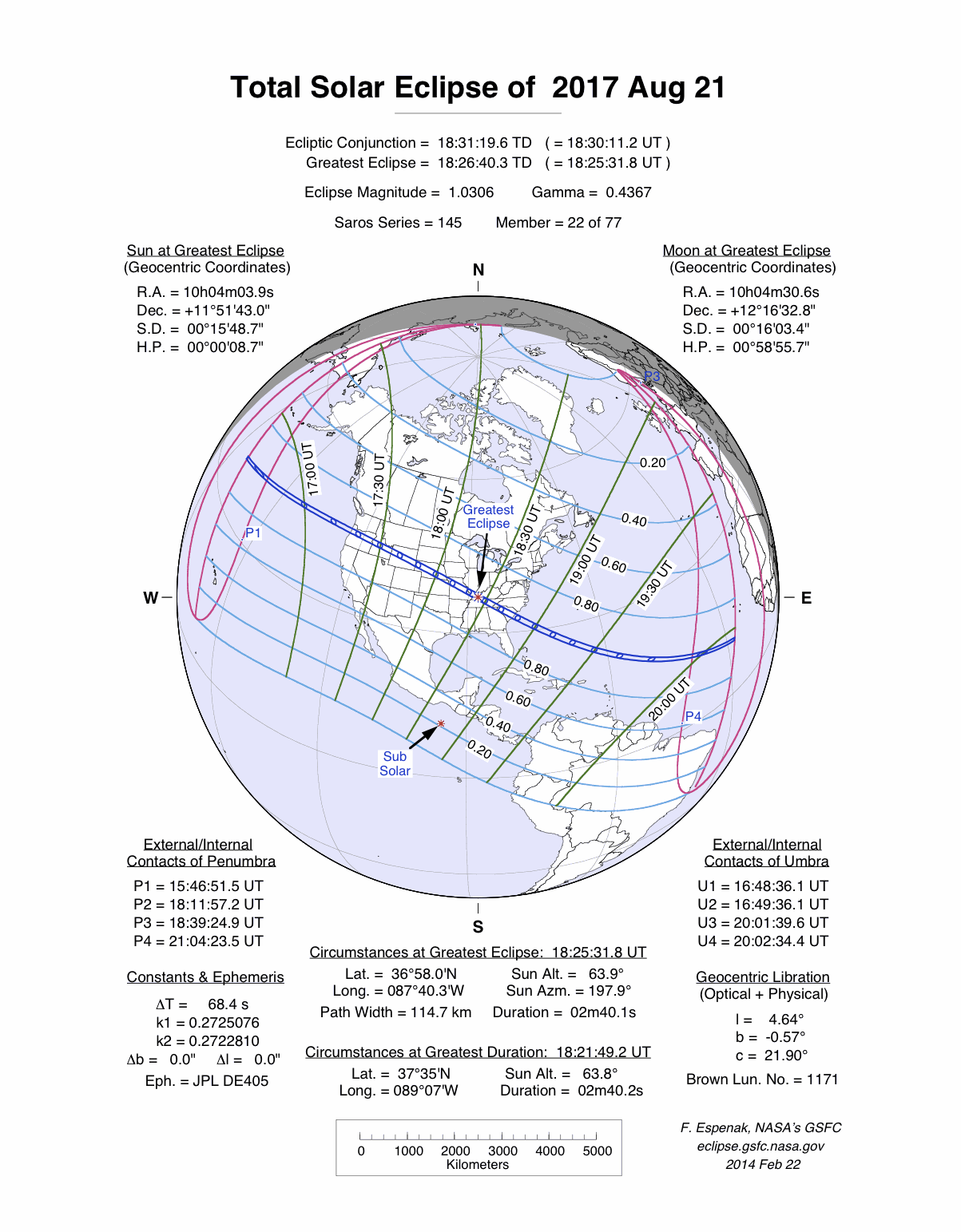
Annular solar eclipse on May 20/21, 2012

Cosmic Penguin

Geek Penguin in GTO
News Reporter
Donator
Joined
Jan 27, 2011
Messages
3,672
Reaction score
3
Points
63
Location
Hong Kong
I am currently thinking of observing this eclipse (probably the last non-partial eclipse visible in Hong Kong for the next six centuries or so); unfortunately this is happening here very early in the morning (just after 6 am), and the Sun is so low on the horizon that choosing an observation site without any hills blocking the view is challenging. And even if I can join some other people to watch it, the weather is a big unknown right now. At least that will happen after my exams.... :thumbup:

But I'm not the only member on O-F that can join this event! The path of the moon's shadow passes through the southern China coast, Taiwan, the most populated parts of Japan (people in Tokyo can observe the annular phase for > 5 minutes!), and the western parts of the US (Redding, Reno, Albuquerque etc.). A partial eclipse should be visible for eastern Asia and the western US.
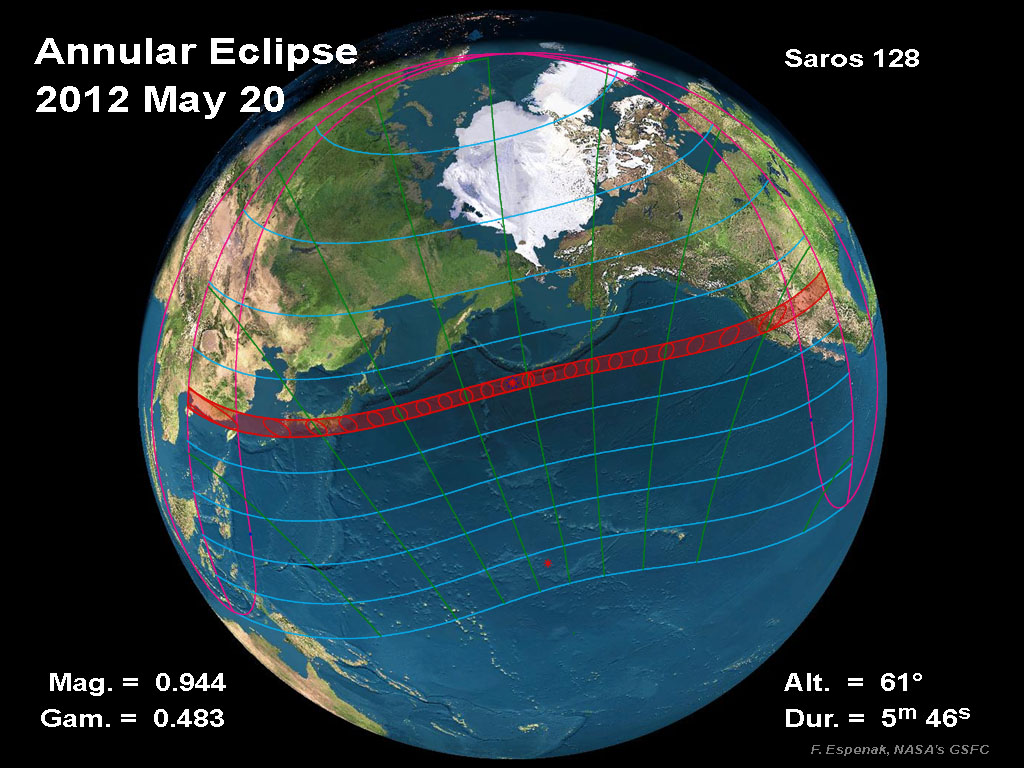
ASE2012pp2a.JPG


Anyone here planning to observe it?
 
Behold! The SUN-SCOPE which I hope to observe the eclipse with!

6yI5f.jpg
 
I hate it when Im just out of viewing range of a solar eclipse. The Eastern US will get theirs in a few years :P
 
Will a partial eclipse on the Atlantic front?
 
It can always be worse: Date of a future full solar eclipse here: Something far, far away in the future.
 
I'm hoping I'll be able to catch the tail end of it in Michigan...

My other option is to send up a near-space balloon, with a camera+solar filter onboard.
 
I'm hoping I'll be able to catch the tail end of it in Michigan...

My other option is to send up a near-space balloon, with a camera+solar filter onboard.

Good luck with that.
 
I'm hoping I'll be able to catch the tail end of it in Michigan...

My other option is to send up a near-space balloon, with a camera+solar filter onboard.

Assuming you're in Detroit, you'll need to have a completely clear western horizon to catch it: the eclipse starts at 19:21 CDT, 28 minutes before sunset. By then the Sun is only 4 degrees above the horizon. As the sun sets on the horizon, you might be able to catch the Sun with one-fourth of its area bitten away.

This, of course, ignores the weather conditions on that day...
 
I don't remember if I already posted about it, but here's the last one in 2010, from Maldives, where I was on holidays.
I met a dutch guy who travels the world eclipse-hunting, who borrowed me a proper solar filter as soon as he saw me approaching him with my just-bought camera. Very kind!!

Big and medium size pictures are from his serious equipment (pictured on the beach), small photos are with my "lousy" 105 mm (and D90).

https://picasaweb.google.com/UgoPicasa/Maldive2010EclissiAnulare#
 
Being in Arizona, I will try to catch it before sunset. I've bought some solar eclipse glasses for the occasion, and it's impossible to see almost anything out of them, which is probably a good thing.
 
Here's an interesting idea for those who can't see totality for themselves.

 
I'm going to sleep now; alarm clock set at 4:30 am to join one of the public events in Hong Kong for the solar eclipse. Unfortunately the weather alternates between relatively clear and thunderstorms today, and currently it's overcast, but it seems there's some chance of actually seeing the whole process!

I'll make a report later today.
 
Dang it, I don't have enough time to look for or obtain those special eclipse viewing things. Is it fine if look at the eclipse, but not directly?
 
Oh well, forget the eclipse. I'll just see the indirect effect: things getting dimmer.

Aren't those special eclipse glasses expensive and hard to find?
 
Last edited:
Back
Top