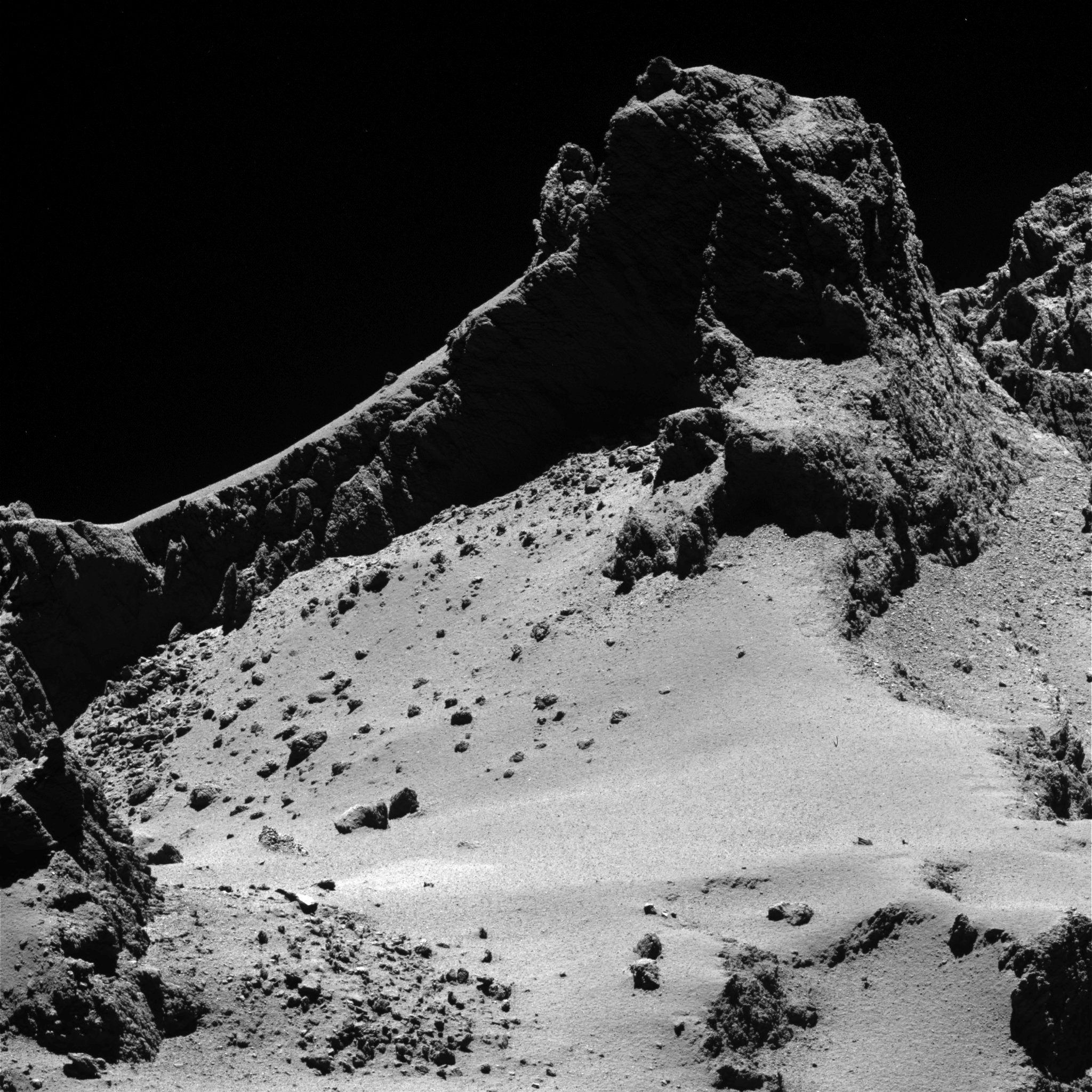
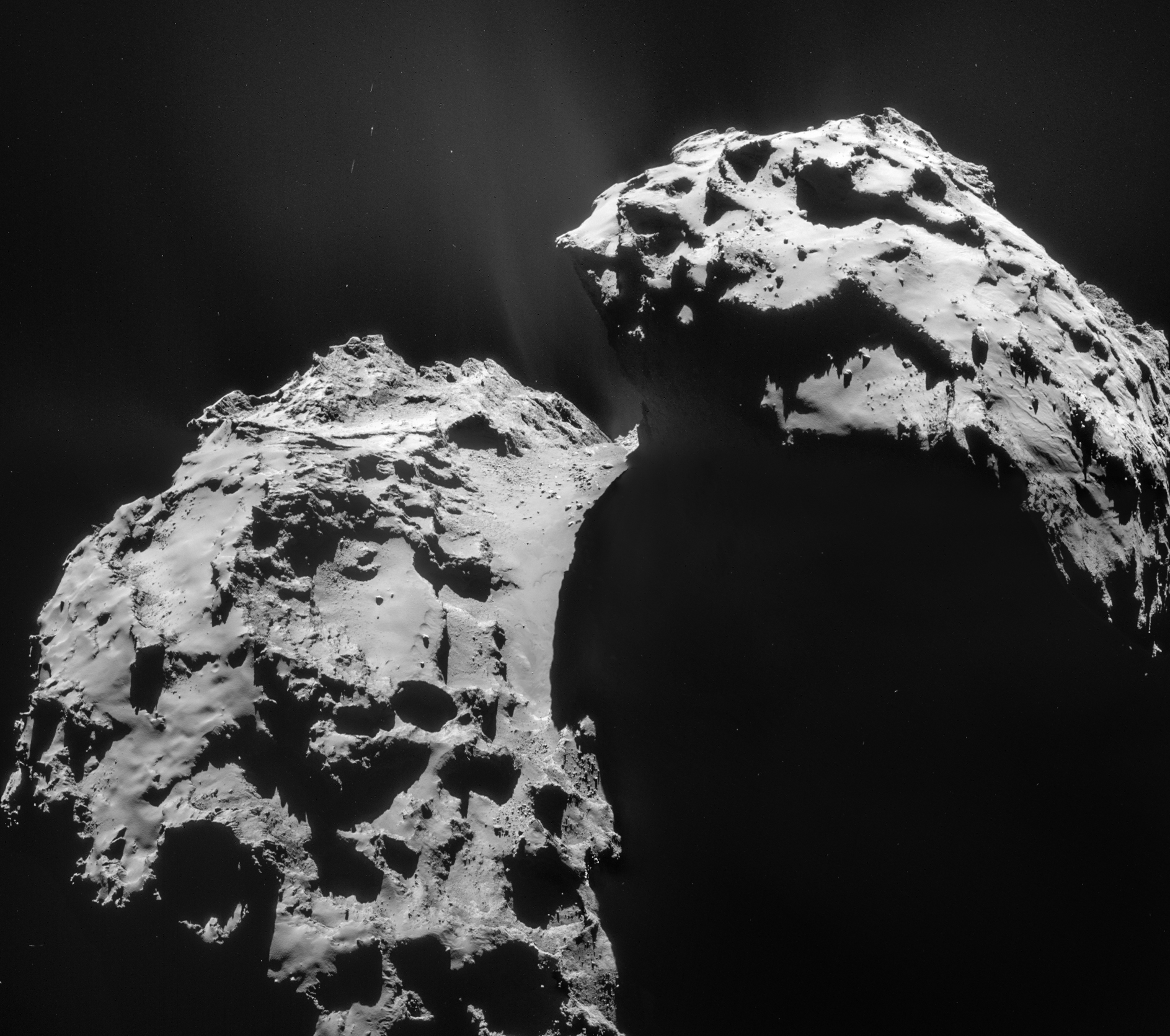
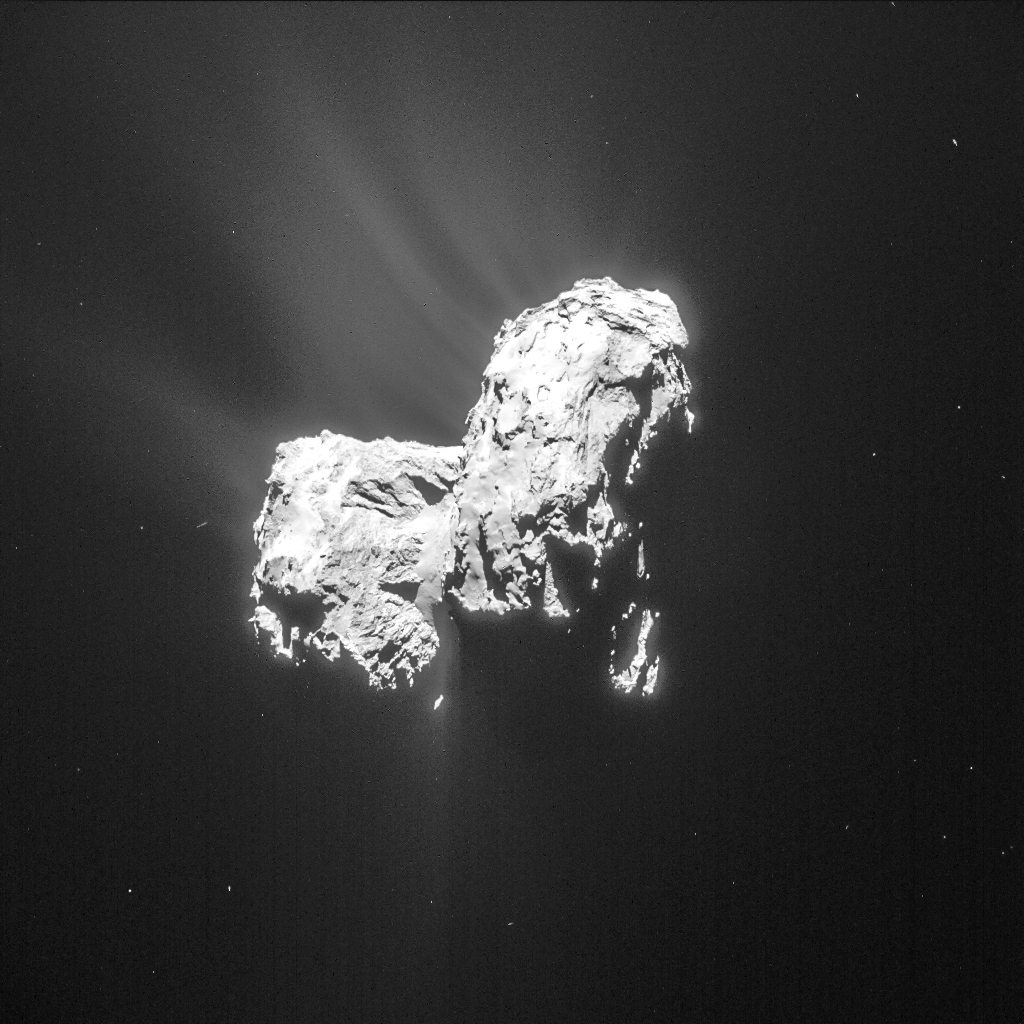
The Rosetta mission is already much more curious than anybody could have expected - how wrong have we really been about comets?
That's the thing I don't understand.
I didn't start following the mission until recently, so I don't know much about the design of the lander, but the entire thing seems to be engineered around assumptions.
I understand we don't know much about comets, but it appears to me as if engineers started assuming stuff and left very little margins for error.
Don't think this landing was a failure, though. Even if we didn't get the chance to do the science because the engineering failed us, valuable things have / will be learned for the next attempt.
boogabooga said:
Is there anything holding the lander to the comet?
Gravity. The lander isn't going anywhere on its own.
boogabooga said:
When the comet starts ejecting material, could there be enough force to push the lander off of the comet?
We don't know, but it's a possibility.
It's not the only danger to the lander, though.
What little power it gets goes towards heating. That means very little heat and a lot of cold. I don't know if the materials the lander is made of can survive the months of expansion and contraction cycles without cracking. As far as we know, that's how the Phoenix lander on Mars died during the Martian winter.
I'm also not sure if the batteries can survive the cold and still be recharged.
The comet itself can also pose a danger. I doubt the material flowing off will be powerful enough to eject the lander, but as the comet rotates, it's surface is exposed to light and darkness, making it expand and contract. That can lead to ice cracking.
EDIT:
Philae's mass is about 100 kg, but beyond this, it makes it difficult to estimate the force you'd need to lift the lander. The mass of the comet is known to within about 10% to be 10^13 kg, but estimates of surface gravity are not trivial to do. This thing isn't spherical. It's likely that due to its shape, the surface gravity fluctuates quite dramatically, as well as its direction. That said, we can assume something like 3.5 * 10^-4 m/s^2 or 0.35 mm/s^2 acceleration.
For this, you'd need a force of only 0.04 N to lift the lander. This sounds awfully little - it is. An apple weighs 1 N on Earth. A sheet of paper weighs 0.01 N.
I hope I didn't make an order of magnitude mistake in my calculations.
Ion engines produce thrust on the order of 0.01 N. True, they expel propellant at very high speeds that the comet can't, but ion engines also use very little mass flow. I really hope the lander doesn't get blown off the surface when the comet sneezes...
---------- Post added at 09:48 ---------- Previous post was at 09:10 ----------
I don't know exactly at what speed gas escapes from the surface of the comet, but we can set a lowest boundary: 1 m/s
That's the escape velocity for the comet. We know the material gets off the comet, so it has to get at least that fast. At that speed, you'd need about 50 grams of material hitting the lander to counter gravity and get it off the surface.
The only thing that I can think of that is powerful enough to do that is a jet. It's thought that jets have enough thrust that they can actually get the comet to change its rotation rate... Philae wouldn't stand a chance against it.



 -a-doodle-do !