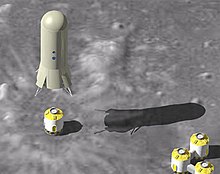
A Return to the Moon by the Apollo 11 50th Anniversary.

At least they are getting results... Nasa on the other hand...

...has produced way more results in the same time! Hardly surprising, since it has more workforce at its fingertips. Does SpaceX also research technologies for aircraft? NASA has to.

And especially: NASA has broken way less promises than SpaceX. But it also promised less in the past years.

You should not forget: NASA is a public service. Not a company.

Also, NASA has once landed on the moon. SpaceX still needs to work hard to even claim to be second. NASA has operated a manned reusable spacecraft. SpaceX still promises it.

Apply the same expectations you have on NASA on SpaceX for a moment... nobody would ever even consider it to be fair at all. How could a small company fulfill all these functions that NASA does? Especially, do many functions that are absolutely non-commercial and only costing money without any short-term profit (like: Education of engineers, basic research). It is really crazy to even consider that SpaceX could do all that.

NASA is more than just building spacecraft and rockets... actually, NASA never did any of that at all.


And I'm not a fan of SpaceX these days, they seem to be more talk than actual results. People have higher expectations of them then they have for themselves.

Warning... the SpaceX mafia knows where your house sleeps at night.
 
Yeah nasa is doing a good job at designing aircraft and space probes. But in terms of human space exploration, nasa has remained stagnant. In fact, nasa has actually devolved in terms of manned spaceflight(maybe this the future?). NASA has been busy designing 4 rockets over the course of 10 years and has done the minimum in terms of testing. The private companies have not only been designing rockets but they've also built and tested them.

The problem with nasa is politics. SpaceX isn't constrained to low earth orbit by politics.
 
... nope, they are constrained to low earth orbit by physics :lol:
 
... nope, they are constrained to low earth orbit by physics :lol:

It would seem that we now have to accommodate the laws of politics to fit in with quantum mechanics, general relativity, and newtons laws of gravity.
 
It would seem that we now have to accommodate the laws of politics to fit in with quantum mechanics, general relativity, and newtons laws of gravity.


Well, we always did. But politics have changed; it used to be important to be able to show some kind of actual, tangible results.

Not so much now.
 
Yeah nasa is doing a good job at designing aircraft and space probes. But in terms of human space exploration, nasa has remained stagnant. In fact, nasa has actually devolved in terms of manned spaceflight(maybe this the future?). NASA has been busy designing 4 rockets over the course of 10 years and has done the minimum in terms of testing. The private companies have not only been designing rockets but they've also built and tested them.

You forget: NASA does not build the rockets. They get proposals from private companies how they could be build by them. In the ideal case, you have the classic project management as developed during Dynasoar. In reality, you often have too many outside influences and sloppy controlling to follow the standard. Instead of having a strong and small project office, you often have weak and huge project office, that is kicked around by NASA management and politicians.


Sounds bad. But in reality, the same is also happening very often in private companies as well and is no symptom of public services.

And that's what you should always keep in mind: NASA is a public service. A service for all US citizens. NASA is great in covering a great spectrum of different functions and services. A private company instead, is great in focussing on single functions or services and developing those to perfection.

Thus, it is all natural that a public service should cover the broad spectrum of everything. And then outsource functions, that are already so well-developed that a public service couldn't improve on them with neglecting other functions, into the hands of private companies. Once a product is so well-characterized, that there is a market for it, why not let the market handle it?


The problem with nasa is politics. SpaceX isn't constrained to low earth orbit by politics.

SpaceX is constrained to low Earth orbit by the lack of customers outside Low Earth orbit.
 
Last edited:
The entire Apollo stack weighed in at 55,000 kg (110,000 lbs - that is command module, service module, lander)

The Falcon 9 heavy on other hand when it does fly will have a payload of
17,000 kg (35,000 lbs) - one third of the Saturn V to lunar trajectory

Would take multiple launches of Falcon heavy to reach moon
 
Falcon Heavy (FH), previously known as the Falcon 9 Heavy, is a spaceflight launch system being designed and manufactured by SpaceX. The Falcon Heavy is a variant of the Falcon 9 v1.1 launch vehicle and will consist of a standard Falcon 9 rocket core, with two additional strap-on boosters derived from the Falcon 9 first stage.[6] This will increase the low Earth orbit (LEO) payload to about 53 tonnes

Wiki says 53 tons LEO, but I have heard the real weight will be a lot lower than that. So is that still right 53 tons in LEO equals about 17 tons to Lunar orbit?
 
SpaceX just sent a payload to SEL1.

DSCOVR to Sun-Earth L1 for NASA, yes.

And still: Only government jobs, so SpaceX is just competing with ULA and others for the limited number of pork barrels.

The key problem that I meant is exactly that: Without getting additional customers outside NASA or DoD, SpaceX is just as limited for their launches and projects to the NASA and DoD budgets and politics, as all other US launch providers.

Any futuristic pipe dreams of lunar missions by SpaceX are simply not realistic without also somebody else than NASA paying the show.

---------- Post added at 03:26 PM ---------- Previous post was at 03:18 PM ----------

Wiki says 53 tons LEO, but I have heard the real weight will be a lot lower than that. So is that still right 53 tons in LEO equals about 17 tons to Lunar orbit?

Depends largely on the launcher. Some are more effective than others for such missions. If the upper stage is especially ineffective, like the Russian storable propellant upper stages for example, 17 tons could actually be an optimistic estimate.
 
The entire Apollo stack weighed in at 55,000 kg (110,000 lbs - that is command module, service module, lander)
The Falcon 9 heavy on other hand when it does fly will have a payload of
17,000 kg (35,000 lbs) - one third of the Saturn V to lunar trajectory
Would take multiple launches of Falcon heavy to reach moon

Yes. The Early Lunar Access proposal would have a much smaller mission size than Apollo. My criticism of the Constellation program was the idea to go beyond Apollo you had to make it bigger.
No, the best way to go beyond Apollo is to make the manned lunar flights cheap enough that they could become routine, or at least as routine as flights to the ISS are now. A key way to do that would be by making the mission size smaller.


Bob Clark
 
My criticism of the Constellation program was the idea to go beyond Apollo you had to make it bigger.

Finally something of you that I can agree on. The early VSE studies had shown that size doesn't matter at all.

And they had some nice creative ideas there, compared to just doing "Apollo Reloaded".

220px-Tspace_canister.jpg
 
Last edited:
Wiki says 53 tons LEO, but I have heard the real weight will be a lot lower than that. So is that still right 53 tons in LEO equals about 17 tons to Lunar orbit?

Saturn V payload to LEO was 118,000 kg (250,000 lbs), about 55,000 kg to Lunar trajectory

On later missions was about 2500 kg more - extra thrust was obtained by
"tuning" Saturn V first stage to get 100,000 lbs thrust (20,000lb per F1 engine)
more.
 
Saturn V payload to LEO was 118,000 kg (250,000 lbs), about 55,000 kg to Lunar trajectory

On later missions was about 2500 kg more - extra thrust was obtained by
"tuning" Saturn V first stage to get 100,000 lbs thrust (20,000lb per F1 engine)
more.

More important was reducing the amount of fuel that was calculated in as safety margin.
 
I had wanted to saying something about how you don't need a huge rocket to go to the Moon, but at the time(the 20 of Feb) I lacked the right stuff to say something meaningful instead of just my opinion. After running across this document again(link) I've resolved to say something.

Investing in super heavies doesn't make a whole lot of sense, especially if only end up pushing a near-full transfer stage and it's payload to LEO. While propellent depots and propellent-exchange equipment aren't proven yet, it seems more to me reasonable to spend money on depots, prop-exchange, and a fleet of smaller rockets than send that money to engineer a massive marvel that bi-annually at the most. I'm not sold on the idea that tanking up in LEO and rendezvousing elements separately would the cheapest way to do a lunar mission, but I'm sure it would be more adaptable than a architecture tied to super-heavy LV. That adaptability would allow for starting out small and changing scope as time goes on, and allow optimal use of available LVs, some of which are operating at lower rates of manufacture than their operators hoped for(the Delta 4 and Atlas 5 to name two I know of).


I think I've rambled enough though.:goodnight:
 
Frankly think that the idea of NASA conducting any manned mission much less a mission to the moon prior to July 2019 is preposterous.

I'd wager at better than even odds that "Dragon 2" will fly with a Human crew before Orion does.
 
Investing in super heavies doesn't make a whole lot of sense, especially if only end up pushing a near-full transfer stage and it's payload to LEO.

well, I mostly agree, but let me add something:

Investing into super heavies would make sense, if we would have more market for heavy launchers. But we don't.

Right now, the launcher is a pure singularity.

It could open up a new market, sure. But that would require much more dedication than NASA has for the project, so that a demand for services, that a super heavy could provide as well or even better than smaller launchers, would appear.

If a launcher system (including ground systems) costs so much, that you can only afford launching one or two every year, it will not work out.
 
Excellent points made in this lecture by Jeff Greason of XCOR that commercial space can get us to the Moon and Mars orders of magnitude more cheaply than the NASA estimates.

This is important because supporters of a "Mars first" approach such as Robert Zubrin take that stance because of the idea a lunar return would cost hundreds of billions of dollars. But this is by following the usual governmental financing approach. By following commercial space and not requiring all new "giga"-rockets, it could be done for a fraction of those estimates.

Then all Mars supporters would come on board to support a return to the Moon.

NewSpace 2014 - Pathways to Human Exploration: Are there alternatives to NASA? - YouTube

Europe's Next Space Chief Wants a Moon Colony on the Lunar Far Side
by Leonard David, Space.com's Space Insider Columnist | May 01, 2015 06:00am ET
http://www.space.com/29285-moon-base-european-space-agency.html

Bob Clark
 
Back
Top