News French plane lost over Atlantic

More R&D, legal, and approval money that they would rather be spending on a new Porsche collection.

 
Some of the solutions made me chuckle:thumbup: and yes, there are a ton of things they could do. I was wondering, couldn't they do a rough estimation of the airspeed by looking at the GPS ground speed? (I don't know if they have it in RL, but FS2004 has it :lol:). I mean, if the pitot says you're stalling and the ground speed on the GPS is nowhere near stall speed, you surely aren't stalling, even if the real speed is also influenced by angle of climb/descent.
Also said earlier here, if pitot goes on vacation, it should be easy to just set the engines for a speed that guarantees a good enough margin on either sides (stalling vs overspeeding). Then, even assuming that the gyros are out (although I don't know how they could be affected by icing), you could sort of roughly eyeball the trim so that it doesn't pit you into the chair or catapult you into the ceiling. Inertial forces may be deceiving here, but maybe experienced pilots can tell easier whether they're climbing or descending.
I guess it all comes down to improvements vs cost. The good old principle that it's cheapser to pay compensation to the victims/relatives of victims than to retrofit the planes. It's basically the airline and the producer saying "Well, you're flying in planes with potential flaws, but it's cheaper to let you die than solve the flaws, so tough luck". I don't know if the FAA has procedures in place to look out for this, but they should be all over it.
 
Some of the solutions made me chuckle:thumbup: and yes, there are a ton of things they could do. I was wondering, couldn't they do a rough estimation of the airspeed by looking at the GPS ground speed? (I don't know if they have it in RL, but FS2004 has it :lol:). I mean, if the pitot says you're stalling and the ground speed on the GPS is nowhere near stall speed, you surely aren't stalling, even if the real speed is also influenced by angle of climb/descent.
Also said earlier here, if pitot goes on vacation, it should be easy to just set the engines for a speed that guarantees a good enough margin on either sides (stalling vs overspeeding). Then, even assuming that the gyros are out (although I don't know how they could be affected by icing), you could sort of roughly eyeball the trim so that it doesn't pit you into the chair or catapult you into the ceiling. Inertial forces may be deceiving here, but maybe experienced pilots can tell easier whether they're climbing or descending.
I guess it all comes down to improvements vs cost. The good old principle that it's cheapser to pay compensation to the victims/relatives of victims than to retrofit the planes. It's basically the airline and the producer saying "Well, you're flying in planes with potential flaws, but it's cheaper to let you die than solve the flaws, so tough luck". I don't know if the FAA has procedures in place to look out for this, but they should be all over it.

No, you actually are in trouble in all circumstances. Ground speed is only helpful if there is no wind and you are flying level. At altitude you have jet streams at several hundreds of km/hr, so it is not a good backup.

Flying 'by your gut' is a bad idea too. You can easily fly a diving corkscrew into the ground with 1g holding you to the floor (i.e. feels straight and level to the pilot and passengers). I think a jet was lost over South America in this manner years ago - instruments went bad, pilots lost situational awareness and they flew into an inverted corkscrew dive and plowed into the jungle.

Setting throttle and trim for hands-free stable flight is an option, assuming you have a positively stable aircraft and you are not being tossed around like a rubber duck in a bathtub.
 
Flying 'by your gut' is a bad idea too. You can easily fly a diving corkscrew into the ground with 1g holding you to the floor (i.e. feels straight and level to the pilot and passengers). I think a jet was lost over South America in this manner years ago - instruments went bad, pilots lost situational awareness and they flew into an inverted corkscrew dive and plowed into the jungle.

Quite a few commercial aircraft have been lost like this. Its very easy for the brain to trick the body. You will roll to what you think is the horizon and wind up corkscrewing into the ground whilst the brain says 'this is all fine'

Sadly, the crash of Flash Air 604 demonstrates this:

 
Last edited:
I mean, if the pitot says you're stalling and the ground speed on the GPS is nowhere near stall speed, you surely aren't stalling, even if the real speed is also influenced by angle of climb/descent.


Yea, except that in reality, stalls can be induced by oh so many more things, including, but not limited to icing that disrupts air flow, turbulence, angle of attack, damage to the wing, climb rate and failing to account for wind...
 
Which is why the recovery procedure for suspect pitot tube icing/ PFD disagree is quite simple:
Nose up to five degress. 80% N1 and you stay like that until you've ridden out the problem.

This way you do not need to rely on any external nav aids or internal instruments except the articial horizon (or the backup) and the engine N1 display.
 
Setting throttle and trim for hands-free stable flight is an option, assuming you have a positively stable aircraft and you are not being tossed around like a rubber duck in a bathtub.

Airbus is already selling such a feature in the avionics as extra, only few airlines decided to pay for it. When the air data reference is lost, it displays the best possible attitude and throttle settings on the MFDs to assist the pilots.
 
In Airbus' implementation, BUSS, it requires the pilots to pull the plug on the some important air data units or something. And then those electronics are useless for the rest of the flight. So airlines and pilots are reluctant to use it. And it costs almost 1/2 million usd to boot! It is standard on the A380.

Boeing also has a system, standard on the 787 and 777? The display just puts a AOA flag above the airspeed indicator and life goes on. No fuse pulling or computer disconnects..
 
In Airbus' implementation, BUSS, it requires the pilots to pull the plug on the some important air data units or something. And then those electronics are useless for the rest of the flight. So airlines and pilots are reluctant to use it. And it costs almost 1/2 million usd to boot! It is standard on the A380.

Yes, you have to switch all Air Data Reference Units off. Which have failed anyway or which you can no longer trust. But that is still better than the Boeing solution, which can lead you in the false faith that you are in a safe situation or that you can trust the velocity indications again. airbus actually doesn't recommend using BUSS at higher altitudes because of the limitations.
 
This is the flight that I was thinking of:

[ame="http://en.wikipedia.org/wiki/Copa_Airlines_Flight_201"]Copa Airlines Flight 201 - Wikipedia, the free encyclopedia[/ame]

In another source analysis of the black box indicated that the flight experienced a coordinated right diving turn causing the vertical acceleration vector relative to the aircraft to remain ~ 1g - no sensation of turning or accelerating was actually felt until they were overspeed.
 
I'm not a friend of too much modern electronics. It actually makes almost everything uselessly complex. Preparing and monitoring a FMC/FMGC for example is more stress than just to hammer a route into a simple INS and just let it fly by simple AP hold modes. I can only tell from a flight simulation perspective of course. And from that, flying an A320 is sheer stress (even if you know all the systems) compared to an A300 for example. You have compressed complexety so that it is distributed to two instead of three crew members. The allegedly relief actually isn't one. Especially on Airbus aircraft. And that's something which already was criticised by the pilots' association in Germany (too less education and training related to the increased complexety).

I never really became accustomed to modern avionics. I remember the first photo I saw of the new 747-400's cockpit in the late 1980s. I was very disappointed as somebody who grew up in the 1980s and flew with "true" noisy and charming aircraft. Even today when I still see photos of real cockpits, like the A300 or 737-200 or 747-200, my heart beat goes up. But when I look at the A320 or A380 or the new 787, nothing happens. It's as boring as watching a control stand of a modern locomotive. The same happened to me when NASA introduced the MEDS for the Shuttles. Where is the advantage to have the GPC displays on LCDs instead of CRTs, and the readings of the analogue AVVIs and AMIs on LCDs (and the other stuff like the aero surface position indicators etc.)? The orginal Shuttle cockpit had more charm. And nobody even wants to simulate that (not in orbiter and not in the space shuttle mission simulator) :(

There is just way too much computer/software controlled knick-knack these days. I understand why Travolta flies the 707 :)
 
Last edited:
Actually, this had to do with hard to find spare and replacement parts for the analog instruments and the cost of maintaining those... It was a lot cheaper to simply rig an interface between the GPCs to LCD displays so that the instruments could be replaced... and it had the positive impact of enabling more information to be displayed than on the original instruments. Would you prefer to fly in Orbiter with an "Analog Surface MFD" instead of the one coming with Orbiter?

I agree however with the "classy" look of analog cockpits... I miss those too, in a way...
 
I am a strong supporter of electronics because a) I earn my living with them and b) They can make everything better.

Just as tiny example: If you would implement the functions of a 1970s analog engine controller in hydraulics, like for previous engines, the engine would weight nearly twice as much for having the same capabilities in its core.

And if you think about implementing a modern FADEC without electronics: Forget it. Even a Zuse Z1 wouldn't be an adequate mechanic replacement. The huge box of electronics there is mostly vibration protection and thermal insulation for a pretty rugged but also pretty small computer that does much more than just controlling the engine parameters for optimal flight. They also record all health parameters to assist in maintenance and keep track of flight phases (in a more limited way as a flight data recorder, the FADECs do that for logging the past events to give the error messages a context).

What you can legally argue about is: Do you want to let the pilot have ultimate authority over all actions or do you want to have the pilot as supervisor of the electronics. It is a big difference in actual design then. In the first one, the electronics don't act, they just react to the pilot and the flight conditions. In the second one, you can have the pilot being forced to react to the decisions of the avionics, but at a much reduced workload in general, since the no-brainer decisions of flight are done by the avionics.

I also prefer the look of the F-35 cockpit over anything. The old analog cockpits are nostalgia, but don't help you flying, contrary, they often make flying much harder by their limitations. Even if modern digital displays still look like the old displays because such displays are really easy to understand by the context: A virtual pointer just existing on a LCD screen does not vibrate during heavy turbulence and become harder to read, and can not get stuck.

Also, software has today no mentionable mass. Even with the full level of redundancy and error correction, the storage systems for your complete flight software, including all manuals in digital form, will weight less than the bottle of aftershave of the copilot.

So, don't be annoyed if I am not shedding a tear because the old cockpits are slowly dying out. The future looks much brighter to me.

---------- Post added at 07:41 PM ---------- Previous post was at 07:30 PM ----------

Where is the advantage to have the GPC displays on LCDs instead of CRTs, and the readings of the analogue AVVIs and AMIs on LCDs (and the other stuff like the aero surface position indicators etc.)? The orginal Shuttle cockpit had more charm.

The CRTs are not like your old computer screens, they had been old classic monochrome storage tubes: No pixels. But also no colors and a very low refresh rate. The electron beam painted the picture by charging or discharging areas on the screen, pretty much the inverse of a old style TV camera.

Making these CRTs space-proof was a major pain in the ass as far as I can tell, since the technology is pretty radiation sensitive.

Also, the limitations of the screens and the first generation GPCs meant that the Shuttle actually is harder to use than Apollo, you need much more key presses for the same actions, and have the data in a much less readable format, since the displays are pretty clogged with information now.

The new LCD displays are much better there: They support colors, permit much higher refresh rates that are not exploited yet, but which would have been used in a fourth avionics update to give it the more human-friendly displays that NASA plans to use for the MPCV now.

And nobody even wants to simulate that (not in orbiter and not in the space shuttle mission simulator) :(

I would, many others in the SSU-Team as well. We just lack the menpower to do two cockpits at once and the current MEDS cockpit not just had already been there, it also had priority.

But I think simulating STS-1 with the MEDS is just perverse. :facepalm:
 
Last edited:
And if you think about implementing a modern FADEC without electronics: Forget it.

I'm neither modern, nor would I like to be implemented with modern electronics :rofl:

Well, I know the advantages (maintenance, weight, power consumption, colour and precision etc.). My point is that the old technology also worked very well, and still does wherever it is used. I know that progress is not made by keeping old technologies. But it's just nostalgic feelings. On the other hand, the old stuff did fly just as the modern stuff does.

I would, many others in the SSU-Team as well. We just lack the menpower to do two cockpits at once and the current MEDS cockpit not just had already been there, it also had priority.

But I think simulating STS-1 with the MEDS is just perverse. :facepalm:

Just as pervers as simulating also the 96 following STS missions with the MEDS. That's the most historically incorrect thing for people who really are interested in piloting the Shuttle like it was piloted for most of its lifetime.

And that's only until the MEDS flew for the first time on Atlantis. There was actually more than 97 missions which flew with CRTs. So, why does the MEDS cockpit have priority to almost all people who work on Shuttle simulations?

---------- Post added at 06:38 PM ---------- Previous post was at 06:30 PM ----------

And that's only until the MEDS flew for the first time on Atlantis. There was actually more than 97 missions which flew with CRTs. So, why does the MEDS cockpit have priority to almost all people who work on Shuttle simulations?

The CRTs are not like your old computer screens, they had been old classic monochrome storage tubes: No pixels. But also no colors and a very low refresh rate. The electron beam painted the picture by charging or discharging areas on the screen, pretty much the inverse of a old style TV camera.

Making these CRTs space-proof was a major pain in the ass as far as I can tell, since the technology is pretty radiation sensitive.

Yep. That's what the CRTs were and did. And this for nearly 20 years. So I don't really see that much importance that they were replaced late into the program.

---------- Post added at 06:54 PM ---------- Previous post was at 06:38 PM ----------

Would you prefer to fly in Orbiter with an "Analog Surface MFD" instead of the one coming with Orbiter?

Yes. I'm looking for historical addons. And almost all of them lack historic instrumentation and depend on orbiter MFDs for the main part. No offense to its developers. I know it's a lot of work. But just to give an example that I would like to dispense from orbiter MFDs, except addon specific MFDs which just display necessary data only (as text/numbers, not gauges) that normally/is was seen by launch and mission control.
 
Last edited:
Well, I know the advantages (maintenance, weight, power consumption, colour and precision etc.). My point is that the old technology also worked very well, and still does wherever it is used.

Write a letter to Tex and let him post it for you, works just as well as the Internet does it? (Yes, I know that it is an argument ad extremum... but illustrates the fallacy well).

Just because it worked well, this doesn't mean it worked good. Especially when compared to today. What would you choose for traveling from Frankfurt to Tokio, a Ju 52 or a Airbus A380? ;) Both can get there, in different time and at different standards of comfort.

Yep. That's what the CRTs were and did. And this for nearly 20 years. So I don't really see that much importance that they were replaced late into the program.

They had been obsolete technology already by the time the Shuttle flew for the first time. It just took a while to replace them because the replacements had not been much better in the context of spaceflight then. The first CRTs in fighters had still been such CRTs...after the lighter CRTs became available in military technology, they had been ready for being improved for space... and then, the LCD technology revolutionized the market. ;) More rugged, more radiation-resistant, much lighter, similar power consumption.
 
Just because it worked well, this doesn't mean it worked good. Especially when compared to today. What would you choose for traveling from Frankfurt to Tokio, a Ju 52 or a Airbus A380? ;) Both can get there, in different time and at different standards of comfort.

A Ju 52 has nothing in common with an A380, except that it's based on the same principles of aerodynamics.

I'll make a valid example to represent my point:

I would chose a 747-300. It has got an epic 3-crew-member analogue cockpit, compared to the boring 747-400 2-crew-member glass cockpit (not to mention the terrible A380 flightdeck). Same comfort, same speed and nice classic analogue technology that works very well just as glass cockpits do ;)
 
I would chose a 747-300. It has got an epic 3-crew-member analogue cockpit, compared to the boring 747-400 2-crew-member glass cockpit (not to mention the terrible A380 flightdeck). Same comfort, same speed and nice classic analogue technology that works very well just as glass cockpits do ;)

And much higher per seat costs and a slightly shorter range (much shorter compared to the A380).

Can the 747-300 even fly from Frankfurt to Tokyo with stopping in Dubai?

Also, many important functions in modern aircraft are not available to analogue cockpit vehicles because of their complexity. Like modern navigation displays with overlay functions and taxiway navigation and collision prevention systems.

(And of course, indicating the safe speed/AOA for flight without air data, would be pretty tough to implement in analog displays, without causing the problems that led to the X-15 spin and crash because the pilot had not been aware that he reentered with sideslip)
 
Last edited:
Higher per seat costs and a slightly shorter range than the -400 did not prevent the -300 from flying from Frankfurt to Tokio. There are still about 3,000 km left :) And higher per seat costs would be nice. In my opinion we have too much traffic and people in the sky anyway.
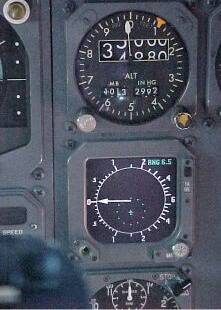
But if we talk about range now, I would chose the 747-SP. It also has an epic analogue flightdeck and a higher range than the A380.

As for the analogue technology vs displays: for taxiway navigation there are airport charts available. Where is the huge difference if I have them on paper or on a display? In one case I have to look on the ND. In the other case I have to look on paper. But as a pilot flying I don't do so anyway since this is done by the pilot not flying anyway.

The navigation is done via INS in combination with the HSIs and DME and NDB indications, just like what you also get on a navigation display but just in a different appearance (and you also can cycle through the route of the INS). You also have ground speed for example (from the INS). It doesn't really make a difference if you hammer data into the FMC or manually tune the navaids and let the auto pilot fly the INS route. The only difference is that you don't have the nice colored graphical presentation and progress information (but you still get things like fuel used info from the analogue gauge etc.). It does not really make a big difference, except that the instr. panel looks more clean (but more boring though). AOA also would be no issue. While Boeing did not implement it, analogue AOA gauges were (and still are) standard in the Tu-154 for example. But digitally presented safe speed indications are not really essential. Anything below V2 can be considered unsafe anyway. And Vne also is indicated on analogue airspeed indicators.

The TCAS is included in the vertical speed indiactors by the way:

tcas_vsi_bendix_king.jpg


I just don't like too much digital stuff. But maybe I'm too oldfashioned :D
 
Last edited:
Higher per seat costs and a slightly shorter range than the -400 did not prevent the -300 from flying from Frankfurt to Tokio. There are still about 3,000 km left :) And higher per seat costs would be nice. In my opinion we have too much traffic and people in the sky anyway.

Found your own airline, buy the planes you like because they have the right gauges for your nostalgia, demand $10000 per seat in economy for your plane...and try to stay afloat.
 
Found your own airline, buy the planes you like because they have the right gauges for your nostalgia, demand $10000 per seat in economy for your plane...and try to stay afloat.

Depletion of oil hopeflly will help in future...
 
Back
Top