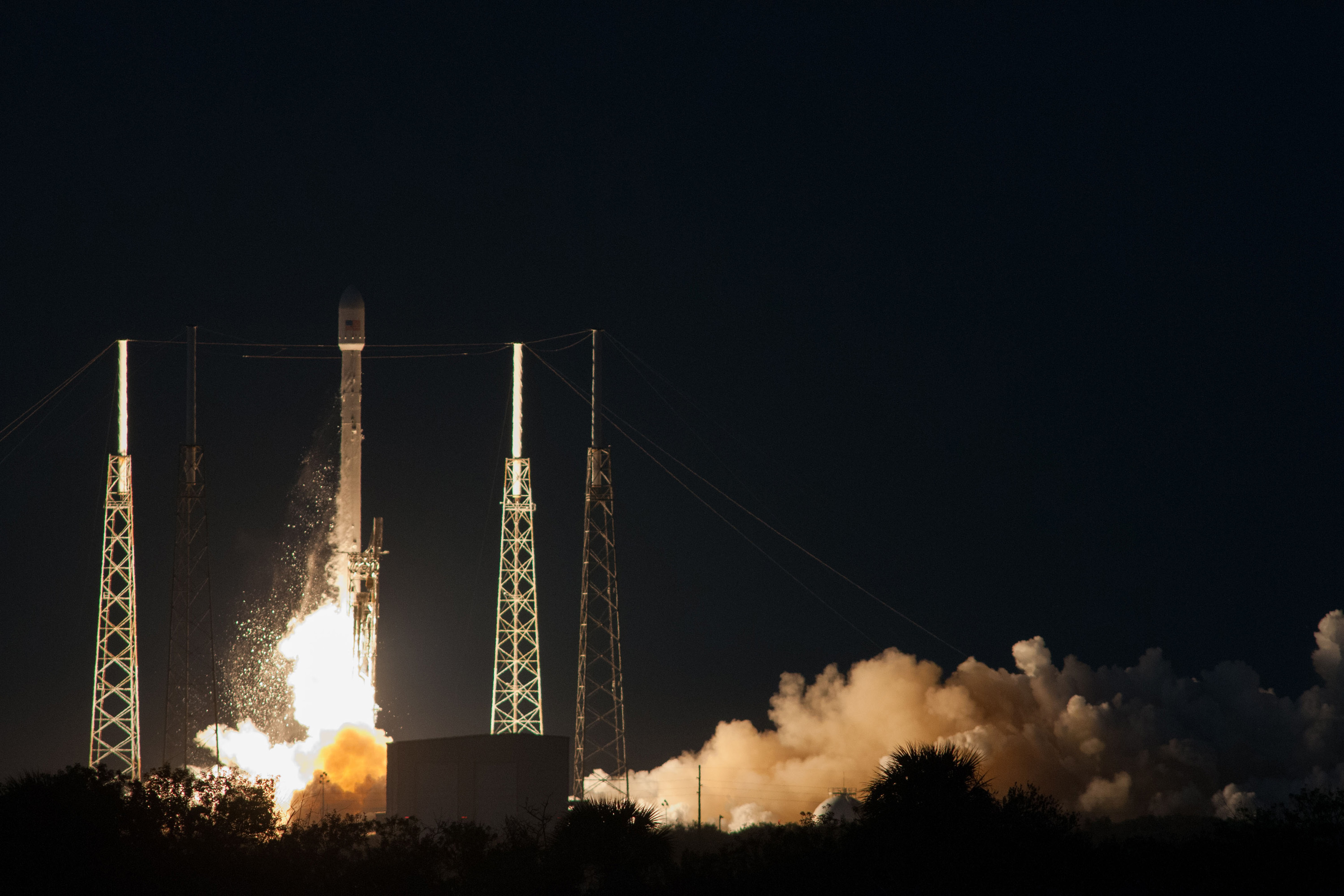
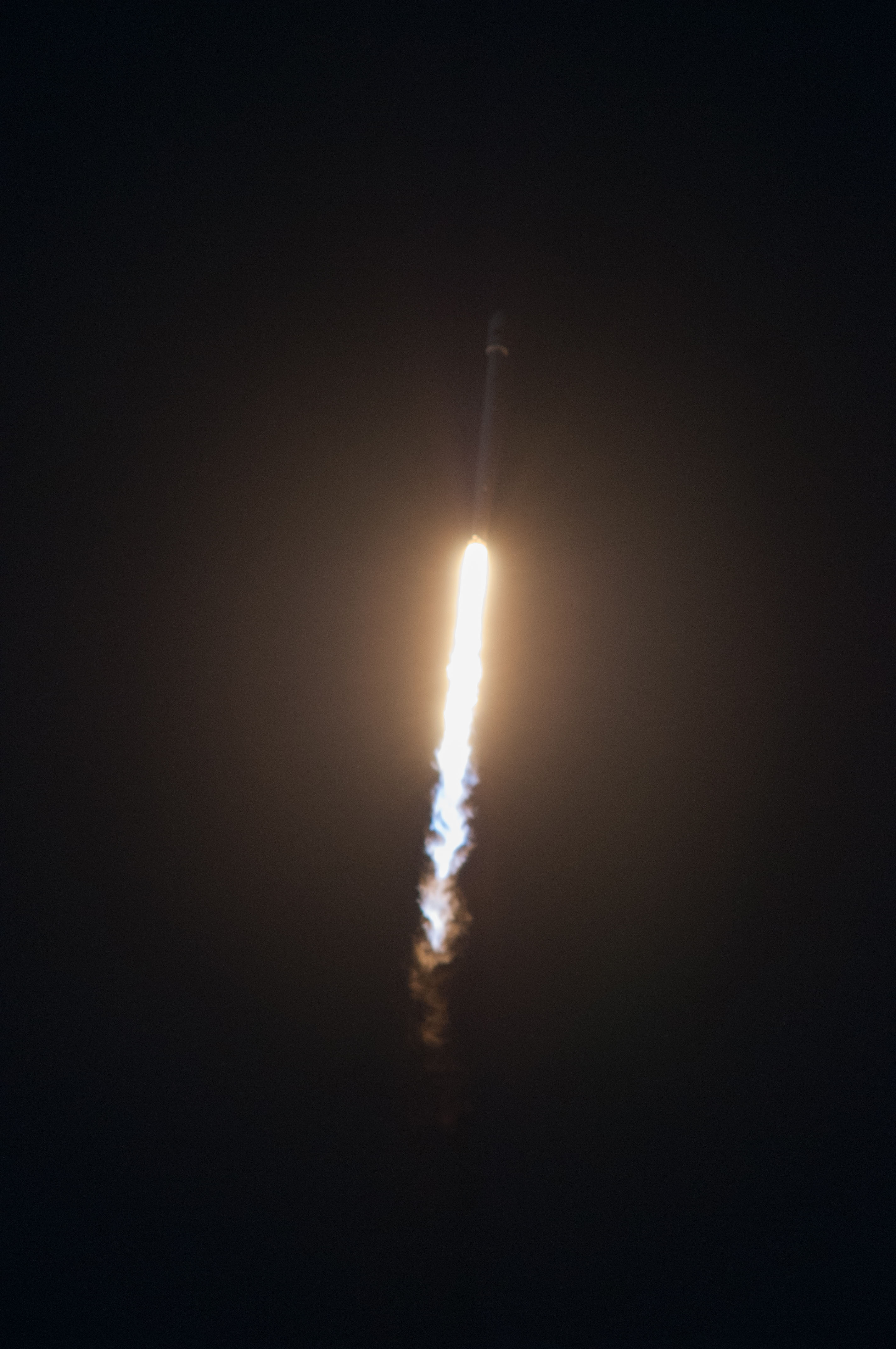
Launch News SpaceX Falcon 9 v1.1 with SES-8, December 3, 2013

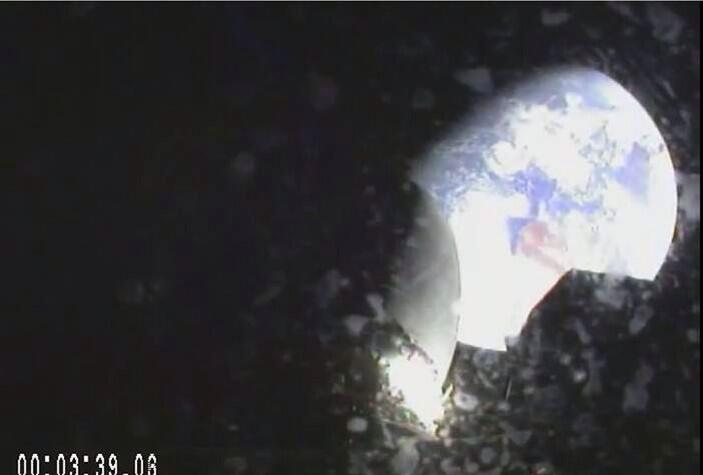
SECOND STAGE BURN SUCCESSFUL, S/C SEP SUCCESSFUL!

Its official?

Good work SpaceX and the people who made this possible. This is a real step forwards towards become a real commercial spaceflight company in a way I want to see it :thumbup:

When is the next Falcon 9 1.1 launch anyway?
 
Elon Musk ‏@elonmusk 4m
Restart was good, apogee raised to 80k km (50k miles). Yes!!!
 
[ame="http://www.youtube.com/watch?v=cXEJLhAh-Kg"]Launch of SpaceX Falcon 9's First Commercial Mission - SES-8[/ame]

62f8323a-4f1a-49b1-8446-b516fb3a90e1.jpg


3aad079c-6970-41e4-9404-6fe11d20fd24.jpg
 

Is that for "Thank God it's today"? Or "Thank God it's Thursday" (for those Europeans with a 4-day work week)? Or "Thank God it's Tuesday"?

Bob Clark

---------- Post added at 01:03 AM ---------- Previous post was at 01:00 AM ----------

SpaceX ‏@SpaceX
Spacecraft separation confirmed! SES-8 is now in its targeted GEO transfer orbit.

Congratulations, SpaceX.

Bob Clark
 
Is that for "Thank God it's today"? Or "Thank God it's Thursday" (for those Europeans with a 4-day work week)? Or "Thank God it's Tuesday"?

Its "Thank God its Tuesday" for Orbiter.

Also, the 4 day week in Europe is something that only few people remember. :lol:
 
Also, the 4 day week in Europe is something that only few people remember. :lol:

:blink: Never heard of that. I only remember the 6 day week.
 
:blink: Never heard of that. I only remember the 6 day week.

We had a period at Volkswagen between 1993 and 2006, with a 28 hour 4 day week to prevent layoffs.
 
...back to topic:
Elon Musk ‏@elonmusk 4m
Restart was good, apogee raised to 80k km (50k miles). Yes!!!
What is this 50k km value?
If I read it as 80000 km I still have no idea what this has to do with a GTO?

Shouldn't a GTO's apogee be around 35786 km (altitude) / 42157 km (radius)?
Or is this a little 'overshot' to get to GEO sooner? But THAT much??

Or is it just the usual "elon & numbers" issue? ;)

/Kuddel
 
Or is this a little 'overshot' to get to GEO sooner? But THAT much??

This is a "trick" to make the Inclination change cheaper in terms of Dv, using the "lever arm" effect (and that's not new at all). In some situations, raising and then lowering the orbit again is cheaper than performing the plane change from GTO. The idea is to move the ascending node away from Earth.

BTW, the power of the "Tuesday effect" still amazes me... :blink:

:hailprobe::hailprobe::hailprobe:
 
Last edited:
This is a "trick" to make the Inclination change cheaper in terms of Dv,...
Right, I forgot about those supersynchronous orbits!

Changing dV by the payload (SES-8) is 'expensive', therefore it is moved to a higher apogee by 'cheaper' launcher fuel/engine.
Then the plane-change (inclination change) that is done by the payload doesn't need so much 'expensive' "payload energy".

Thanks for reminding me ;)
 
Turns out that this launch has set another spaceflight record: this is the first ever launch worldwide of a geostationary orbit bound satellite on a two-stage only rocket without the use of a liquid hydrogen powered stage. And it beats out every single Ariane 4 or "classical" Atlas-Centaur variant on GTO performance! :cool:

(the closest rocket to claim this record is the old Atlas-Agena, however the stage-and-a-half design of the Atlas stage disqualifies it)
 
That's certainly a good record to add to SpaceX's resume, versus the other commercial companies. If we can get Thaicom-6 off in the next few weeks, SpaceX may be about to hit the ground running with the schedule.

I'd love for one day for a Falcon 9 to have a BEO/interplanetary mission with NASA.
 
Turns out that this launch has set another spaceflight record: this is the first ever launch worldwide of a geostationary orbit bound satellite on a two-stage only rocket

Yes, and Tsiolkovsky equations show us it isn't the most optimal solution. The rocket would have more potential to GSO if "cut" in 3 stages.

without the use of a liquid hydrogen powered stage.

Wasn't the Proton family of Block-D/DM (LOX/RP-1 or LOX/Synthin) ever used to put a satellite in GSO ? It surprises me...

I'd love for one day for a Falcon 9 to have a BEO/interplanetary mission with NASA.

It would ruin the point of it. SpaceX is supposed to be a private and commercial company. There isn't going to be commercial needs for BEO/interplanetary for a looong time... Or maybe if the Chinese build a moonbace in 2020 and ask SpaceX to supply them... I have my doubts... :hmm:

The best SpaceX can do (and it was why it was funded at the beginning) is to relieve NASA of the LEO operational costs (ISS or other future stations), letting the national agency focus on science and exploration of space, which was its first goal, (and that is still actively carried through unmanned probes).
 
Wasn't the Proton family of Block-D/DM (LOX/RP-1 or LOX/Synthin) ever used to put a satellite in GSO ? It surprises me...

The Zenit-3 SL was also Kerolox from top to bottom.
 
Yes, and Tsiolkovsky equations show us it isn't the most optimal solution. The rocket would have more potential to GSO if "cut" in 3 stages.

I actually think SpaceX may opt to go down this road with a "long duration mission stage" on top of the F9 powered by the old Kestrel engine or with modified Draco thrusters - this may save cost with respect to using a FH for larger payloads....

Wasn't the Proton family of Block-D/DM (LOX/RP-1 or LOX/Synthin) ever used to put a satellite in GSO ? It surprises me...

And how many stages do Protons going beyond LEO have? ;)

It would ruin the point of it. SpaceX is supposed to be a private and commercial company. There isn't going to be commercial needs for BEO/interplanetary for a looong time... Or maybe if the Chinese build a moonbace in 2020 and ask SpaceX to supply them... I have my doubts... :hmm:

Kyle meant that SpaceX getting launch contracts from NASA of interplanetary spacecrafts - this is possible since they already got their first NASA launch contract of an Earth observation satellite last year (Jason-3 - launch in 2015).

The best SpaceX can do (and it was why it was funded at the beginning) is to relieve NASA of the LEO operational costs (ISS or other future stations), letting the national agency focus on science and exploration of space, which was its first goal, (and that is still actively carried through unmanned probes).

And maybe capturing back some of the commercial spacecraft launch market back in the US - although I think the optimizations SpaceX made with their space transportation system is evolutionary and not (yet) revolutionary, and they could just easily end up with other launch service providers.

The Zenit-3 SL was also Kerolox from top to bottom.

How many stages did I count? One stage, two stages, ........ :tiphat:
 
The Zenit-3 SL was also Kerolox from top to bottom.
Yeah... I don't like very much that attitude of attributing themselves "firsts" that have been achieved long ago...

And maybe capturing back some of the commercial spacecraft launch market back in the US

Yes, because it is the only way they have to fund themselves, and effectively relief NASA from LEO transportation costs, this was the COTS philosophy. Again NASA is a national agency, meaning that getting contracts from NASA is the same than getting contracts from the Federal Governement of the United States of America...
 
Last edited:
How many stages did I count? One stage, two stages, ........ :tiphat:

The twin stage Zenit-2 also has a GTO performance in its manual - it is just on the same magnitude as the heavier Falcon 9 1.1: Much ado about nothing.

The number of stages is as important as the number of pistons in a car engine. If you think that more is worse, you are wrong. If you think less is worse, you are wrong. If you think that the right number of pistons for the task is good, you are right.

And by external efficiency, a three stage rocket to GTO will always be the more efficient system. And a Hydrolox upper stage the most efficient choice for a GTO launcher.

Economic realities can make a less optimal launcher be the better choice for a short time, but in the long run, economy has to follow physical reality, not the other way around.
 
Back
Top