Question Starting with electric guitar

george7378

DON'T PANIC
Addon Developer
Donator
Joined
Jun 26, 2009
Messages
1,045
Reaction score
0
Points
36
Hi everyone,

I would like to ask a question of the guitar players here. I know NOTHING about guitars, but I am interested in starting to play the electric guitar in the near future. So, what would you recommend as a starter? I would probably pay up to £200, but £150 would be ideal. I see that companies like Argos are offering electric guitar starter packs for about £120, with a guitar and a 15W amp, would you recommend one of these? I am not looking to play on stage (yet !) so I don't need anything professional, I just want to experiment and try and learn some of my favourite songs.

Thanks a lot!
 
Those packs got me started. Grab yourself a good technique book with technical & melodic exercises, and maybe something with popular music, or music you like. That oughta to put you on the right track if you're self-teaching yourself.

I also reccomend: Buy a new full set of strings outside of the box, and a tuner. The basic strings in the back will rust/break very quickly. Coated strings will keep the rust off, and don't use colored ones. The tuner is a good help for learning pitches until you have a musical ear, if it has a metronome, even better.
 
Well, I don't know about the guitars themselves... I would suggest you try several within your price range, and see which one you like best. It's all about feel with guitars, so what I think is a really good guitar might be terrible to someone else.

For amps though, there are a few very good ones at entry-level prices that come to mind. The 20W series by Crate is very good, even without any external fx modules or pedals. Another one that is really good and tiny, albeit a little more expensive, is the Roland MicroCube. That thing roars like a full amp stack.

If you want more flexibility out of your setup, I'd suggest picking up a small digital fx pedal. Don't go with the obvious Zoom ones though, they're terrible. A long time ago I bought a Digitech RP50*, and was surprised at how much better than a Zoom it was, and at the same price range. It also has a built-in tuner and a simple drum machine, which IMO, is always better than a metronome.

*There may be several new models that are much better now.

Now, one thing that will really help learning songs and techniques is a program called GuitarPro. IIRC, the free version will let you play any song, but restricts saving, which shouldn't be a problem if you're not writing your own. There are tons of sites out there that have huge libraries of GP-format songs.

Hope this helps! Happy shredding! :RnR1:

Cheers
 
Last edited:
I started playing on a Fender Squier (a really bad guitar), but in summer 2010 I got myself an Epiphone Casino off of Craigslist for $330. Those go new for about $600. I haven't played guitar much lately due to other new hobbies (i.e. Orbiter) and school. Playing guitar is a lot of fun, and if you don't care too much about being very good at it, then it's a fairly easy instrument to pick up.
 
It really depends on what you want to play. If it's something like metal you'll be looking for something like an Ibanez or cheapo Fender/Squier. If you want to play the blues or rock-n-roll, it'll be something else. If you want to play jazz, well, be prepared to spend 10 times as much as you think you will. :P
 
Got a Burswood to begin (and still have it). It was cheap, 100€, but not a bad choice overall, good for begginers, had an amp included. Some of my friends started in Acer's, in that price range you say, and were happy with them too. I think, in the beggining, take it simple. Buy something simple, not over the top, and see how well you do. And following what HarvesteR said too, see which feels best. I had a chance to play on an Ibanez (in a model that looks like a Les Paul in the outside) but didn't really feel comfortable with it.
Also, in the learning part, tabs can be great, but don't always trust them, they can be miswritten, in different tuning, etc. Look per example in Youtube for tutorials, these helped me a lot. Eventualy, you'll end up figuring out some stuff alone.

Well, not much more I can advise on. Good luck :cheers:

PS: What Izack said, since I just noticed what he posted as I'm finishing this.
 
[textbookproblem="firstgrade"]My brother has one guitar for every year he's lived. He has nine guitars. How old is he?[/textbookproblem]

If you want to select your first guitar, make sure you get something kinda cheap, but kinda good. (like an Ibanez[straight from his mouth:lol:]) You can get another nicer one when the opportunity comes. Nolan got an Epiphone Les Paul for about $300, even though it's worth over $700. It came with an amp too :cheers:

Quick note: If you play guitar, you can also play bass, kinda
 
If you can afford it, the best is to take lessons. I give myself guitar lessons (all styles) as a part-time job, and there are a lot of people that tell me that taking lessons is the best way for them to keep motivated.

Beginning with electric guitars isn't the easiest. Those are very sensitive and do not forgive imprecision. Still, my opinion is that the first priorities are to acquire :

1) The rythmic basics (I've seen to many people technically skilled but with no rythmic accuracy, and that's a pity). Learn to read simple music sheets, not only tabs (that most often omit rythmic information).

2) The basic chords, major, minor, 7ths, then when you get used, the (in)famous barre chords. Those open you almost endless chords possibilities.

3) Learn pentatonic scales. First practice improvisation on slow blues tracks. As you gain confidence, you'll move to rock'n'roll, or ultimately jazz (the most complex scales).

Always use a metronome to learn rythmic accuracy. This is a key to learn guitar. And when you learn a new song / track, start with your metronome at 50 bpm, make sure you can play it perfectly and accurately that way, then repeat the process by steps of 3 bpm (53, 56, 59...). This method works very well with people of various age, musical style, gender, and seem pretty universal, from my guitar teacher experience.

And of course have fun playing. Learning Guitar Pro tabs note per note isn't funny and don't explain you how it works. Learn and practice with other people, guitar can be an awesome social activity :2cents:
 
I suggest, you start with an acoustic, and work your way up to an electric guitar. The acoustic will get you used to mashing the chords, and will strenghthen your fingers. Also, the acoustic will help you build up your tolerance to playing bar chords. Just my :2cents:
 
I started playing on a Fender Squier (a really bad guitar)

Boo !! :lol:

I spent a week in the USA when I was in French Canada, and I couldn't prevent myself to bring back the Stratocaster Made in USA "50th anniversary edition" (roughly 1000$ if I remember well, but there was a discount). Proudly sitting in my flat, now. Very nice stuff. :cool:
 
I play guitar but I absolutely cannot physically play a bar chord. I have osteoperosis and my joints are too loose and my pinkie just pops out of joint when reaching for that fret and my fingers just don't stretch enough to replace it. I actually broke my pinkie once just trying to push down on a string to stop it from buzzing on a fret. :(

Anyway. I play a REALLY OLD Fender Squire with four pickups on it. It's actually a decent guitar for doing punk rock and metal.
 
Last edited:
This is a handy app, now for Windows:

http://tuxguitar.herac.com.ar/

Even has a tuner, you will want an adapter with 1/4 inch mono female on one end and 1/8 inch stereo male so you can plug the guitar cable into the soundcard.
 
I picked it up from scratch almost 2 years ago, and I think I can offer some pointers on how to start with it. Keep in mind, though, the only thing that can really determine how far you go is how much you enjoy it. I tried learning piano as a kid and it just turned into a chore that I eventually gave up.

-If at all possible, try to find an instrument to borrow. You don't want to feel like you HAVE to keep playing because you just dropped all this money on the gear. I convinced my Dad to loan me a guitar to take back to my apartment without an amp, and that's what I learned with for at least the first three or four months before I ever had access to an amp.

-If you have to buy, buy used. There's no reason to spend massive amounts of money on something you may or may not end up enjoying. Ignore Gibson and Fender for the time being, they're way too much money and you won't have the skill and experience to appreciate them anyway. Figure out what kind of music you want to play, then troll Craigslist or similar sites for used stuff. More on specific gear later...

-Youtube + Guitar Pro + Ultimate-Guitar forums. The secret to my modest success. Go through the music you like and pick out something that sounds very, very easy. For me it was an Offspring tune. Troll through U-G's tab library until you find what you want to learn. Tabs are very easy to read, just find a key of what all the symbols mean and you'll understand the logic. Then, as you try to play it, find tutorial videos on Youtube that demonstrate the techniques you need to know. Like, if you see the tab has some hammer-ons, find a hammer-on tutorial to watch. This is a good, free alternative to paying a teacher to show you how to do things, and serves the same visual learning purpose. I love Guitar Pro because it dodges the big downfall of tabs: they don't show rhythm at all.

-Choose songs that YOU want to learn how to play. If you don't care about the Rolling Stones or any other stuff that everyone says you should learn first, then don't bother with them. The surest way to get sick of learning is to be playing stuff you don't really want to play. Play along with the songs, that's how you learn to play in time.

-There is a lot of wiggle room in how your specific technique works. Talk to 10 different guitarists and they'll show you 10 different ways to play. Hold the pick in a way that's comfortable for you, not necessarily the way people tell you to. You can always modify your technique down the road if it becomes necessary. Play the way you enjoy playing, and figure out your own fingering for chords.

-Try to play something every day. Even if it's just screwing around for 5 minutes and hanging it up, just try to do a little something every day. I plug in and get loud once every few days, but EVERY evening I lie on the sofa and watch TV while I play. Play while you're sitting through an Orbiter trip. The wonderful thing about guitar is that it takes 2 seconds to pick up and start amusing yourself, and 2 seconds to put down and do something else. Even if you're not totally focused on it, practice is practice.

All that said, my tactics do have some problems. At 2 years in, I still know essentially no music theory. I can't tell you what chords I'm playing, I can't play scales, and if you tell me "Dude, play A minor", I will look at you like a clueless idiot. I ignored music theory in the interest of learning songs and having fun. It's probably not the best way, but I didn't get frustrated and give up. If you wanna write music, you have to learn it. If you just want to play songs and amuse yourself, you can let it slide.


Now for equipment. The big question is: What kind of music do you want to play? Technically you can play anything with anything, but some instruments are better suited to particular genres than others. Pickup choice (the magnets that pick up the vibrating strings and emit signal to the amp) is the biggest single consideration:

cherryburst_fender_strat.jpg


These are single-coil pickups, commonly associated with Fender guitars, like this Strat. They tend to have a lighter, thinner sound with a lot more "twang" to them. I'm generalizing here, but you see single-coils used for softer rock or alternative, funk, country, and blues.

b843a191-7bfd-4ade-b87c-df89c4956871.jpg


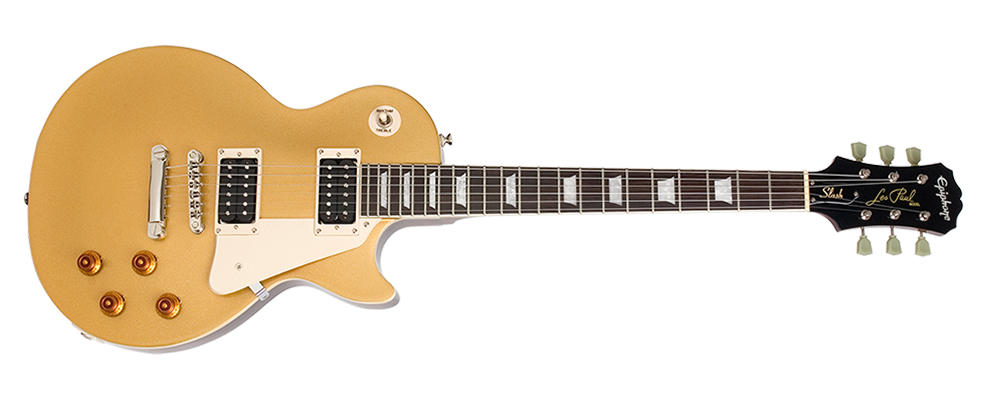
These are humbucker pickups, commonly associated with Gibson guitars, like this Les Paul. Humbuckers have two coils in them, and are designed to cancel out the humming sound you get when you plug in a single-coil instrument. They have a bigger, fatter sound with no twang. Again, generalizing, but you see humbuckers in hard rock and metal, usually paired with a high-gain amp.

Personally, I play hard stuff, so I'm member of the humbucker master race. I find that Les Paul-style bridge to be much easier to play with than the Fender tremolo (whammy) bar, which tends to get in my way. I suggest not getting a trem on your first guitar, you should learn to deal with it after you get the basics down.

Like I said earlier, look for used stuff. Try not to get a crappy guitar that you'll feel sorry for buying six months down the road when you figure out how bad it sucks. But, don't blow a stupid amount of money and feel obligated to play. Here is a basic brand rundown of the big players:

-Squire: These are the cheaper licensed versions of Fender's guitars. They look, feel, and sorta sound like Fenders, and if you can learn to play one you can pick up a real Fender with no trouble. Secondhand, you can find Squire Strats for $100 or less anywhere.

-Epiphone: These are to Gibson what Squire is to Fender. They are built to the same specs as Gibsons, just with cheaper hardware. Used ones do tend to run a bit more than Fender, but you can get decent ones for $150.

-Ibanez: Don't know much about them, so I can't say.

-Jackson/ESP/LTD: These guitars are generally optimized for the metal players, with high-output pickups and pointy edges. If you like that music, these are a good choice.

-Schecter: Not that big of a brand, but I'm mentioning them because I'm a massive fanboy. Optimized for metal and hard rock, similar to Jackson/ESP/LTD. Very good quality for the money, which is a lot less than Gibson/Fender.

Obviously, there are a lot more manufacturers out there, but these are the ones that churn out enough inventory for the used market to be affordable.

Here are some specific guitars that are good to learn with, but should be cheap to find used:

http://www.musiciansfriend.com/guitars/schecter-guitar-research-omen-6-electric-guitar - Godlike value for the money, the first guitar I actually owned. $2000 Gibsons are less comfortable to play than this, IMO.

http://www.musiciansfriend.com/guitars/squier-standard-stratocaster-electric-guitar - Basic Squire Strat. Try not to get the dirt-cheap ones that come in the starter kits...

http://www.musiciansfriend.com/guitars/epiphone-les-paul-standard-plain-top-electric-guitar - These are hard to find around here for less than $300 used. The Special/Special-IIs are significantly cheaper.

Generally, if you can find it new for $300, you can find it used for $200 or less.


As for amps, there are just way too many to count. My advice is to do some research or throw up some posts on U-G to get recommendations. Remember, you don't HAVE to have an amp to start learning, but it does help. If you have to choose between a cheap guitar and a nice amp, or a cheap amp and a nice guitar, take the nice amp. Crappy amps can ruin an otherwise good guitar, but good amps can prop up a cheaper guitar.

Personally, I'm a big Blackstar fan, and I play through a 40 watt tube combo with a 4x10 cab. That's a little expensive for a first-timer.

http://www.musiciansfriend.com/guitars/blackstar-venue-series-ht-studio-20-20w-tube-guitar-combo-amp

http://www.musiciansfriend.com/guit...s-ht-5r-tube-guitar-combo-amp/h75307000000000

That little 5 watt is an awesome bedroom amp, it's designed to put out the sound of a high powered amp at a much lower volume. The 20 watt has enough power to have some fun with.

The big choice with amps is tubes vs transistors. The really legendary guitar tones are almost all achieved with old-school tube amps, but those are expensive. Transistor amps take in the guitar signal and run it through modeling software to simulate tube sounds. Transistors are cheaper and offer a greater variety of sounds, but tubes just sound better. Tubes will also let a lot more of the character of individual guitars through, while transistors tend to launder most instruments into the same basic sound. Just don't cheap out too much, or you'll be holding back an otherwise good guitar.

 
Last edited:
I also have this, which is convenient for plugging a guitar to the computer and improves the sound quality of all applications, once properly configured :

http://line6.com/toneportux1/

line-6-toneport-ux1_2.jpg
 
As far as starting equipement goes, I'm not fond of the starter kits. Trouble is, you cannot use those amps for nothing later on. If you don't want to pay the money for a good amp (or at least a useful one), there's plenty of alternatives nowadays that allow you to hook your guitar into your computer and get better sound than those amp-wannabes.

If you pay money for an amp, you have to make sure that you can use it life or in studio, otherise you simply don't need an amp anymore nowadays.

As for the guitar, beginner guitars are usually a good thing, because in most cases you end up buying a new guitar sooner or later anyways even if you bought a good guitar to begin with, simply because now that you can play, you want a guitar best suited for the stuff you play, which isn't neccesarily the stuff you started out with.

Whatever you do, you should not neglect educating yourself about setting up your guitar by yourself from the get go (truss rod, string height, pick-up height, setting intonation). Here's a pretty good manual on how to do that . Although it has the order backwards. If you don't set te intonation last, you'll set it twice...

Taking care of this yourself saves you a lot of money for services which you can spend for other equipment or put aside for a new guitar, and if you know how a guitar truly works, it will help you to identify a good guitar that's suitable for you when the time comes to buy one for serious. Plus, you'll sound a lot better with a properly set up guitar.
 
i'd like to say, as a Fender Squire owner - it's a lucky-good instrument....

the thing is - the quality of the wood used to make those guitars is somewhat random - so you can get one that feels almost like a real Fender or one that sounds like something cut from a dead tree that fell over a road somewhat by chance...

i got lucky - mine is quite a treat to play - and having replaced the first pickuy with an ibanez humbucker model (which required some cutting of the face plate), it sounds a lot better than before....


but that's my play-at-home guitar.... my stage instrument is a heavily modified Slammer by Hamer explorer model with seymour-duncan pickups and a number of other goodies (including a home-made straplock that i hooked up)


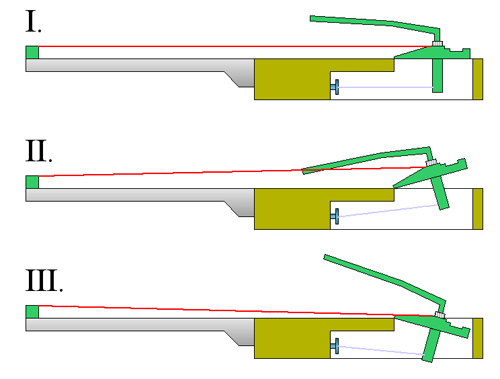
as a word-of-advice for novices on electrics, do NOT go for a two-way rocker bridge (a "Floyd-Rose") at first....

it looks cool and all but look at how it works:

Floyd_rose_principle.gif


as you can see - those are mad fidgety to get tuned properly, since any tension on one string will reduce the load on the others... so it'll be a frustration much larger than the whammy effects it can do are worth...


this is the type of bridge you want on your first guitar -- it's pretty much maintenance free
robotbridge.jpg


you can also go with the Fender style one-way whammy bar type as well (available on the Squire), since it only bends down, and the back-pulling springs are a heavy enough to hold against the detent at all times when you're not depressing the lever - so it tunes easy and offers a nice pitch-down whammy effect


for strings - get Ernie Ball! i don't recommend anything else - they have the best cost-benefit of all brands, IMHO - they sound "shiny" for about two weeks, but still remain smooth for several months before starting to rust out

the regular slinky .10mm is a nice gauge for general playing and most styles - they're not too heavy that you'll require a lot of finger strength to bend and pull, but also not too light (as the "default" .09) that every little slip-up of the hand will be heard

plus, you won't snap your high E string when playing the Enter Sandman solo (as often, at least) :rolleyes:


regardless of what guitar you get - make sure you take it to a specialist guitar guy and have it checked out and adjusted properly... there's a lot more adjustments in those things than just the tuning knobs - so it's worth it to have an experts hand give it some attention

trust me - it'll play easier and will sound a lot better after a visit to the "guitar doctor"


for effects and even amps - i have a bunch of good things to say about Behringer -- the V-Tone line is a great cost-benefit, and sounds really good for rock in general...


well, rock on! :headbang::RnR1:
 
as a word-of-advice for novices on electrics, do NOT go for a two-way rocker bridge (a "Floyd-Rose") at first....

As an advice for anyone, don't get a floydrose unless you're dead-certain you want and need one. Stuff is hell to set up and takes about twice as long as your usual guitar... :facepalm:

trust me - it'll play easier and will sound a lot better after a visit to the "guitar doctor"

Short of physical defects, there's nothing you can't do yourself. Just get your manufacturers recommendations on neck relief, string height and pickup height and take it from there.

i have a bunch of good things to say about Behringer

I have a lot of awfull things to say about Behringer, but those concern their mixers and PA's. They should be forbidden by law to make that stuff :lol:
 
Last edited:
Moach is on the money, don't screw around with a Floyd, just get a basic Tune-O-Matic bridge as shown.
 
Wow, thanks for all the help! That's given me a lot to go at. I think, reading all the stuff here, that an acoustic guitar might be the best idea to start with (like Samuel said) but I think I will go to a shop and have a mess around, and hopefully see what they feel like.

At the moment, this is the sum of my guitar experience:

www.youtube.com/watch?v=xdseWTQSVOA

...so it is probably best to actually hold a real one before I go and buy one!
 
If you really want to play electric guitar, I'd start with an electric guitar. Playing acoustic is totally different, my opinion is that it wouldn't help: under some aspects, an acoustic guitar is harder to play (greater effort to get a "clean" sound, bigger body, and the rest depends on the type of guitar), but on the other hand you will get a way to approach the instrument that you will have to change dramatically when you'll shift to electric.

So, my personal suggestion is: buy a good entry-level guitar which satisfies you estetically, but avoid starter kits and similar stuff. As you will improve your tecnique and sensibility you'll be able to choose the instruments that fits you, but until then don't panic, almost every guitar suitable for beginners is good :thumbup:

For what concerns the amplifier, try to get a good one: a valid amplifier gets every instrument play way better, and probably you won't need to change it for many years.
In my opinion, one of the best choice possible is the Roland MicroCube: 15W (more than you really need), good sound, and a great number of effects that let you have fun without wasting money on pedals and external effects :)

Last, try to take some lesson at first, it is VERY important to get the correct initial approach, and a guide book or a manual will never substitute a valid teacher... trust me, that's the best way to spend money :thumbup:
 
Back
Top