The answer to everything in the universe is 0, not 42.

originalpckelly

New member
Joined
May 23, 2008
Messages
40
Reaction score
0
Points
0
Location
Denver
:)
Think about it, it makes total sense.

The answer to everything in the universe is 0.

The universe is like a reverse atom. Instead of being the thing which cannot be divided any further, it is the thing which is not the product of division. It, in other words, is supposed to be everything.

If you take a graph, and you make the scale of each unit on the graph infinite, everything that may have been on the graph is stuck at (0,0).

y = x

Well, when you consider the universe as a whole, it makes quite a lot of sense that the universe should be 0, because there's nothing gained or lost.

Imagine now a number line. It has positive and negative numbers, and zero. You have two points on that number line, p1 and p2.

0 = p1 + p2

With that relationship, if you place p1 at 3 on the number line, you must place p2 at -3.

Energy is really just the product of relationships like that, which is what you were basically telling me. You cannot measure the energy of everything, because taken as a whole, there is no "distance" and there is nothing for light to travel relative to in a dimensionless universe, so there is no c in e=mc2.

I'm guessing that for everything there is an equal and opposite thing because of this. I seem to remember Newton's third law saying something about an equal and opposite reaction for every action.

For every increase in the distance between p1 and 0 on the number line, there must be an equal and opposite decrease between p2 and 0.

It's like a sealed fish tank with a magnet inside. You pull the magnet along with another magnet on the outside, but because there is no loss or gain of any water, the water has to come behind the magnet to fill in its "displacement."

It's kind of like a submarine or something in a sealed tank (ignoring the idea of pressure...) For every displacement of something there must be an equal and opposite displacement.

It's perfectly logical.

So the answer to everything is 0 because everything MUST have an equal and an opposite that cancels it out its "displacement", since nothing leaves or comes into the universe. It must be that way for every dimension, not just one like a number line represents.

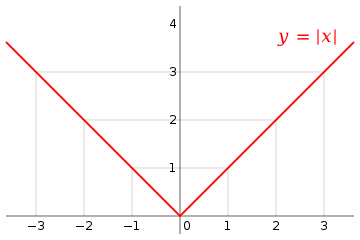
p1 = |p2|

The absolute value graph:
360px-Absolute_value.svg.png


Everything must be symmetrical. Think of a wave. If you were to plot a sine wave on a graph, it would be going up and down in equal distance from x if you cut it in half with the x axis. If you cut it in half at the peak, than the distance peak to trough is the same, it's symmetrical that way too.

400px-Sine_and_Cosine.svg.png


Could the shape of a wave be related to the fact that the universe probably is a 0 sum game? Looks pretty symmetrical to me.
 
Actually, the answer is c, if you would use general relativity and unified field theory as base of the calculations.

Which is, on a logarithmic scale, closer to 42 than 0.
 
I'm guessing that for everything there is an equal and opposite thing because of this. I seem to remember Newton's third law saying something about an equal and opposite reaction for every action.

So why is there so much matter and so little anti-matter?
 
Actually, the answer is c, if you would use general relativity and unified field theory as base of the calculations.

Which is, on a logarithmic scale, closer to 42 than 0.

What's C? About 3 * 10^8 m/s

How can you have meters or seconds in a universe in which everything is collapsed on (0,0)?

C is meaningless if you have no space in which light can travel between things.

You have no frame of reference if all frames of reference are located at the same place.
 
You have no frame of reference if all frames of reference are located at the same place.

Ah. So do you have evidence for this extraordinary claim? After all, you just claim that time dilation of GPS satellites is not caused by the movement of the inertial frame of the GPS satellites relative to my own inertial frame.
 
So why is there so much matter and so little anti-matter?

Matter and anti-matter is a matter :P of a thing called intrinsic angular momentum, or spin.

The spin of all anti-matter is the opposite of the spin of all matter. Yet, we know we're here and we're NOT anti-matter.

Use a mirror, if you a have a watch going clockwise in reality, it would counter-clockwise in the mirror, wouldn't it? (I know it does, I just tried it out to make sure.)

What if there's another dimension of measurement? One that separates matter/anti-matter from each other, so they can't annihilate one another?

Oh, and about that time thing, if time goes one way in "reality" wouldn't it have to go the other way in the mirror? Like some kind of anti-time?

Oh, and I forgot to mention, the charge of anti-matter is opposite to that of matter. So you have equal and opposite electrical charges in the universe, to cancel one each other out.
 
Alright Aristotle. And woman have less teeth than men? :lol:
 
Ah. So do you have evidence for this extraordinary claim? After all, you just claim that time dilation of GPS satellites is not caused by the movement of the inertial frame of the GPS satellites relative to my own inertial frame.

Outside the universe, does any frame of reference inside the universe matter?

If you have two coordinate planes that do not intersect, there is no relationship between the coordinates in one plane and in the other. That includes the distance between things in space and between moments in time, were you to plot them on either coordinate plane. Accelerations in one coordinate plane, would have no meaning in the other.

Making that judgment is impossible, there is no relationship between the planes and observers in either one. The thing is that the outside observer is nothing to us, except an idea, but perhaps it's a very helpful one that can explain a great many things.
 
Outside the universe, does any frame of reference inside the universe matter?

There is no outside. The universe is a closed system. And the universe is also not limited to the visible universe, it can extend beyond that, but we can't tell how far.
 
There is no outside. The universe is a closed system. And the universe is also not limited to the visible universe, it can extend beyond that, but we can't tell how far.

Yes, that's true, the universe is a closed system.

0 = p1 - p2

is a closed system.

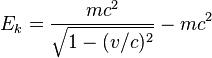
Kinetic energy is described in relativity as:
a234845f2e68dc74e420e32f15d7578d.png


If you have a velocity one way in a closed system, would it not make sense to have an equal and opposite velocity the other way? If that's true, the kinetic energy cancels out.

It's like the number line again, only with a little bit more complex things.

Think about rockets. To go one way you must throw mass the other way. If you're not throwing an equal and opposite mass the other way, then the speed of that mass must be higher. And let's remember velocity is directional! So if I throw mass down, and I go up, the two velocities cancel out.

The equation for that situation would be:

isthisright.jpg


If m1 = m2 and v1=v2, then that's true.

If m1 is more massive, then m2 must be less massive and m1's velocity will be lower, while m2's will be higher. We know that's how it works with rockets.

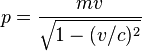
You could also use the relativity momentum equation for that too:
246efafd67b3f7d269b83b889855d5a9.png


relativity_conservationofmomentum.jpg


For a closed system, which presumably the universe is, you must have conservation of momentum. And if you swing that around, you'll find that 0= p1-p2, where p is the momentum.

So, in other words, you're saying the universe doesn't have conservation of momentum? A zero sum problem doesn't mean that two things have to be zero, they just have to add up to zero.

---------- Post added at 09:10 AM ---------- Previous post was at 08:24 AM ----------

Is energy just a measure of difference?
If e=mc^2, then does that mean that mass is just a measure of difference as well?

If the two are just measures of difference, then what does that mean?

Think entropy, and ask yourself why it only goes one way.

If you have a block of ice in water, thermodynamics says the heat of the surrounding water will flow into the ice and melt it.

If you were to divide the tank with one side having the ice + wate around it, and the other side having the water alone, there's a temperature difference.

On the other hand, after the ice melts into the water and the lack of heat has been evenly distributed throughout the water, you divide both side of the tank, each side would be the same.

temperature difference = temperature of one side of the tank - temperature of the other side of the tank

As time goes on the temperature difference comes closer and closer to zero, as the heat flows into the ice, the heat from the warmer side of water flows into the colder side.

Interesting to note that if both sides of the tank were in perfect thermodynamic equilibrium, the temperature difference of both sides would be 0.

In economics, there is a measure of supply versus demand.

disequilibrium = s - d

It's usually thought of as a ratio, not like this. But look at the similarities. It's all the same thing, over and over and over again. Whether you're talking about kinetic energy, heat, or even economics.
 
The big break in symmetry is time.

From an atomistic point of view the laws of physics are perfectly symmetric and every physical process that can run forward in time can also happen backwards.(maybe not totally true but in every relevant case)

Nevertheless from our point of view time isn't symmetric.

  • Something that gets broken doesn't get fixed from alone (2nd law of thermodynamics).
  • Also we can remember the past but not the future.
  • The universe is expanding not collapsing.
So there are three things how we can find out in which direction the time arrow goes.

In which direction this arrow shows has (I hope so) something to do with the initial state of our universe. Mysteriously it started in a state of high order and low entropie (ok I couldn t write about it if it wouldn t;)). Now order is decreasing until everything is uniform and no organisated things like lifeforms will be possible in the far future.
 
You say:
The universe is like a reverse atom. Instead of being the thing which cannot be divided any further, it is the thing which is not the product of division. It, in other words, is supposed to be everything.

And then you say:
Outside the universe, does any frame of reference inside the universe matter?
But here we arrive at a contradiction. You say the universe is everything, and then you posit something outside the universe. It doesn't work that way. The universe contains everything.

Your understanding of "infinity" is incorrect. In the graph you propose where the scale of each unit is "infinity", all finite things are not on (0,0), they are just infinitely close to (0,0).
 
"How many roads must a man walk?" Zero does not make sense here, as it implies that there should be no roads. Douglas Adams was, then, clearly correct. :P
 
I was interested in this friendly argument until I got this visual of Scarlet Johansen, a red bikini and beer. I must add that I'm more of a bourbon drinker, but if I've got to make a sacrifice at all, I'll trade the bourbon for the beer and the other two aforementioned items.

Thanks guys for a nice break from my otherwise boring day. And thanks TMac for making it even better.
 
The universe is like a reverse atom. Instead of being the thing which cannot be divided any further, it is the thing which is not the product of division. It, in other words, is supposed to be everything.

That we can not devide the smallest particles we think it is the smallest, does not mean it is the smallest and indivisible (while the whole atomic model still is nothing more than just a man-made model to enable us to work with). I do not see a logical reason why a particle should be the smallest ever possible and indivisible, only because we and our technologies can not observe different things yet (probably never). Everything which still exists is divisible theoretically, and that even endlessly.

I see no indices why the universe should be limited. And I doubt we would ever find an answer to everything in the universe, because I doubt we won't ever know more than just a little bit of it which is barely within our biological and technological scale.
 
You say:


And then you say:

But here we arrive at a contradiction. You say the universe is everything, and then you posit something outside the universe. It doesn't work that way. The universe contains everything.

Your understanding of "infinity" is incorrect. In the graph you propose where the scale of each unit is "infinity", all finite things are not on (0,0), they are just infinitely close to (0,0).

If you fill in v1 as 0 in the following equation, won't it cause momentum to be un-conserved in the other, if it has any non-zero value?

youareallsostupiditisscary.jpg


Einstein didn't think what it would be like to be a single particle all by itself in it's own lonely universe. Without any reference point, you can't have a v.

I would suggest to you that in fact, the standard model is coherent with itself. Quantum physics and general relativity are the same thing, it's just that quantum physics deals with few points of reference, and it capable of describing only one point of reference.

If you have a number line, just one point on the line doesn't tell you anything. It's undefined. It should be for all practical purposes 0.

What if you make the universe the only frame of reference? What can you compare the whole universe to? Nothing, as the universe is the reverse of an atom. An atom (by the thinking of Democritus) is a thing which cannot be divided any further.

The universe by general definition, is the the thing that is not the product of division.

If you can't divide anything any further, then it makes the division in that momentum equation useless. If something can't be divided, it too makes the division in the momentum equation useless.

Can you divide 0? Can you divide by 0?

That is why you could never, but never have v = 0, it appears in both the numerator and the denominator.

It stands to reason that as you approach the indivisible unit of matter that it should be harder to find, after all, you have fewer points of reference when you drill down so far. You would need to have at least three points reference not in the same plane to know where something is in X, Y, Z.

Isn't it curious that electrons behave so wildly and they are thought to be of a class that is the last division of matter so far discovered?

If you stripped away the electrons, the quarks in the protons/neutrons would be necessary for X, Y, Z points of reference, and they would all have to be in different planes, or else it would just be X,Y, or if it was three points on a line, then you'd just have X.

If matter is energy and energy is just a measure of difference (as you'd have un-conserved energy if you made v 0 in the kinetic energy equation), then isn't that kind of like saying probability at some point?

What's the disequilibrium of one point? None, you can't sub-divide a single point. If you had two points, what's the possible disequilibrium (aka difference)? 1/2, however many "units they are apart."

If you had three points, what's the possible disequilibrium? 1/3.

If John has one marble in a bag, and reaches in the bag and pulls out a marble, what's the probability that John is going to get the one marble?

1/1

1=1

How meaningful is it to reach in a bag and get out one marble? It's just one marble. There is no probability/difference of one marble, it's one marble.

What if the marble isn't in a bag, and is all by itself? The bag presumes that you have two things, which you don't in either the case of the universe or a Democritian atom by definition, you have only one thing. How can you know what one thing is all by itself? Don't you need a frame of reference? At least another point?

Energy is just a measure of difference, just like probability. And probaility is division. 1/2, how many probabilities are there in one out of two? 2.

0 = 1-1.
1 = 2-1.
You need to be able to do that and not get 0 to have a difference, which is what probability and energy are, because you simply cannot subtract one point from itself. Then you have nothing.

One thing by itself cannot truly be analyzed in probability, and no value assigned it for lack of a second thing to make the comparison.

That ladies and gentlemen is the joining of quantum physics with relativity.

There is just one more thing:
Every physicist working on this is a complete and total idiot for not getting this sooner. EOM.

My name is PC Kelly, and I just figured out that you can't have a difference in one thing.
 
I'm not understanding the problem of having v1 as 0 in your equation. First of all momentum has to do with your reference frame.

So something moving at the same velocity as the observer has zero momentum relative to the observer. Mass is independent. So v2 must also be zero for momentum to be conserved. Unless the 'universe' has a nonzero total momentum in which case you need to add a constant value to one side of the equation.

(universe in the experimental sense of whatever environment you define, can be two balls in Newtonian space or the real Universe)

---------- Post added at 10:22 AM ---------- Previous post was at 10:13 AM ----------

Consider using the equation:
Code:
     n
C = SUM ( (m_i * v_i) / (1 - (v_i / c)^2 ))
     i
C is a vector representing the total momentum of the system (assumed zero for the Universe). n is just the number of things you are summing.

And of course the value of C may not be independent of the reference frame.
 
Back
Top