
What about a bullet shaped object... Like a dream chaser with far smaller wings. That should combine the simplicity of a capsule with the aerodynamic control of a spaceplane.


What about a bullet shaped object... Like a dream chaser with far smaller wings. That should combine the simplicity of a capsule with the aerodynamic control of a spaceplane.


- - - Putting on moderator hat for a moment - - -
The topic at hand is essentially winged vehicles v capsule; merits of each.
If anyone wants to discuss the scocioeconomic merits of the astronaut corp (past and present), please start a new topic (preferably in the basement).


What about a bullet shaped object... Like a dream chaser with far smaller wings. That should combine the simplicity of a capsule with the aerodynamic control of a spaceplane.


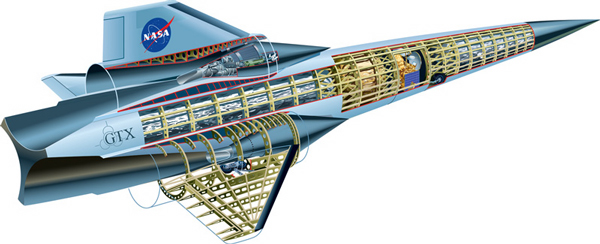
Why not just something like this?

The statistic of 1/6 LOCV for Apollo is real - but it was estimated at the earliest design stages of Apollo, before even the final configuration was decided.
The real LOCV was likely 1:15- 1:20 for Apollo.

I guess the other question is whether that was an estimate for the launch, or an estimate for the entire lunar mission. I have a hard time believing that the risk of LOCV for the Apollo/Saturn launch itself could be greater than that of the Shuttle, or even anywhere near as high as the Shuttle. On the other hand, Apollo 13 was very nearly a LOCV, and a 1/6 risk of LOCV for the lunar landing and ascent might not be far-fetched at all.

 dangerous.
If the Apollo flight manual was written to today's standards, every mission would most likely have triggered an abort at some stage. Those early pioneers took risks that were orders of magnitude higher than would be considered acceptable today.
Like Urwumpe said the NASA models the whole mission and not only the launch and reentry. Every component has a calculated chance of failing, and the model estimates the consequence. Then you calculate the chance of two simultaneous failures etc. Then you add redundancy and recalculate. That's how the model is supposed to help designers.
Apollo had several components that HAD to work or the crew was toast. The LM's ascent engine was especially 'iffy' because it tore itself to pieces so it couldn't be tested before liftoff. The first (and only) time it ran was when it lifted off the Lunar surface.


