News Fertilizer plant explosion near Waco

As an afterthought, in the cellphone video, it looked like the explosion started at the left of the frame, as if from the air, down to the tank. It's obviously not perfectly clear, but maybe not completely misleading. Whatever happened, it certainly looks like some specific structure exploded, probably housing one specific chemical whether that was ammonia or ammonium nitrate. (news suggests it was just the ammonia tank)

Fumes igniting, at first I thought something had crashed into the facility and caused the explosion.
 
Fumes igniting, at first I thought something had crashed into the facility and caused the explosion.

That's exactly what it looks like, either from motion blur of the 'camera' or just the rapid movement of the flame. I thought it was video edited in from a movie at first.
 
The chemical, ammonium nitrate (NH4NO3), dissolve readily in water.
And is harmless unless ignited by a detonator or high temperature in the order of 290 degrees Celsius.
It also get very cold when it dissolve in water.
So much so, we chilled our water bottles with it.:)
We also used a primer, which consist of a 20 cm long sausage like explosive of the gel type.

What I think happened there is that the fire reach the storage containers, heated it up and it explode.:(
The by products of these explosions is nitro fumes.
It is highly toxic in the sense that when inhaled in large quantities, they form blisters inside the lungs.
What make it so dangerous is that it have a delayed effect of several hours before the blisters form and burst.
Then you effectively drown in your own bodily fluid.
The most effective method of getting rid of it is water.
It is absorbed easily in water and is then harmless.

So, if you happened to be close to a chemical plant which produce ammonium nitrate, and it is on fire, get the hell out of there.
 
Last edited:
I didn't hear anything as our house is fairly well insulated, but according to the Wikipedia article on the explosion, it was heard as far north as where I live (the southern DFW area, the article lists Arlington and Desoto, which are both about as far north as I am).

On second thought, I may actually have heard / felt it. I have a vague memory of some sound that I though odd, but earlier in the day I had been thinking about how many earthquakes I might have experienced without knowing it (that train of thought was started by this post: http://orbiter-forum.com/showthread.php?p=415518&postcount=10880), and that, combined with seeing the news about the explosion, may have created a false/imagined memory.

Multiple people at work reported hearing it, though (at least two thought at the time that something had hit their roof).
 
That's exactly what it looks like, either from motion blur of the 'camera' or just the rapid movement of the flame. I thought it was video edited in from a movie at first.

It was fumes igniting, which set off the rwaaction.
 
For those who haven't been following the news: apparently the number of people losing their lives have been fluctuating for the past 24 hours as rescuers try to account for all missing people. It looks like the number is now about 35, midway between earlier estimates.

10 first responders were killed in the explosion, including five volunteer fire fighters, four emergency responders and an off-duty fire fighter from Dallas living there.

It would be interesting to see how come a fertilizer plant, even without the explosion threat, could be approved to be placed in the town center - this is no "light industry plant" after all..... :facepalm:
 
For those who haven't been following the news: apparently the number of people losing their lives have been fluctuating for the past 24 hours as rescuers try to account for all missing people. It looks like the number is now about 35, midway between earlier estimates.

10 first responders were killed in the explosion, including five volunteer fire fighters, four emergency responders and an off-duty fire fighter from Dallas living there.

It would be interesting to see how come a fertilizer plant, even without the explosion threat, could be approved to be placed in the town center - this is no "light industry plant" after all..... :facepalm:

I would say that the town was probably largely built around the plant after the fact.
The plant was built in 1962. [citation needed] (also a reason their standards started low [citation needed])
 
From what I've read, the town of West had a volunteer fire department, not a full-time one. They're more accustomed to structure and vehicle fires, not chemical plants burning.

From expierience, I can tell you that even commanders of volunteer brigades usually know very well what they are doing.
 
From expierience, I can tell you that even commanders of volunteer brigades usually know very well what they are doing.

Same can be said from my experience. But: volunteer fire fighters are no professional chemical plant fire department. While both have generally a high standard of training, the latter is acustomed to the plant and the situations.

Just asked the volunteer fire fighter next to my desk: If a chemical factory is in their territory, they will get equipment and training for fighting fires there, and will get briefings about what is stored there, how to fight it and where the tools on the plant are.
 
Last edited:
14 officially dead as of this past afternoon.
http://stateimpact.npr.org/texas/20...o-15-fatalities-estimated-fire-under-control/

People survived this:
West-Apartmenrt-Building.jpeg
 
From latest reports, the factory stored 245 tons of ammonia nitrate - ten times more than it was permitted to.

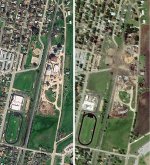
The factory is just a bit of debris around a big crater now, as you can see from satellite pictures.

http://photoblog.nbcnews.com/_news/...ore-and-after-fertilizer-plant-explosion?lite

Also it looks like the epicenter of the explosion had been near the factory halls, not at one of the tanks (since the debris of the tanks is blown to one side)
 
I agree there. I think something was stored there, that should not have been there.
 
"Sorry for blowing up your houses, but we didn't want to spend too much of our profit margin on insurance premiums. In the best tradition of unregulated free market, I am sure the state will be more than glad to help you rebuild your homes. Thank you all and good bye, it's been a blast!" :dry:
 
How come I am not really surprised there. Alone by the fact that they stored 10 times more fertilizer at the plant as permitted...
 
The owner's of the plant need to go to prison for life,or since certain Texas politicians love the death penalty so much maybe they could have a choice.
 
I see it like that: A free market has to be regulated. It sounds paradox at first, but then, it is the only way to guarantee that this freedom does not become a freedom of a few big market participants. To prevent that the big companies can dictate the market the rules, a more powerful government that does not take part in the market (otherwise, it would be corrupt) has to play the referee.

A regulated market does not mean "You have to produce millions of pages of bureaucracy". It just means "You should work properly, document not more of your business activities as you would need anyway to work properly, and have a government watching in the back and only get active, if you cause problems"

Luckily, the German constitution is very communist in that context: Property means responsibility in the constitution here. A company that does act against the interests of the society can face problems and legislation can interfere in the property rights of people without being unconstitutional...but the German government is so badly corrupt currently, that no big company has to fear much from the big ones, only the small bureaucrats cause trouble.

For example, the broadband internet market is badly ruined by corrupt politicians. Not that they get directly paid for their actions, but many of them sit in the board of directors of big companies or get jobs in such companies beyond their qualification after their political career. Favors are exchanged, that would in less corrupt countries count as interest conflicts.

So are the results: The broadband market is tailored and regulated towards the big companies and the internet neutrality is abolished. Minimum broadband coverage is defined so low, that 50% of the country are told to have high speed internet. Which today means: 500 kBit/s maximum bandwith or theoretical accessibility for LTE mobile data (not practical accessibility by actually seeing the antenna or having enough capacity in a very large mobile phone cell for so many customers). Result: What the German government counts as success by their own low standards, is actually a disaster, since only a minority of the Germans actually have broadband internet according to international standards (which is at least 2 MBit/s). Would the US standard be used, it would be even far less (at least 4 MBit/s downstream, 1 Mbit/s upstream).

Coverage by FTTH internet is completely ignored and does not see any support by the government. Why? Because supporting copper lines and VDSL vectoring supports T-Online, which is still owned mostly by the German government... and which already offers some nice comfortable underperformer jobs for political pensioneers.
 
Back
Top