The answer to everything in the universe is 0, not 42.

I'm not understanding the problem of having v1 as 0 in your equation. First of all momentum has to do with your reference frame.

So something moving at the same velocity as the observer has zero momentum relative to the observer. Mass is independent. So v2 must also be zero for momentum to be conserved. Unless the 'universe' has a nonzero total momentum in which case you need to add a constant value to one side of the equation.

(universe in the experimental sense of whatever environment you define, can be two balls in Newtonian space or the real Universe)

---------- Post added at 10:22 AM ---------- Previous post was at 10:13 AM ----------

Consider using the equation:
Code:
     n
C = SUM ( (m_i * v_i) / (1 - (v_i / c)^2 ))
     i
C is a vector representing the total momentum of the system (assumed zero for the Universe). n is just the number of things you are summing.

And of course the value of C may not be independent of the reference frame.

Let me ask you some questions:
1. If I have a room that has no windows in it, no clocks, no people, and only artificial lighting, if I take two pictures of that room 24 hours apart, will I see any real difference?
2. In the 24 hours a bunch of people entered and left the room.
3. Why couldn't I tell from those two pictures?
4. If an exposure time is not short enough, will I not get a motion blur with fast movement?
5. If nothing is lost or gained from the universe, what happens to the seconds when we can no longer see them? If I can't see the other side of the world, does it mean it's not there? Do things tend to disappear when you're not looking at them?
6. What if the maximum velocity you could attain was dependent upon the frame rate?
7. What if c is the frame rate of the universe?
8. If I tell you I walked ten miles in 2 hours, does that tell you anything in particular about my velocity during that time? No, just that I walked on average 5mph. It stands to reason someone would accelerate (by either walking faster or slower) during that time, right? But without further information, all you know is that I walked 5 miles per hour.
9. If you get really close to a wall move along it, and you can't see the other part, does it mean the other part of the wall disappears when you can no longer see it?

Look at this formula:
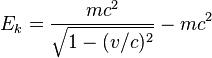
a234845f2e68dc74e420e32f15d7578d.png

How many c^2 do you have? You have m c^2.
How many v's do you have? you have (v/c)^2.
How many apples do I have? m apples^2
How many apple do I have? (v/apples)^2
You are putting one thing in common terms with another. m^3
Velocity is meters per second.
If you graph that out, but instead of using points, you use squares = 1 meter * 1 second, you can describe velocity as an area.
If you graph out acceleration, which is the change in velocity, it is the complimentary area, if you draw a rectangle.
If you graph out one masses acceleration versus another, but on a different piece of graph paper, mass is just the complimentary area in the ability to accelerate.
meters per second = m^2
meters per acceleration = m^2
mass per meters per acceleration = m^3
If you have a 4 meter * 4 meter space you can find the area by squaring it 4^2. Meters length * width are the same thing.
If you have a 4 meter * 4 meter * 4 meter volume you can find the volume by 4^3. Meters length * width * height are the same thing. A meter up is the same meter down, a meter going left is the same as a meter going right. A meter going forward is a meter going backward, but it's also the same as a meter going up/down or a meter going up/down.
Squares and cubes are just ways of multiplying the same thing 1 type unit squared * 4 * 4, or 1 thing unit type cubed * 4 * 4 * 4.
If you don't have the same type of units length or width or height, you still can multiply, I remember when I first learned multiplication, I was told it was an easier way of adding the same thing over and over. Why do 1 apple + 1 apple + 1 apple, when you can do 3 * 1 apple? Why do 3 apples multiplied by 3 apples, when you can just call it 3 apples^2? Why multiply 3 apples * 3 apples * 3 apples, when you can call it 3 apples^3?
1 meter * 1 second * 1 kilogram = 1 meter^3
1 joule = 1 meter^3
e = mc^2
But if mass and meters and second are all the same thing?
e in joules = 1 meter^3
1 joule/second = 1 watt = 1 meter^4
a234845f2e68dc74e420e32f15d7578d.png

Something is non-linear when try to you plot linear 3d information on a 2d graph, because doing that means you don't have a 1:1 thing you have a 1:(y*z) thing. Something would be non-linear in 3d if you were trying to plot 4d information.

Just remember the motion blur on a camera with a frame rate too slow to capture the motion. Just think of Hollywood where they have to use high frame rate cameras for "slow motion" video, or not have motion blurs on everything.

If the maximum rate of velocity is c, and you are limited to that, wouldn't things only have so much meter/second left over in which to move/accelerate? Think of the frames on a piece of film. If you put all of them on top of each other, the things that didn't "move" would be OK to see, while the things that did would be all blurry and all spread out, like an area.

Just look at this long exposure photography, it's just like doing that:
800px-LongExposureExampleUniversityofAberdeen.jpg

You can see it with your own two eyes, don't take my word for it.
I guess you could call the blurry stuff "Undefined," now couldn't you?

It kind of looks like a non-linear area, now doesn't it? Imagine the hands of a clock being photographed with long exposure photography. They would form a symmetrical circle. Even the numbers on a digital clock would be blurred together.

The film of a movie camera would be kind of weird looking and not as smooth, because you're chopping time up into discrete points and comparing the difference between them. It almost looks like that "wormhole" scene in Star Trek: The Motion Picture, where everything is drawn out and blurry, but and if something moves to much, you can see discrete things of it. (I am not trying to imply wormholes exist by that comment, I'm just giving you a possibly familiar reference.) ;) Meters and seconds are the same thing. And if you believe e = mc^s, then joules are just m^3. And if you have the resistance to acceleration, mass, time and distance it's probably the same, but m^4.

When you go x^2 on a graphing calculator, you're really plotting 2d information on a 1d number line. If you just put in x, you're getting a linear increase, because you're plotting one unit up and over. If you do -x, you'll get a line that's equal and opposite the other. If you do the relativistic momentum equation, you get a straight un-curved line. You put it in parenthesis, you get the opposite of the line if you put a - sign infront of it. If you don't believe me, just go here http://www.coolmath.com/graphit/
((x)/(sqrt(1-((x/299792458)^2))))
-((x)/(sqrt(1-((x/299792458)^2))))
You can then try out 2x in the top, to represent mass. Your line will be steeper but in a linear fashion.
If, however, you put x^2 in the top of the division, you'll get a non-linear graph. x*x*x = x^3.
If you put in x^3, you'll get an equal and opposite non-linear graph. Think x*x*x*x
x^4 is like the first non-linear graph, but steeper.
X^5 is just like x^3, but steeper.

If you do the equal and opposite for all of the previous, you'll get something that's in all quadrants of the graph. Something that's equal and opposite.

* I must note that the original post I referred to a "you" and I realize that it sounds weird, re-reading what I wrote, I was replying to the person I was talking to who helped me to see this, by telling me I couldn't add up all the energy in the universe (which of course seems absurd now, knowing that there's an equal and an opposite for everything, and energy is just a measure of a volumish thing.)
 
Last edited:
Please be more concise. You are diluting your own arguments into meaninglessness.

1. If I have a room that has no windows in it, no clocks, no people, and only artificial lighting, if I take two pictures of that room 24 hours apart, will I see any real difference?
2. In the 24 hours a bunch of people entered and left the room.
3. Why couldn't I tell from those two pictures?
You'll only see a difference if something ended up in a different location.
4. If an exposure time is not short enough, will I not get a motion blur with fast movement?
That's the definition of motion blur.
5. If nothing is lost or gained from the universe, what happens to the seconds when we can no longer see them? If I can't see the other side of the world, does it mean it's not there? Do things tend to disappear when you're not looking at them?
They don't disappear, it just makes them difficult to observe when you aren't looking or your view window is too short.
6. What if the maximum velocity you could attain was dependent upon the frame rate?
7. What if c is the frame rate of the universe?
I think there is something to that. It's believed that no particles can propagate or change their state faster than c. It is entirely possible that the slow down of a moving object is caused because each particle must spend more time propagating in a certain direction than just spinning around and doing 'normal' things.
8. If I tell you I walked ten miles in 2 hours, does that tell you anything in particular about my velocity during that time? No, just that I walked on average 5mph. It stands to reason someone would accelerate (by either walking faster or slower) during that time, right? But without further information, all you know is that I walked 5 miles per hour.
Your average velocity between those two points is still 5mph no matter your path. You can take as many breaks, spirals and loop backs as you want, your average velocity is still the same.
9. If you get really close to a wall move along it, and you can't see the other part, does it mean the other part of the wall disappears when you can no longer see it?
No, and I don't understand what the intended physics analog is.

When you go x^2 on a graphing calculator, you're really plotting 2d information on a 1d number line.
Backwards. You are plotting 1d information on a 2d surface.
 
The "frame rate" of the universe is the Planck second. Gravity wave detectors have now become sensible enough to get errors caused by the quantization of time.
 
I think after thinking about this a little longer, I can take back the comment about there being an m^4.

I think there are really only three dimensions, not four. Isn't everything that's not 2d at a different point in time, space, and "acceleration"? Think of light, it doesn't have mass. It has no resistance to acceleration, but it does have distance and time.

What we think of as "cube" isn't really a 3d object, just six 2d planes at right angles to each other. The two components of light are at right angles to each other. Light is 2d. So is a square cube.

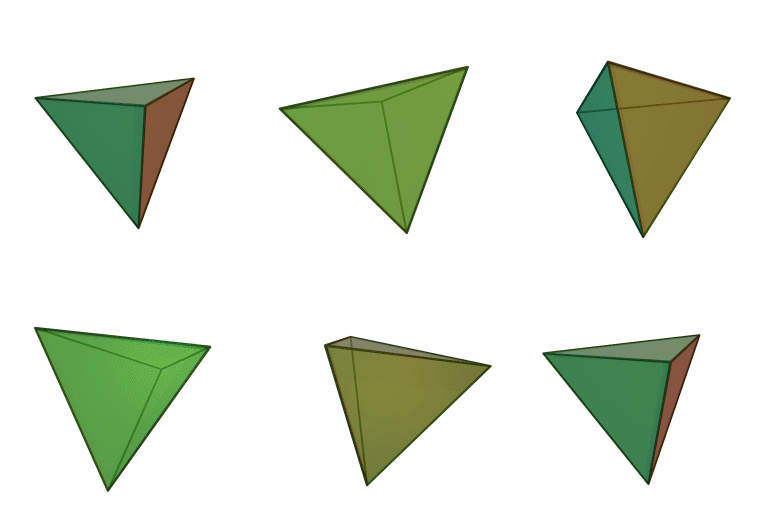
On the other hand, a real 3d object would be the 3d equivalent of an equilateral triangle, with 60 degrees in each angle: a tetrahedron. The points of a tetrahedron do not need more than three things to explain them. A tetrahedron is a 3d shape.

Tetrahedron.gif


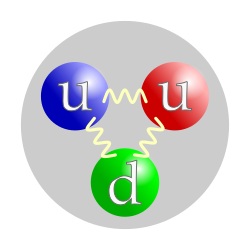
In this case, you really do have to think outside the box. Think about it: three quarks per neutron/proton.

Think about Lagrange points.

Think about centrifugal force, a "fictitious force."

Think about dark matter/energy. I think I can say now there is not dark energy, and that the unexpected observations attributed to it, are due to the fact that there are only 3d dimensions with equal and opposite sides. Dark energy/matter (except planets) is our modern day aether.

Gravity (compression) is time going backward, and entropy (expansion) is time going forward. That's why light is red-shifted by something's gravity, it's traveling back in time to a little to a point when the universe was more compressed, then when it comes out on the other side in forward time, it is redder.

Everything in our world that we consider 3d is 3d and only 3d. There is no 4th dimension or at least we haven't discovered it, if there is one. Mass/inertia is a measure of one of the 3 dimensions. Time/anti-time (aka gravity) is the other, and distance/anti-distance the final one. You don't need anything more than tetrahedral space to be non-Euclidean. It is very interesting that a tetrahedron is the simplest "3d" shape. That's because everything except waves is tetrahedral or an equilateral triangle. 3 quarks + 1 electron = hydrogen.
250px-Quark_structure_proton.svg.png

Add the electron, and what do you have? A tetrahedron, don't you? Well, at least an equilateral triangle + scalene triangles for every position of the electron in relationship to the three quarks, in which it does it not form a tetrahedron. You really don't need 4d to describe something like that, do you? A tetrahedron has 4 sides, but they are all equilateral triangles, and to relate each point to each other, you only need to relate three things:

Dimension 1: time/anti-time
Dimension 2: acceleration/anti-acceleration
Dimension 3: distance/anti-distance

My thinking now is that gravity makes the angles of an equilateral triangle distort, because it's the past, when the universe was more compressed. This increases distance and that causes acceleration in relation to everything else. But they are all really measures of the same kind of thing. m^3, we'll come back to m^3 a little later.

I seem to remember this six sided thing that's made of 6 equilateral triangles. What do they call that again? Oh yeah, one of those hexagon things.

Have you ever looked at that hydrogen thing? This below is supposed to be kind of like a hexagon I guess:
Chapter_5_page_12small.jpg

Go here and look at the hydrogen symbol:
http://en.wikipedia.org/wiki/Hydrogen

You will note the symbol is two hexagons, hydrogen after all is diatomic.

Think of a hexagon divided into into six parts by equilateral triangles. Draw one if you have to. Two up quarks for every down quark. Look at the triangles in there. In one half, you have two triangles going one way, and one going the other way. If you made those two going the same way up, and the one going the other way down, wouldn't that be a proton's quark configuration? Look at the other side, however. It would be down-up-down. Unless you flip the paper around.

If you look in a mirror at your watch, wouldn't the second hand be going the opposite direction? What if you cut this hexagon in half, brought it to a mirror?

If you had two things in orbit around a planet, the orbit was not elliptical, but 100% circular, and they are in the same orbital plane, but going the opposite directions, wouldn't they hit and fall into the planet? Think about an orbit through time. It would be just like the hands of a clock long capture photographed: sweeping out an area.

Doesn't anti-matter have an intrinsic angular momentum exactly opposite that of matter? “Intrinsic angular momentum” or spin.

Isn't that the deal with “dark energy”? What if the reason we see those results is that there is an equal and opposite thing happening?

Think of the hexagon. Time/anti-time. Distance/anti-distance. Mass/anti-mass. Think of the hexagon spinning. If I made the hexagon out of something heavy, cut it in half and I rotate that half around a single point, it would wobble.

What if you put the two halves back together and spin it? A hexagon is symmetrical. No more wobbling like it's had too much to drink. :)

Those two things in orbit would hit each other, unless there was some other measure of distance. Anti/normal. Take the two triangles pointing at each other in the hexagon, remove the other triangles. It would look kind of like a bow-tie. Turn the shape so that the two triangles are left/right of each other. Label the line going from the bottom left to the center anti-time. Label the line going from top left down to the center anti-distance. Put arrows to the left of them showing they go away from the center. On the side that doesn't touch the center, put acceleration with little arrows up and down. On the other side of this little diagram, put time on the line that anti-time becomes going up. On the line that anti-distance becomes going down, put distance. On the other side not touching the center, put acceleration with two arrows, one going up, one going down.

You can divide an equilateral triangle into two right angle triangles. Do that three times. You now note that you have the basis for a vector in the quaint old trigonometry way of doing things. If time and distance are the same, then you have an equilateral triangle for the side of acceleration, and acceleration is equal to distance/time. If distance is greater than time, then the side adjacent the right angle on the distance line will be longer, and the angle where the acceleration line and the distance line touch will be smaller. I would submit to you that since everything has an equal and an opposite reaction, anti-distance will increase in the same way. From the point where the distance/anti-distance are bisected by by the time line, the increase in distance/anti-distance should be equal and opposite for something of the same “mass”. If not, the differences in the mass should be found, and that should be used to calculate the increase in anti-distance. All the same things are true from the perspective of time being greater than distance. From this point forward distance, time, and acceleration should be considered one of the same thing. M^3.

This is the reason for Lagrange points. If an object is 60 degrees ahead or behind the object other than the massive one it is orbiting with, then it will stay in the Lagrange point. You will note there are five possible Lagrange points. This of course seems obvious now. Think of the hexagon. Put the heavy object on one point. You have five points left following the previous description of a Lagrange point. Every other position is counter balanced by an equal and opposite. Think about that: equal and opposite. That means the mass of the equal and opposite thing is greater than the mass you have in this side of the universe or the opposite for something heavy. This is why stars wobble, and we can detect planets. On the other hand, this is why something less massive is capable of staying in a Lagrange point. It has an equal and opposite massive thing on the other side. There are three dimensions, so the stuff always cancels. :) Pretty awesome isn't it? Mass = acceleration, just want to let you know. To find mass, you have to compare the acceleration between two things of the same mass againt some third point. Now you know why the Lagrange points do their thing. The anti-mass has an effect on mass in this side of the universe.

You might want to try to call time/anti-time and distance/anti-distance, and acceleration/anti-acceleration, different dimensions, BUT do you call the negative side of the x-axis a different dimension from the positive one? Or the y-axis? You shouldn't for any of the three dimensions or their opposite sides.

Three body problem? No, more like three body solution.

Think back to the relativity momentum equation. Why is it linear with only 1 kilogram, when graphed on a graphing calculator? Mass * time * meter. If mass is one, then time and meters vary and you're graphing 2d information in a 2d thing. This is light, it is also the momentum of something not undergoing acceleration. If you do it, then you will note the graph is missing half. That other half is anti-distance/anti-time. Just put a negative sign in front of it all, and it works out.

Light has distance and time, and those are equal. A light wave is like the opposite and adjacent sides of a right triangle being equal. Sine and cosine are the same thing in those cases. The wavelength is just the hypotenuse. Light is two 2d equal and opposite things (at right angles.) If you divide a square in half, you have two right angle triangles with equal opposite and adjacent sides.

Oh, and that explains why light travels the way it does. It can go c because it doesn't have inertia, the other side of the equilateral triangle is zero, since it is two 2d things. (In this case 0 is 1, but think of it as no division. "Undefined.") It also explains why nothing with inertia can go that fast. It also explains the momentum of light, now doesn't it? You don't need mass to have momentum, because momentum is just m/s or m^2.

I have a very simple question:
If entropy is the way everything is headed, then how can a star have fusion?

That's because time in a star is further in the past.

Think of a black hole. Think of a singularity. It's theorized that the universe started as a singularity, then underwent rapid expansion.

What if the singularities in those black holes are the beginning of the universe, at least for that area?

Another thing:
Will an ice cube on a space ship traveling at a significant fraction of c melt as fast as one slower? It shouldn't, if it's like a clock, everything should be slower closer to c, from the perspective of something slower than c.

Doesn't that show some kind of relationship between entropy and the speed of light? Why does entropy only go one way? If you were to run time backwards, what would happen? You'd have anti-entropy. Of course, that's what happens in a star. Two things become one.

When particles that decay in the blink of an eye are accelerated to very near c, they stay together longer than if they were at our frame of reference, in other words it takes them longer to decay. Wouldn't decay be considered a form of entropy? Of course.

So there you go: the answer to everything, never call it seconds/kilograms/meters again...just m^3. :)

*If you make a tetrahedron, and label the sides mass/time/distance, eventually you'll have to put two “different things” on the same side. :) Don't believe me, try it yourself, silly. M^3.

This is not an April fools joke, tomorrow if you want me too, I'll re-post it again. Plus it explains a lot, so it's going to make sense. It really is that simple. It is beautiful. I am in awe of the simplicity of the universe, and the wondrous complexity it has from that simplicity. It's kind of funny I finally crystallized 8 years of thinking about this matter (haha!) on April Fools. Gotta love life!

If this gets around, which it may :rolleyes: (that means IT BETTER GET AROUND!), anyone with questions should contact the following e-mail:

[email protected]

Here's to being 3d! :rofl: Silly universe, making us think you have four dimensions!
 
Last edited:
:tumbleweed:
I don't even know where to start
:suicide:
It's true, just do the math yourself, draw everything out that I told you too. Make a tetrahedron out of paper. Start labeling stuff. You will see what I'm talking about, it's crystal clear in fact. You will at some point have to label two "different things" on the same side. You will begin to wonder how we thought it was any different. All the math works, too. Don't believe me? Try it yourself. You don't have to take my word for it, not one bit. Everything I said is a truth independent of me. A tetrahedron is the simplest 3d thing, take away one of the points and it's just an equilateral triangle.

The one thing I said that wasn't true is the part about a cube. It's six not four, I don't even know why I said four. Sorry about that.

The universe has to have symmetry, and to some degree is does where we can see it, but there is also a missing part that we don't see, and that's the part of the universe that's equal and opposite us. If you look at a hexagon, it kind of looks like a cube. It's pretty trippy when you realize this.

So did your head esplode? Eh? :)
 
Last edited:
I stopped reading when you made the ridiculous claim that a cube is not a 3d object. (In other words: TL;DR).

If I have a solid cube, it has a length, a width, and a height. This is how we define three-dimensional space, not some ridiculous metaphysical pyramid junk. No (known) real object is two-dimensional; all objects we know of have all three dimensions of space.

Your statement that a cube is no more than six planes at right angles to each other fails to take into account that the cube is not defined solely by its surfaces, but also by its volume. The cube has an infinite number of 2D slices (well, down to the Planck length) in any direction. That the slices are effectively infinite is what makes the cube a three-dimension object and not a collection of two-dimensional ones.
 
originalpckelly, please condense your posts into something more focused. Its easy to write in your style, but very difficult to read.

If you can, please switch to a claim, explanation style. Be as verbose as you want with explanations, but be very clear on what claims you are making.

On a side note, a hydrogen nucleus is NOT spherical and not really triangular either. The up quarks align themselves on either side of the down quark in an almost linear shape. It bends a little to track the electron and other charges in the environment. It also spins very fast and the obseved shape depends upon the current axis of rotation which can be between something that looks like three balls squished together (in a line) and a disc.

Not unlike electrons, quarks can be divided into probability volumes. Its a little more complex as up quarks have a +2/3 charge and down quarks have a -1/3 charge.
 
I stopped reading when you made the ridiculous claim that a cube is not a 3d object. (In other words: TL;DR).

If I have a solid cube, it has a length, a width, and a height. This is how we define three-dimensional space, not some ridiculous metaphysical pyramid junk. No (known) real object is two-dimensional; all objects we know of have all three dimensions of space.

Your statement that a cube is no more than six planes at right angles to each other fails to take into account that the cube is not defined solely by its surfaces, but also by its volume. The cube has an infinite number of 2D slices (well, down to the Planck length) in any direction. That the slices are effectively infinite is what makes the cube a three-dimension object and not a collection of two-dimensional ones.
A cube that we see is made of things that are tetrahedrons, we can have any shape we like. We're 3d.

x^3 is really just x*x*x not a six sided thing. It doesn't mean you have to have three things that all have 90 degree angles. We should really start making graph paper with equilateral triangles on it. It might be a tad bit more helpful for this kind of stuff. That way kids will learn how things really are, and not go around thinking x*x*x = square cube, like you and I both did until today.

---------- Post added at 09:14 PM ---------- Previous post was at 09:12 PM ----------

originalpckelly, please condense your posts into something more focused. Its easy to write in your style, but very difficult to read.

If you can, please switch to a claim, explanation style. Be as verbose as you want with explanations, but be very clear on what claims you are making.

On a side note, a hydrogen nucleus is NOT spherical and not really triangular either. The up quarks align themselves on either side of the down quark in an almost linear shape. It bends a little to track the electron and other charges in the environment. It also spins very fast and the obseved shape depends upon the current axis of rotation which can be between something that looks like three balls squished together (in a line) and a disc.

Not unlike electrons, quarks can be divided into probability volumes. Its a little more complex as up quarks have a +2/3 charge and down quarks have a -1/3 charge.
That's precisely what you should have happen if you think about it. In fact, what I said explains that behavior. Uh duh, didn't you read the part about the hexagon? There's a reason we're not made out of anti-matter.
 
A cube that we see is made of things that are tetrahedrons, we can have any shape we like. We're 3d.
Everything is made of tetrahedrons? {{citation needed}} (and remember, no original research allowed)

x^3 is really just x*x*x not a six sided thing. It doesn't mean you have to have three things that all have 90 degree angles.
Um, what? A dodecahedron also has three dimensions. Dimensions are of volume, not sides.

We should really start making graph paper with equilateral triangles on it. It might be a tad bit more helpful for this kind of stuff.
Us humans live in a world which we have decided to define by rectangular axes. Triangular graph paper would not be useful to us.
 
Don't you just love pseudoscience? :)
So many ways to 'explain' the universe... :)
 
That's precisely what you should have happen if you think about it. In fact, what I said explains that behavior. Uh duh, didn't you read the part about the hexagon? There's a reason we're not made out of anti-matter.
I read your hexagon explanation again and can't understand it. Please state it a different way.

Also, there is no known reason why matter dominates anti-matter, at least in this galaxy. The energies and physics are identical, only the charge and spin are reversed. (electrons and anti-electrons have been known to change their spin, this is how cold hydrogen clouds can be detected in deep space)
 
Everything is made of tetrahedrons? {{citation needed}} (and remember, no original research allowed)


Um, what? A dodecahedron also has three dimensions. Dimensions are of volume, not sides.


Us humans live in a world which we have decided to define by rectangular axes. Triangular graph paper would not be useful to us.

What's the simplest 3d thing?

And yes, I agree, for most things this would not matter, we're all 3d anyway, so it's not like it's un-natural. We just think 3d is a square cube, not a triangular cube. A cube is not three square things, it's three of the SAME thing multiplied by itself x*x*x. The sides of a tetrahedron are 1*1*1 in x^3 units, you can't have a tetrahedron without 4 points, but having three sides creates all the points necessary to form a tetrahedron. I started thinking what the 3d equivalent of a dichotomic search tree would look like, and at first I thought it would be half of a square cube. What's half of a square cube? There's your answer: the simplest 3d thing. A square cube is just two of those. (Well, sort of, just with wider angles. It's a squished tetrahedron. I think that's actually quite important here.)

---------- Post added at 09:40 PM ---------- Previous post was at 09:30 PM ----------

I read your hexagon explanation again and can't understand it. Please state it a different way.

Also, there is no known reason why matter dominates anti-matter, at least in this galaxy. The energies and physics are identical, only the charge and spin are reversed. (electrons and anti-electrons have been known to change their spin, this is how cold hydrogen clouds can be detected in deep space)
The reason that matter dominates anti-matter is that we're matter. When you screw up the distances enough, you'd probably get a union of matter/anti-matter. I wouldn't be surprised by anything having my own mind blow by the only 3d junk. It's really pretty screwed up, I have just accepted time + x, y, z but it's really all only x, y, z.

Think of "virtual particles" there are no virtual particles, those are just particles that are the equal and opposite of something else.

I think you will begin to understand this better if you do the graphical stuff I told you all to do. Only then, when you see it with your own eyes will you believe it. I didn't believe it myself. Why is time and 3d space the same thing? Time is one dimension of 3d space. It's not right to call it time or mass or distance. It's all just a measure of distance. m^3. Just look at the units in the gravitation constant:
981c4a7801639525969c8d798aca28ce.png


If they are different things, then by all means, you have to keep them separate, but if they are all the SAME UNIT, then of course, you follow the rules of exponentiation:
d6e3e127755943f83ca442a4419411e0.png

m^3-3 = m^3/m^3
 
The reason people think of cubes for 3d is because of the perpendicular axises. x, y and z form 90 degree angles with each other in order to be completely independent. The same is true for lower dimensions. You could use two sides of an equilateral triangle to form a basis for a coordinate system, but to travel up or down one side of the triangle both coordinates would have to change (= more annoying math).

---------- Post added at 11:48 PM ---------- Previous post was at 11:45 PM ----------

Think of "virtual particles" there are no virtual particles, those are just particles that are the equal and opposite of something else.
That is not the traditional definition of a virtual particle.
http://en.wikipedia.org/wiki/Virtual_particle
Generally, they are used a a crutch to understand or represent field interactions.
 
The reason people think of cubes for 3d is because of the perpendicular axises. x, y and z form 90 degree angles with each other in order to be completely independent. The same is true for lower dimensions. You could use two sides of an equilateral triangle to form a basis for a coordinate system, but to travel up or down one side of the triangle both coordinates would have to change (= more annoying math).

---------- Post added at 11:48 PM ---------- Previous post was at 11:45 PM ----------


That is not the traditional definition of a virtual particle.
http://en.wikipedia.org/wiki/Virtual_particle
Generally, they are used a a crutch to understand or represent field interactions.

What's the traditional definition of space? We're going to be redefining "traditional definitions" pretty soon.

Here's another thing: if you turn a square cube on it's side (with one of the points down), what does it look like? What light is from the side. The weird non-linearness of it being plotted is the same thing as sine being plotted: you're really condensing 2d information onto the 1d number line of the y-axis. If you don't believe me, think about it. A square is something with equal sides at right angles (though now of course, that's a triangle as the universe is concerned). A graph paper has 1*1 right angles. 2*2 would be two of the little squares per axis.

If I plot time on a graph and I say you travel 3 meters in three seconds, that's a 3*3 square. On the other hand, a number line doesn't have squares, so the difference between the first square and the second is pretty big. That's why plotting x^2 on a graphing calculator is non-linear. Don't believe me? Try it yourself, and soon you will.

I'm such an idiot for not thinking of this some time before this. If I had only realized a square means x*x and not a right angle square, I could have figured this out, long ago. Same for the x*x*x thing.

You guys are asking so many questions, but when you get down to it, it really makes more sense. The universe doesn't lose or gain anything, if it is a closed system. So that means you should have conservation of spin and charge like you do other things.

This:
triangle both coordinates would have to change (= more annoying math)

Bingo. Even if you don't get it now, then you will eventually and it will completely and totally blow your mind. Just think how mind blowing thinking time and space were in 4d beforehand, after thinking they were two separate things. But then, it will make sense, just thing of the long exposure photography. We've all seen it before, and it's not taken to mean anything in particular. Of course it doesn't, we think it's just common sense that's you'll get motion blur.

Motion blur is one of the reasons the old claymation looks so terrible. Who knew gumby would be the answer to everything? :rofl:

*I'm getting tired, I've been working hard on this, and I've done more geometry stuff in the last few days than I care to. If I get famous from this, I have a feeling some of my math teacher's will be totally surprised. Except the one who launched me on a course to an appreciation of math. It's a beautiful thing. It almost makes me want to cry seeing how simple and beautiful everything is and yet how complex it is at the same time.
 
So did your head esplode? Eh? :)
I started thinking of all the rebuttals I needed to make to your post then, yeah, my head exploded...

I stopped reading when you made the ridiculous claim that a cube is not a 3d object. (In other words: TL;DR).
:lol: I started laughing a couple of sentences earlier, at "Think of light, it doesn't have mass", then fell over at "Light is 2d. So is a square cube.". WTF is a square cube?

What's the simplest 3d thing?
A sphere? Simpler than a tetrahedron, IMHO.

What's half of a square cube?
A square pyramid, not a tetrahedron.
 
I think you will begin to understand this better if you do the graphical stuff I told you all to do. Only then, when you see it with your own eyes will you believe it. I didn't believe it myself. Why is time and 3d space the same thing? Time is one dimension of 3d space. It's not right to call it time or mass or distance. It's all just a measure of distance. m^3.
Did the graphing thing. I don't see anything that suggests that its all distance. In fact if you have more than 3 particles you must use 3d geometry because there is a very high energy cost to stay in the same plane.

The smallest unit of distance is the Planck length. The fastest velocity is c. So the standard unit of time is how long it takes for a photon to cross a Planck length. Because its difficult to observe at the smallest scale, the photon is shot through a greater distance which results in a greater travel time. The value for the Planck time will still be the same.
 
If I get famous from this, I have a feeling some of my math teacher's will be totally surprised. Except the one who launched me on a course to an appreciation of math. It's a beautiful thing. It almost makes me want to cry seeing how simple and beautiful everything is and yet how complex it is at the same time.
I would be totally surprised too :dry:

BTW, triangle graph paper:
http://incompetech.com/graphpaper/triangle/

Thanks to Google for the link. It will find you the most amazing things, even real academic papers on the subject of maths and dimensions...
 
I started thinking of all the rebuttals I needed to make to your post then, yeah, my head exploded...


:lol: I started laughing a couple of sentences earlier, at "Think of light, it doesn't have mass", then fell over at "Light is 2d. So is a square cube.". WTF is a square cube?


A sphere? Simpler than a tetrahedron, IMHO.


A square pyramid, not a tetrahedron.
What is h-bar?
0a9fc3f71a862a9883e3b8922319eabe.png

You're right, but only partly right. Those things that are quarks are probably just circles. There you go. It's about circle's relating to one another. Think of string theory (one dimensional fundamental thing), I guess this would be circle theory. Although, who knows, maybe they are spheres?

A cube is x^3. We have been defining cube as a six sided thing, when it's just 4. If all the sides of a tetrahedron are equal, then by "cube" in terms of x*x*x you should be able to see what I mean. By the way, go draw a hexagon inside a circle. It's pretty close to being a circle. If you divide the hexagon up into triangles, it almost looks like a 2d representation of a regular cube, one that we consider a cube, not the equilateral triangle one.
 
What's the simplest 3d thing?
The answer you want is "tetrahedron" because that is the simplest 3d shape that you can make by connecting a few points, since any three points are coplanar and the fourth point defines a volume (instead of a plane). However, that does not mean that all objects are composed of tetrahedrons (more on that thought later). I would say that the "simplest" 3d thing is a sphere. Spheres are certainly more natural than tetrahedrons--spheres form naturally all over the place; tetrahedrons do not.

The sides of a tetrahedron are 1*1*1 in x^3 units, you can't have a tetrahedron without 4 points, but having three sides creates all the points necessary to form a tetrahedron.
Actually, you only need two sides to create all the points necessary to form a tetrahedron.

What's half of a square cube? There's your answer: the simplest 3d thing. A square cube is just two of those.
Just because you can visualize a cube as being composed of two (squashed) tetrahedrons does not mean that there's any physical meaning behind that. There are 6 ways to divide a cube into two (squashed) tetrahedrons, not just one.

It's similar to how Orbiter requires 3d models to be divided into triangles--it's simply more convenient and simpler for the renderer. The fact that triangles are used to define the surface (rather than n-gons) carries no information about the surface. It's simpler for (normal) humans to think of 3-space in terms of cubes and right angles, so we do.

---------- Post added at 09:23 PM ---------- Previous post was at 09:19 PM ----------

A cube is x^3. We have been defining cube as a six sided thing, when it's just 4. If all the sides of a tetrahedron are equal, then by "cube" in terms of x*x*x you should be able to see what I mean. By the way, go draw a hexagon inside a circle. It's pretty close to being a circle. If you divide the hexagon up into triangles, it almost looks like a 2d representation of a regular cube, one that we consider a cube, not the equilateral triangle one.
Er, no...cubes have six sides. I don't know what you've been smoking that's causing you to think that cubes only have four sides, but you should probably stop.

This:
triangle both coordinates would have to change (= more annoying math)

Bingo. Even if you don't get it now, then you will eventually and it will completely and totally blow your mind. Just think how mind blowing thinking time and space were in 4d beforehand, after thinking they were two separate things. But then, it will make sense, just thing of the long exposure photography. We've all seen it before, and it's not taken to mean anything in particular. Of course it doesn't, we think it's just common sense that's you'll get motion blur.
Coordinate systems where you cannot change one coordinate without changing the other suck. They're not particularly useful for anyone's needs, and it's not going to blow anyone's mind (except yours, apparently).
 
Back
Top